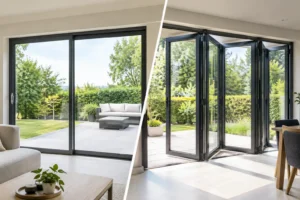
A new extension can look exceptional on completion, then feel warm, stuffy or slow to dry after the first few weeks of everyday use. Kitchens generate steam, family rooms fill with people, and highly insulated modern construction retains heat well. To improve extension ventilation, the design needs to move stale, moist air out while bringing fresh air in without making the room cold or compromising its clean architectural finish.
The right answer is rarely one window or one fan. It is a considered combination of background ventilation, opening windows or doors, effective extract ventilation and glazing chosen for the way the room will be used.
Why extension ventilation deserves early attention
Extensions are designed to be more airtight than older parts of a home. This is good news for thermal efficiency: insulated walls, roofs and floors, together with aluminium glazing that includes a thermal break and energy-efficient glass, help keep warmth where it belongs. But reduced uncontrolled air leakage means moisture and pollutants also have fewer routes out.
Without a ventilation plan, condensation may form on colder surfaces, cooking odours can linger, and the room can become uncomfortable during warm weather. In a kitchen extension, the issue is often most noticeable when the hob, dishwasher and several people are all producing heat and moisture at once.
Ventilation should therefore be considered at the layout stage, before the roof, electrics and glazing are fixed. Retrofitting a poorly positioned extractor or changing an opening panel later is possible, but it is less straightforward and may limit the finished appearance.
Improve extension ventilation with two types of airflow
A successful extension generally needs both everyday background airflow and faster purge ventilation. They solve different problems.
Background ventilation provides a small, controlled amount of fresh air over longer periods. Depending on the scheme, this may come from trickle ventilators, mechanical ventilation or other designed air paths. It helps manage normal moisture levels without needing windows left wide open.
Purge ventilation is the rapid airing of a room through openable windows, rooflights or doors. It is useful after cooking, entertaining, cleaning or on a hot afternoon. Large opening sections can clear warm air quickly, particularly where fresh air can enter at a lower level and escape higher up.
For many extensions, the best result comes from combining the two. Relying solely on opening bifold doors may work on a pleasant day, but it is less practical in winter, during heavy rain or when the property is unattended. Equally, background vents alone will not offer the immediate relief needed in a busy kitchen.
Plan for cross ventilation
Cross ventilation occurs when air travels through a space between openings on different sides or at different levels. It is one of the most effective passive ways to make a room feel fresher.
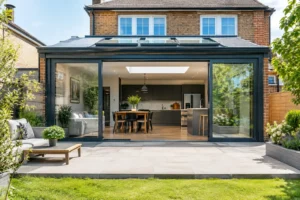
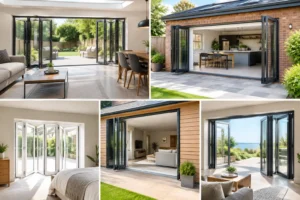
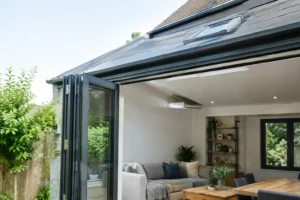
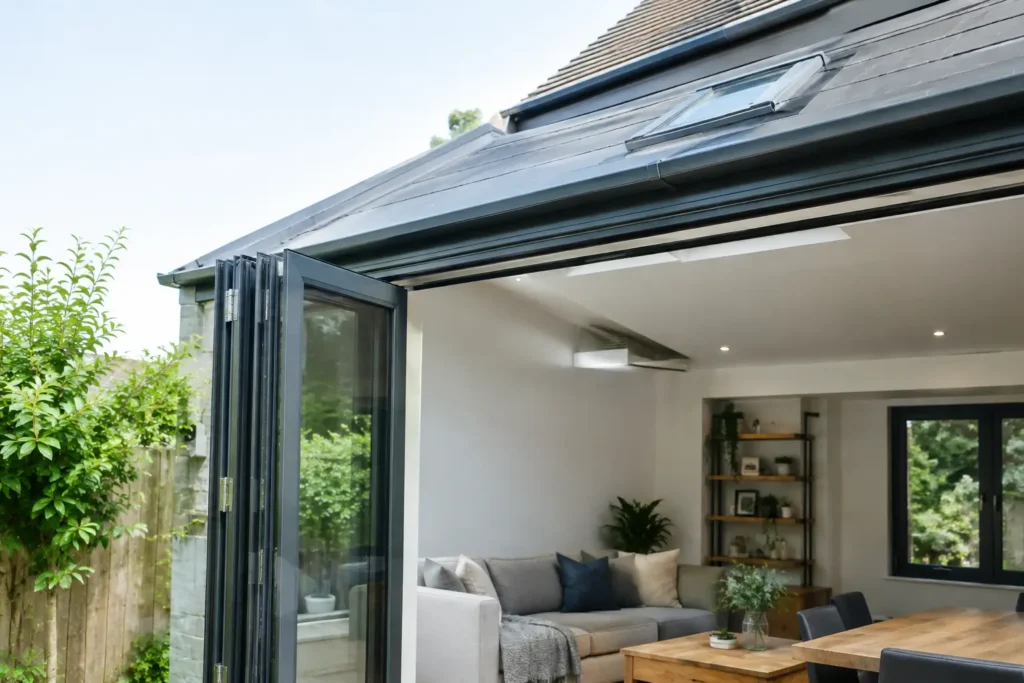
A rear extension with bifold or sliding doors to the garden may have generous openings along one elevation. Where possible, pair these with an opening window, rooflight or high-level vent elsewhere in the room. Opening both creates a route for air rather than simply opening one side of the extension.
The layout matters. If a large door opening faces prevailing wind and there is an opening on the opposite side, air movement can be very effective. However, exposed gardens can create draughts, so controllable opening sections are preferable to assuming every panel needs to open fully.
Use height to release heat
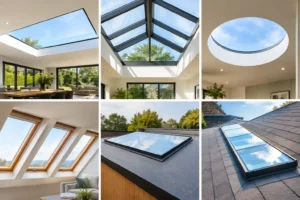
Warm air rises. That simple principle makes opening rooflights, roof lantern vents and high-level windows particularly valuable in single-storey extensions with vaulted ceilings or large areas of glazing.
When a high-level opening is used alongside a lower-level door or window, cooler replacement air can enter below while warm air escapes above. This stack effect is especially useful on still days, when cross breezes are limited.
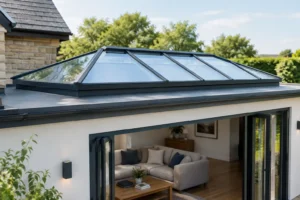
Not every rooflight needs to open. Fixed flat roof lights and roof lanterns can deliver outstanding daylight and a striking architectural feature at a lower cost. But where overheating is a concern, an opening rooflight in the right position may be a worthwhile addition. Consider solar control glazing and blinds as part of the wider strategy too: ventilation removes heat, while shading reduces how much heat builds up in the first place.
Choose glazing that works hard for the room
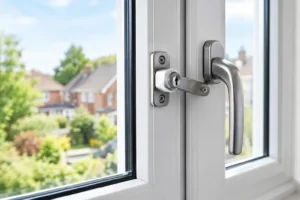
Door and window configuration should be led by daily use, not only by the view. A three-panel bifold may give a wide opening to the garden, but a separate opening window can be more convenient for a quick morning air change. In other homes, a sliding door with an adjacent casement window offers the right balance of uninterrupted glass, easy access and controlled ventilation.
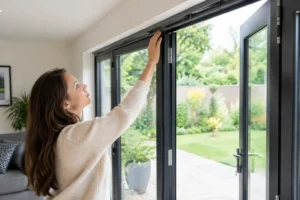
Aluminium systems are well suited to larger glazed openings because their slim, strong frames can support expansive panes while retaining a contemporary look. Products such as Smarts Visofold 1000 Bifold Doors can be specified with panel arrangements, colours, handles and threshold options to suit the extension design. The key is to discuss which panels will open, how often they will be used and where furniture will sit once the room is finished.
For instance, a kitchen island positioned directly in front of the only opening window may make that window less useful. Likewise, a door arrangement that requires moving dining chairs to open fully will not be used as often as expected. Good ventilation is partly about capacity, but it is also about making fresh air easy to access every day.
Do not overlook kitchen and bathroom extraction
Natural ventilation is not a substitute for properly designed mechanical extraction in moisture-producing rooms. A kitchen needs an extractor arrangement that removes steam and grease effectively, while a bathroom or utility area needs suitable extract ventilation to control humidity.
Where practical, ducted extraction to the outside is generally more effective than recirculating systems for removing moisture. The duct run should be as direct and appropriately sized as possible, with unnecessary bends avoided. Long, convoluted runs can reduce performance and increase noise.
Choose an extractor with a capacity suited to the room and cooking style, rather than selecting on appearance alone. It should be used from the start of cooking and left running afterwards to clear residual moisture. A quieter unit is often a better long-term choice because people are more likely to use it consistently.
If the extension includes a utility room, downstairs shower room or concealed laundry area, treat these as part of the same ventilation plan. Drying clothes indoors can add substantial moisture to the air, and a closed internal door may prevent that moisture reaching the main room’s openings.
Meet Building Regulations without treating them as an afterthought
Ventilation in new extensions is covered by Building Regulations, including Approved Document F in England. Requirements vary according to the home, room use, existing ventilation and the chosen approach. Similar standards and guidance apply elsewhere in the UK, so project-specific advice is essential.
This is one reason to involve your designer, installer and Building Control early. They can establish whether trickle ventilators are required, how much purge ventilation is needed, and what extract rates apply to the kitchen, bathroom or utility space. If replacement windows or doors are part of a wider project, changes to existing ventilation provision should also be checked rather than simply removed for a cleaner sightline.
A compliant solution does not have to detract from a contemporary extension. Vent positions, opening styles and mechanical controls can be planned around the architecture, helping the finished room feel as refined as it looks.
Small habits that protect air quality
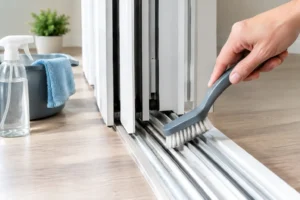
Even a well-designed extension benefits from sensible use. Keep background vents open unless there is a specific reason not to, and clean grilles, filters and extractor covers regularly. Dust and grease reduce airflow over time.
Use lids when cooking, close internal doors to contain steam where appropriate, and air the room after high-moisture activities. If condensation regularly appears on glass, walls or ceilings, do not dismiss it as a seasonal nuisance. It is a useful sign that the room needs more effective airflow, less moisture production, or both.
For extensions that become hot in summer, ventilate in the cooler morning or evening rather than opening every door at the hottest point of the day. External shading, suitable glazing and controlled high-level openings can make a noticeable difference without sacrificing the bright, open character that made the extension appealing in the first place.
The best extension ventilation is designed around real life: how you cook, where you relax, when you open the garden doors and how the space feels in January as well as July. A well-planned glazing and ventilation scheme keeps that new room light, comfortable and ready to enjoy throughout the year.