A new front or rear entrance door changes more than the first impression of your property. It affects daily security, heat retention, kerb appeal and how confidently the door will stand up to years of use. When comparing aluminium versus composite doors, the right answer depends on the opening, the architecture of your home and the finish you want to achieve – not simply the headline price.
Composite doors remain a popular choice for traditional front doors, while aluminium is increasingly selected for contemporary entrances, glazed rear doors and extension projects. Both can be secure, insulated and made to order. Their differences become clearer when you look at design, construction and long-term maintenance.
Aluminium versus composite doors: the key difference
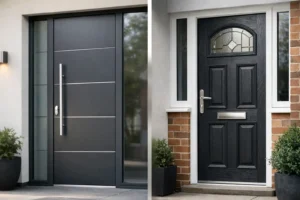
A composite door is typically built from several materials. Depending on the manufacturer and specification, it may combine a foam core with timber, laminated layers and a durable GRP outer skin. This construction is designed to produce a solid-feeling, insulated door with the familiar appearance of painted timber.
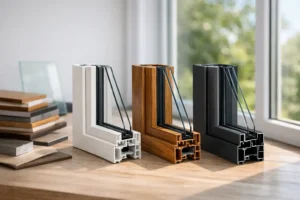
An aluminium door uses precision-engineered metal profiles, usually with a thermal break to reduce heat transfer through the frame. It can be fitted with a solid insulated panel, glazed sections or a combination of both. Aluminium is especially well suited to larger, more architectural openings because it offers high strength without requiring bulky frames.
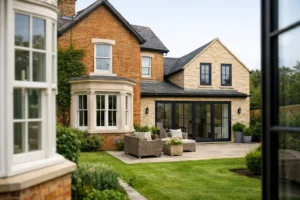
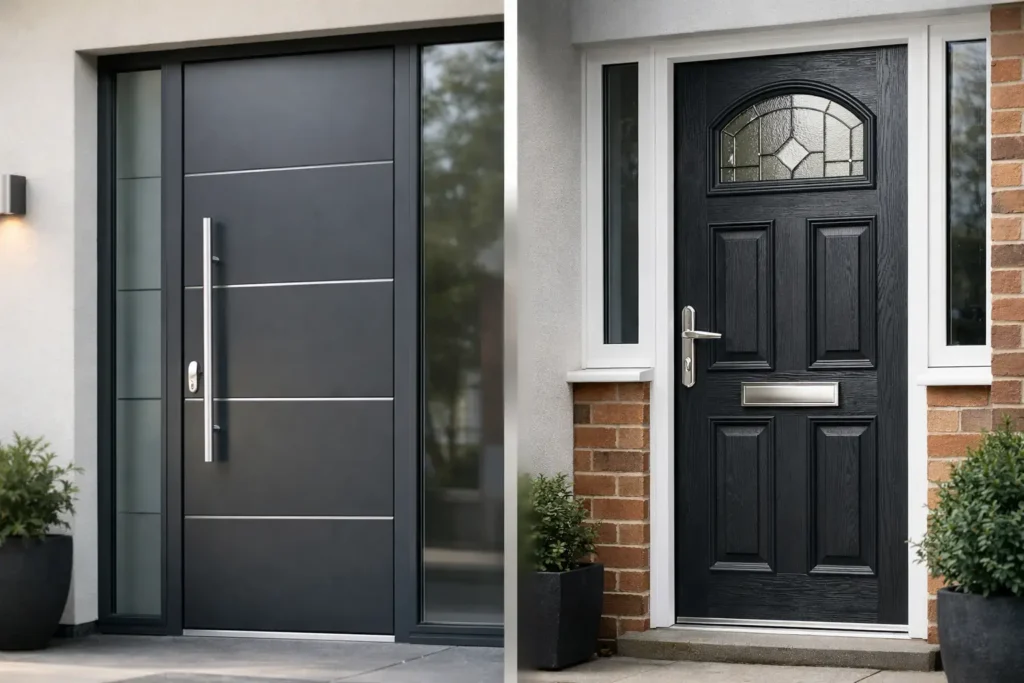
For a conventional opening in a period or suburban property, a composite door can be an attractive, practical fit. For a contemporary extension, a wide garden opening or a home with slim aluminium windows and bifolds, an aluminium door often creates a more considered, consistent finish.
Style and sightlines
The visual difference is usually the first thing homeowners notice. Composite doors excel at traditional styles. Woodgrain finishes, decorative glazing, heritage colours and moulded panels can suit Victorian terraces, cottage-style properties and homes where a classic front entrance is part of the character.
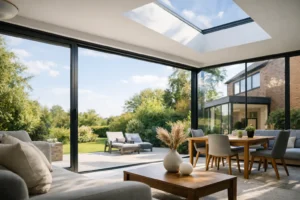
Aluminium has a cleaner, more modern appearance. Frames can be slim, crisp and neatly proportioned, helping to maximise glass and daylight where glazing is part of the design. This makes it a natural partner for aluminium bifold doors, sliding doors, roof lanterns and replacement windows.
Colour choice is another consideration. Composite doors are available in a broad range of finishes, but colour options and inside-outside combinations can be more restricted by the chosen door range. Powder-coated aluminium offers a durable finish in a wide choice of RAL colours, with the option to specify different colours internally and externally on many systems. That flexibility is valuable when the exterior needs to complement brickwork while the interior suits a new kitchen or living space.
When aluminium makes more sense
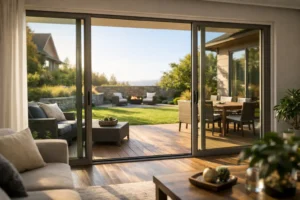
Aluminium is often the stronger design choice where an entrance is tall, wide or heavily glazed. It is also ideal when you want matching frames across a renovation. A rear extension with Smarts Visofold 1000 Bifold Doors, for example, can be complemented by an aluminium single door or French door in the same family of colours and hardware finishes.
This consistency is difficult to achieve if a composite door sits alongside slim-framed aluminium glazing. It is not impossible, but the difference in frame profile, sheen and detailing can be noticeable.
Thermal performance: look beyond the material
Neither material should be judged on its name alone. Thermal performance depends on the complete door specification: frame, panel or glazing, seals, installation quality and the threshold detail all matter.
Composite doors are naturally associated with insulation because of their dense, multi-layered construction. A well-made composite door can provide strong thermal performance and reduce draughts around an older entrance. It is a sound option for homeowners replacing a tired timber or poorly fitting uPVC door.
Modern aluminium systems have also moved far beyond the cold-metal reputation of older frames. A thermal break separates the internal and external parts of the profile, limiting heat transfer, while energy-efficient double or triple glazing can improve overall performance where glass is used. Insulated aluminium panels and carefully specified seals help create a high-performing entrance without sacrificing the slim, contemporary look.
Ask for the actual U-value or energy rating for the door configuration you are considering. A fully glazed door, a solid-panel door and a door with decorative glass will not perform identically. For extensions and replacement work, the final installation should also meet applicable Building Regulations.
Security and everyday use
A secure door is a complete system, rather than one strong material. The lock cylinder, multipoint locking, hinges, glazing specification, frame fixing and installation all contribute to how well the door protects your home.
Composite doors can feel substantial and reassuring under hand, and quality systems are commonly supplied with multipoint locking and reinforced sections. Aluminium doors have the benefit of inherent frame strength and can accommodate high-security locking hardware, toughened or laminated glass where required, and secure hinges.
For either option, check what is included as standard rather than assuming every available upgrade is already in the quote. Discuss the cylinder type, lock operation, glazing safety, handle finish and whether the chosen threshold works for your household. A low threshold can make access easier for pushchairs, wheelchairs and garden traffic, but it needs to be specified correctly to suit the location and weather exposure.
Durability and maintenance
Both door types are designed for British weather, but their upkeep is different. Composite doors generally need little more than regular cleaning with mild soapy water. Their GRP skins are made to resist everyday knocks and will not require the regular painting associated with timber. However, avoid harsh cleaners, and inspect seals and hardware periodically.
Aluminium is exceptionally durable. It does not rot, warp or swell with moisture, which is a major benefit on exposed elevations and busy rear entrances. The powder-coated finish is low maintenance and normally only needs gentle cleaning to remove dirt and airborne deposits. As with any moving door, hinges, locks and tracks should be checked and adjusted when necessary.
Long-term appearance comes down to product quality and care. A low-cost door may look similar in a brochure but offer fewer choices in profile, hardware, weather sealing or finish quality. Choosing a made-to-measure system from an experienced supplier gives you more control over the details that affect performance over time.
Cost: compare the finished specification
Composite doors are often less expensive at the entry level, particularly for standard front-door sizes and traditional designs. They can represent excellent value where the priority is a warm, secure replacement door with familiar styling.
Aluminium doors usually command a higher initial investment. The cost reflects engineered profiles, powder coating, bespoke fabrication and the ability to create larger or more glazed designs. If you are already investing in an extension with aluminium bifolds, sliders or roof glazing, matching the entrance door may be worth the additional outlay for the finished result.
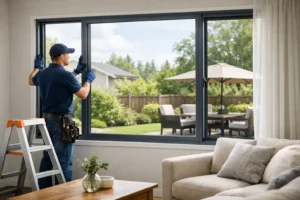
Do not compare quotes by door size alone. Check whether each price includes survey, delivery, removal of the existing door, installation, trims, glass specification, handles, locks and VAT. For supply-only projects, confirm who will measure the opening and take responsibility for fitting, particularly where threshold levels and drainage details are involved.
Which door is right for your home?
Choose a composite door if you want a traditional or cottage-inspired entrance, a solid insulated feel and a cost-conscious replacement for a standard front-door opening. It is particularly effective where decorative glazing and timber-style detailing are more important than extensive glass or ultra-slim frames.
Choose aluminium if you want a contemporary architectural finish, greater freedom with colour and glazing, or a door that visually matches aluminium windows, sliding doors and bifolds. It is also the better fit for wider openings, tall doors and projects focused on bringing more natural light into a kitchen, dining room or garden room.
There is no need to use one material throughout the property. A composite front door can retain a traditional street-facing character, while aluminium doors at the rear can connect a modern extension to the garden. The best scheme responds to each elevation and how you use the space.
Before placing an order, bring together photographs, opening sizes and a clear idea of how the door needs to work every day. A detailed quotation from a specialist such as Smarts Bifold Doors can help you compare configurations, colours, glazing and installation options on a like-for-like basis. The right door should feel as good to use in five years as it does on the day it is fitted.