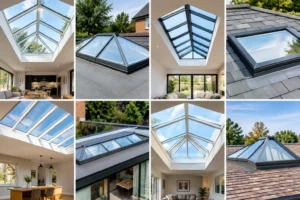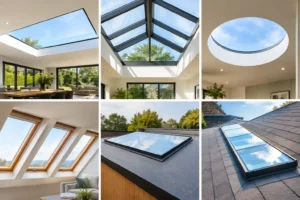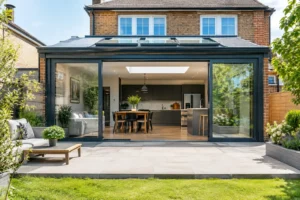
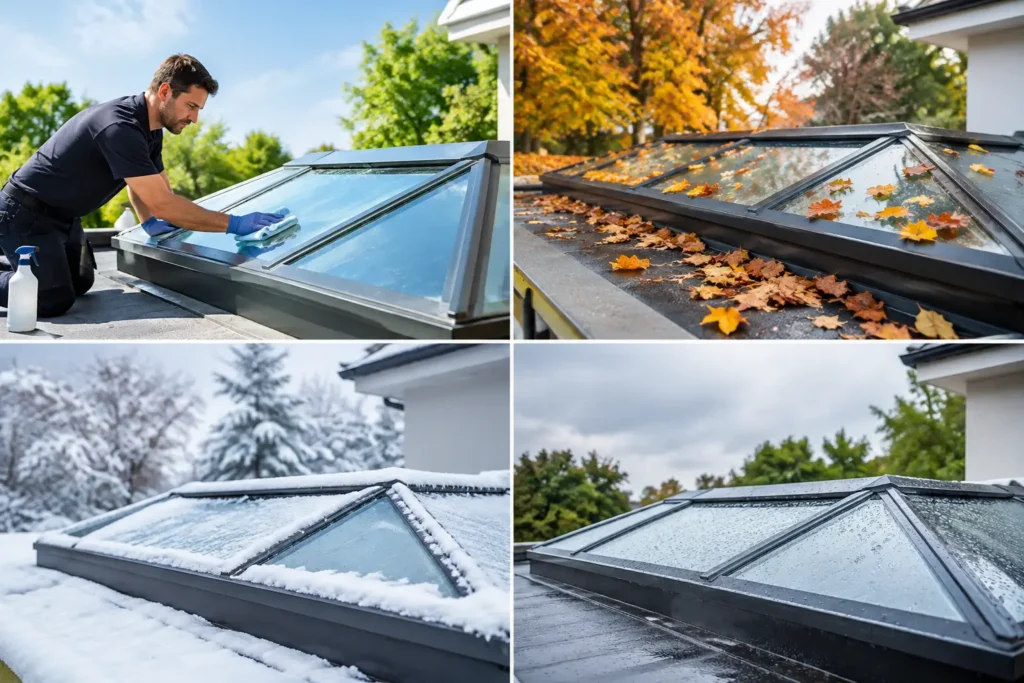
A roof lantern earns its place every day: it draws daylight into the centre of an extension, makes a kitchen feel more open and gives a flat roof a refined architectural finish. Because it sits above the room, however, dirt, leaves and weather can go unnoticed for longer than they would on windows or doors. Knowing how to maintain roof lanterns protects that clear view of the sky, helps rainwater drain correctly and keeps the system looking as good as the day it was fitted.
Aluminium roof lanterns are built for low maintenance. Their powder-coated frames resist corrosion, quality glazing is designed for year-round exposure, and well-made systems use durable seals and fixings. Low maintenance does not mean no maintenance, though. A small amount of careful attention twice a year will usually prevent the avoidable issues that lead to staining, restricted drainage or unnecessary call-outs.
Start with a safe visual inspection
Inspect your roof lantern in spring and autumn, and after particularly severe weather. Do this from inside first. Look through the glass in daylight for condensation trapped between panes, cracks, chipped glass, discolouration around the edges or signs of water on the internal plasterboard and ceiling.
Then inspect the outside only if you can do so safely from a suitable access point. Never lean out of an upstairs window, stand on a glazed roof, or put weight on the lantern frame or glass. Roof lanterns are not designed to be walked on. For high or difficult-to-reach installations, a professional cleaner or installer is the sensible option.
From a safe position, check whether leaves, moss, bird droppings or debris have collected around the lantern perimeter. Also look at the surrounding flat roof surface. Standing water nearby, lifted roof coverings or blocked outlets can direct water where it does not belong, even when the lantern itself is performing perfectly.
How to maintain roof lantern glass without damage
Clean the glazing when it begins to look dull rather than waiting for dirt to become baked on. In many homes, this means once or twice a year. Properties near busy roads, trees, the coast or agricultural land may need more frequent cleaning.
Use clean, lukewarm water with a small amount of mild washing-up liquid. Apply it with a soft microfibre cloth, a non-abrasive sponge or a soft-bristled brush on an appropriate extension pole. Rinse thoroughly with clean water, then allow the glass to air dry or dry reachable areas with a clean rubber squeegee.
Avoid abrasive pads, scouring powders, solvent-based cleaners and metal scrapers. They can scratch the glass, mark coated frames or damage specialist coatings. Strong alkaline cleaners should also be avoided. If you have self-cleaning or solar-control glass, follow the glass supplier’s care instructions, as some products have specific cleaning requirements.
Hard water can leave mineral marks, particularly where water runs repeatedly over the same area. Wiping away drips from accessible glass and keeping drainage routes clear will help. If stubborn deposits remain, choose a cleaner specifically approved for architectural glass rather than reaching for a household chemical at random.
Keep aluminium frames clean and protected
Powder-coated aluminium is an excellent choice for roof lanterns because it is strong, slim and highly resistant to the British climate. It still benefits from a gentle wash. Use the same mild soapy-water solution to remove airborne grime, pollen and residue from the frame, joints and cappings.
Pay particular attention to corners and the lower sections of the frame where dirt can settle. Rinse these areas well so no cleaning solution is left to dry on the surface. Do not use pressure washers. The force can drive water towards seals, disturb jointing details and potentially damage the flat roof finish around the lantern.
If you spot a scratch in the powder coating, do not ignore it. Small superficial marks are often cosmetic, but deeper damage should be assessed before it exposes the aluminium beneath. Contact the original supplier or installer for advice on a compatible touch-up method. An unsuitable paint can look worse than the scratch and may not adhere properly.
Clear drainage paths around the lantern
A roof lantern does not work in isolation. Its long-term weather performance depends on the roof build-up, upstands, flashing details and drainage around it. Water should flow away from the lantern and towards the roof outlets without pooling.
Remove leaves, twigs and moss from the surrounding roof area using a soft brush or by arranging safe professional access. Check that gutters, hoppers and outlets serving the roof are clear as well. A blocked outlet can cause water to rise around the lantern base during heavy rain, putting unnecessary pressure on weathering details.
Do not poke wire, screwdrivers or other sharp objects into any visible drainage slots or joints. If a channel appears blocked, use clean water and a soft brush where safely accessible. Persistent blockage, water backing up against the frame or staining around the internal reveal needs professional investigation. The cause could be roof drainage rather than the lantern itself.
Check seals, fixings and internal finishes
During your inspection, look closely at the seals where glass meets the frame and where the lantern meets its upstand. They should sit evenly, without obvious gaps, tears, shrinkage or lifting. A seal may collect surface dirt, but it should not look brittle or distorted.
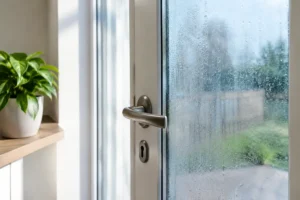
Inside, pay attention to the plastered reveal and ceiling line after prolonged rain. Peeling paint, brown water marks, bubbling plaster or a musty smell are signs to act on promptly. Condensation is different from a leak: it tends to form on the room-facing glass surface when warm, moisture-rich air meets cold glazing. A leak is more likely to create localised staining or dampness around a joint.
Modern thermally broken aluminium frames and efficient double or triple glazing reduce the risk of internal condensation, but household humidity still matters. Use extractor fans when cooking, keep lids on pans where practical and ventilate bathrooms properly. If condensation is frequent, review ventilation before assuming there is a fault with the roof lantern.
Treat condensation and leaks differently
This distinction can save time and expense. Light condensation on the internal glass on a cold morning can be normal, especially in a newly plastered extension or a busy family kitchen. Improve airflow, keep indoor humidity under control and wipe any moisture from accessible surfaces.
Water between the panes, recurring drips from one particular point, or moisture appearing after rain is not a normal condensation issue. Take photographs, note the weather conditions and arrange an inspection. Do not apply sealant over the outside of the frame as a quick fix. It Can trap water, conceal the true cause and affect any applicable warranty.
Seasonal care for a brighter home
Spring is a good time to wash away winter grime, clear debris and assess any storm damage. Summer makes it easier to notice whether solar-control glass and blinds are helping you manage heat and glare in a south-facing room. If blinds are fitted, dust them regularly and operate them gently to avoid strain on cords, tracks or motors.
In autumn, clear fallen leaves before they build up around the roof perimeter. Winter calls for observation rather than risky outdoor cleaning. Watch for condensation, check for signs of water ingress after heavy rain and avoid attempting to remove snow or ice from the glazing. Tools and concentrated pressure can damage the glass, seals or frame.
If building work is planned nearby, protect the lantern from cement dust, paint overspray and welding or grinding debris. These materials can permanently mark glass and powder-coated aluminium. Covering the lantern temporarily may be appropriate, but only with a breathable material installed so that it cannot trap moisture or scratch the surface in the wind.
When to call a professional
Routine cleaning is suitable for many homeowners, provided access is safe. Professional advice is worthwhile if you see cracked glass, failed sealed units, frame movement, loose external cappings, damaged seals, repeat leaks or persistent water pooling around the base. It is also the right choice when access requires ladders, roof work or specialist safety equipment.
Keep copies of your installation paperwork, warranty details and any maintenance records. This makes it easier to identify the glazing specification and gives a surveyor or installer useful context if a problem develops. If your roof lantern is part of a recent extension, any remedial work should be carried out with care for the roof membrane, insulation and Building Regulations-compliant construction around it.
A well-specified aluminium roof lantern should deliver years of natural light with little effort. Regular, gentle cleaning and sensible checks are all most homes need. If something looks wrong, dealing with it early keeps your room bright, dry and comfortable – and protects the finish that made the extension feel special in the first place.