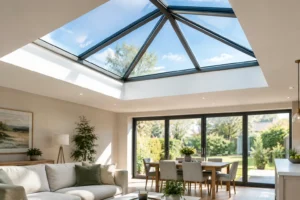
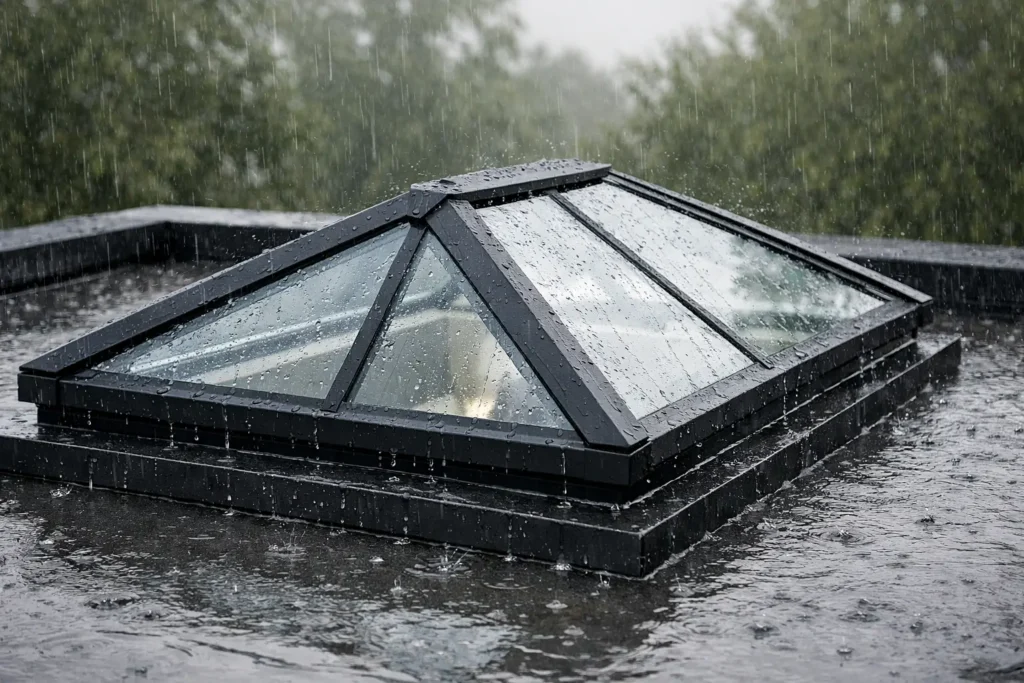
A roof lantern should make a kitchen extension feel brighter, taller and more connected to the garden – not leave you watching the ceiling every time heavy rain arrives. So, are roof lanterns watertight? A well-designed, correctly specified and professionally installed roof lantern is made to be fully weatherproof. The important qualification is that watertight performance depends on the complete installation, not simply the lantern frame or glass.
A quality aluminium roof lantern uses purpose-designed glazing seals, drainage channels, pressure plates and flashings to direct rainwater away from the roof opening. When those details are correctly matched to the roof build-up, it can provide years of reliable protection in British weather.
Are roof lanterns watertight in heavy rain?
Yes. A properly installed roof lantern is designed to withstand normal and heavy rainfall, including wind-driven rain. Its weather resistance comes from several layers working together rather than a single seal around the glass.
The glass units are seated on durable gaskets, while external caps and pressure plates hold them securely in position. The aluminium frame is engineered with internal drainage routes so any water reaching the outer weather seal is channelled safely to the outside. At the base, the lantern must be integrated with the flat roof covering using an appropriate upstand and flashing detail.
This layered approach matters. No exposed glazing system should rely on one bead of sealant to keep water out. Sealant has a role, particularly at carefully defined junctions, but the frame, drainage design and roof detailing should do the main work.
Wind can expose weaknesses that are not obvious during a light shower. Rain may be forced against joints, collect around the base of the lantern or travel beneath poorly finished roof membranes. This is why a tested system and experienced installation are worth prioritising over a lantern chosen on appearance alone.
What makes a roof lantern weatherproof?
A roof lantern sits above the roof line, so it has to manage rainwater from every direction. The following elements determine whether it remains dry inside.
A correctly formed roof upstand
The upstand is the raised kerb that the roof lantern sits on. It creates a secure, level base above the roof surface and gives the roof covering a vertical face to dress against. This prevents standing water from reaching the glazing system at roof level.
The precise height and construction required will depend on the lantern system and the type of flat roof covering, such as EPDM, GRP fibreglass or felt. The roof should fall away from the upstand so water drains freely towards outlets rather than pooling beside the lantern.
A poorly constructed upstand is one of the most common causes of a leak incorrectly blamed on the roof lantern itself. Even an excellent aluminium system cannot compensate for a roof membrane that has not been properly dressed, bonded or sealed at the kerb.
Engineered glazing seals and drainage
Roof lanterns use specialist gaskets to seal the glazing where it meets the frame. Better systems are designed with separate internal and external sealing lines, helping to control water before it can reach the internal structure.
Drainage channels within the frame collect any moisture that gets past the outermost seal and lead it outside through concealed routes. This is a normal part of weatherproof design, not a sign that the product is failing. It is also why drilled holes, blocked drainage paths or inappropriate sealant repairs can create problems later.
The right roof pitch
Most roof lanterns are designed for installation at a minimum pitch. The angled panes encourage water to run off the glass, reducing the likelihood of pooling around glazing bars and seals. A lantern with a shallow pitch may look contemporary, but it must still meet the manufacturer’s requirements for drainage and weather performance.
The ideal pitch will vary by system, size and roof design. Larger lanterns, complex configurations and exposed locations may need particularly careful specification. Your survey should account for the roof layout, prevailing weather and the position of gutters, parapets and drainage outlets.
Strong aluminium construction
Aluminium is particularly well suited to roof lanterns because it is strong, lightweight and resistant to corrosion. Its strength supports large glazed areas and slim sightlines without relying on bulky frame sections that can interrupt the view of the sky.
A thermally broken aluminium frame also helps limit heat transfer between the exterior and interior. Combined with energy-efficient double or triple glazing, this supports a more comfortable room in winter and helps manage solar gain when the right glass specification is selected.
Roof lantern leaks: where does the water usually come from?
When water appears beneath a roof lantern, homeowners understandably assume the glass or frame is leaking. Sometimes that is the cause, but it is not the only possibility. Pinpointing the source before attempting a repair is essential.
Leaks can develop at the roof covering around the upstand, at corners where the membrane has been stretched or poorly sealed, or at flashings that have lifted over time. Water can also travel some distance along timber, insulation or the underside of a roof deck before becoming visible indoors. The drip point is not always the entry point.
Failed glazing seals, damaged gaskets and loose pressure caps can also allow water through, especially after years of exposure. On older systems, sealants may have cracked or degraded. A blocked drainage route can cause water to back up within the frame, while an incorrectly fitted lantern may lack the necessary mechanical fixing, packing or alignment.
If a leak only appears in driving rain, the issue may be related to an external joint or flashing detail. If it occurs after prolonged rain, standing water, inadequate roof falls or overwhelmed drainage may be involved. These patterns give a specialist useful clues, but the roof and lantern should be inspected as one assembly.
Condensation is not the same as a leak
Water droplets on the inside of roof lantern glass do not automatically mean the lantern is letting rain in. Condensation forms when warm, moisture-laden indoor air meets a cooler surface. Kitchens, open-plan living areas and newly plastered extensions are especially prone to it.
Modern glazing and thermally broken frames reduce the risk, but no glazed product can remove moisture from the air. Consistent background heating, extractor fans, trickle ventilation where appropriate and everyday ventilation all help. If moisture is forming between panes of glass, however, the sealed unit may have failed and should be assessed.
The timing also matters. Condensation tends to be most noticeable on cold mornings and may appear across the glass. A rainwater leak is more likely to follow wet weather, concentrate around a joint or leave staining on the surrounding plasterboard and finishes.
How to choose a roof lantern that will stay watertight
Start with a system designed specifically for flat roofs, rather than adapting general glazing components for an overhead installation. Ask how the lantern manages drainage, what glazing thicknesses it accepts and what minimum pitch it requires. The answers should be clear and supported by the system’s technical specification.
Glazing choice should be considered alongside weatherproofing. Toughened safety glass is commonly used for outer panes, while laminated inner panes can offer added safety because the glass remains held together if broken. Solar-control glass can be valuable for south-facing extensions, helping to reduce overheating and glare without losing the benefit of natural light.
Installation quality deserves equal attention. A survey should confirm the structural opening, roof build-up, upstand dimensions, roof falls and safe access. The fitting team should protect the roof membrane, use the specified fixings and complete compatible flashing details. Building Regulations may also apply, particularly for thermal performance, structural safety and replacement work.
For homeowners choosing a supply-only route, close coordination between the roof contractor, builder and glazing supplier is essential. Every party needs the approved dimensions and installation requirements before work begins. A roof lantern cannot be safely treated as the final decorative item added after the roof has already been built.
Simple maintenance that protects performance
Aluminium roof lanterns require relatively little maintenance, but a small amount of attention helps preserve their weather resistance. Clean the glass and frame with mild soapy water and a soft cloth. Avoid abrasive pads, strong solvents and pressure washers aimed directly at joints or caps.
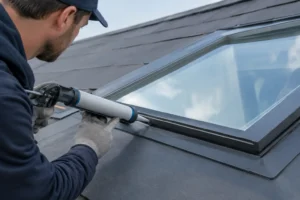
Twice a year, check that leaves and debris are not collecting around the lantern base or blocking nearby roof outlets. Look for damaged roof covering, lifted flashings, cracked sealant and any signs of staining indoors. Do not add extra sealant to drainage holes or frame joints unless a specialist has identified that as the correct repair – it can trap water instead of solving the problem.
If your extension is being planned, choose the lantern and roof detailing together. Smarts Bifold Doors can help homeowners specify bespoke aluminium glazing that brings in generous daylight while keeping the practical demands of a UK flat roof firmly in view. The best roof lantern is not simply the one that looks right from the garden; it is the one that is properly engineered, correctly installed and still performing when the weather turns.