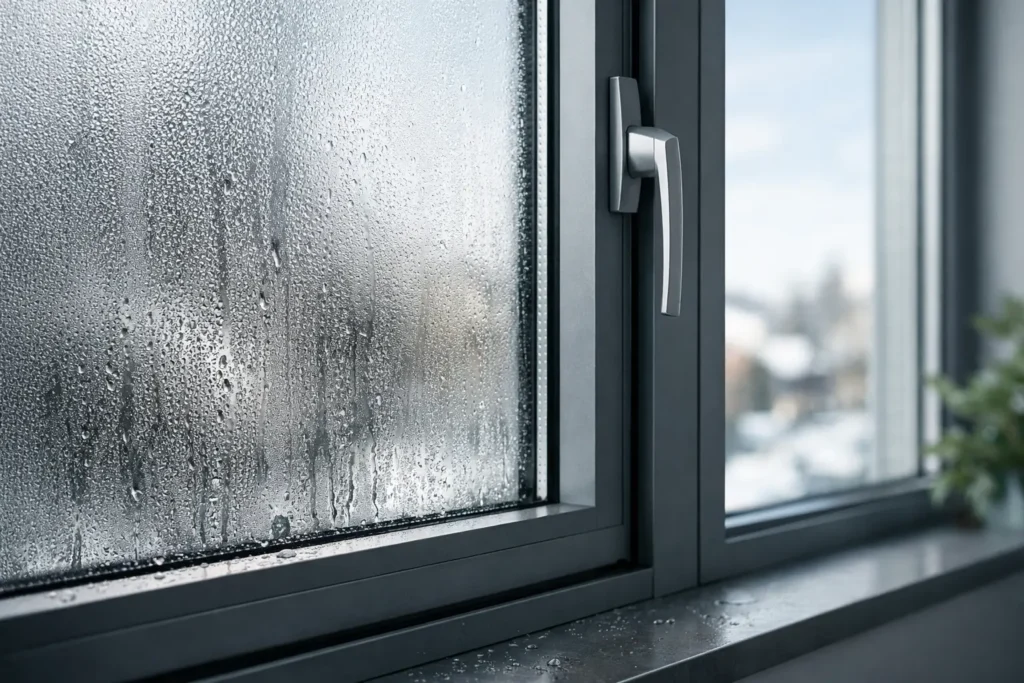
Waking up to water running down the inside of a bedroom window is more than an irritation. Left untreated, it can spoil paintwork, encourage mould around reveals and make a well-kept home feel cold. So, can aluminium windows reduce condensation? Yes, when they are a modern thermally broken system with efficient glazing and are specified properly for the room.
The key point is that aluminium alone is not the answer. Older aluminium frames could become very cold in winter, creating an easy surface for moisture in the air to settle on. Modern aluminium windows are engineered very differently. They use insulated thermal breaks, quality seals and high-performance glass to keep the internal frame and glass warmer, making condensation less likely.
Why condensation forms on windows
Condensation appears when warm, moisture-laden air meets a surface that is colder than the air’s dew point. In a typical UK home, that moisture comes from everyday living: showers, cooking, drying clothes indoors, pets and even breathing overnight.
Windows are often the first place it becomes visible because glass and frames can be cooler than surrounding walls. A single night of poor ventilation in a busy household can be enough to leave droplets on the glass by morning.
There are three different types to recognise. Internal condensation forms on the room-facing side of the glass or frame. External condensation sits on the outside pane, usually early in the morning. Condensation between the panes means the sealed unit has failed and needs attention.
External condensation is not normally a defect. It can be a sign that high-performance glazing is retaining heat inside the house, leaving the outer pane cool enough for moisture in the outdoor air to settle. Internal condensation, however, is the issue most homeowners want to reduce.
Can aluminium windows reduce condensation in practice?
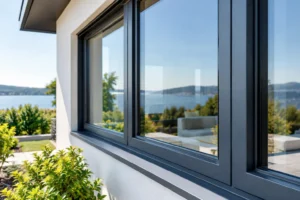
Modern aluminium windows can make a genuine difference because they reduce the cold surfaces that trigger internal condensation. A thermally broken aluminium profile separates the inner and outer sections of the frame with an insulating polyamide barrier. This limits the transfer of heat through the metal, helping the inside face of the frame remain closer to room temperature.
Pair that frame with energy-efficient double or triple glazing, and the inner pane is also warmer than it would be with older units. Warmer internal surfaces mean there is less opportunity for airborne moisture to turn into water droplets.
Systems such as Smarts Alitherm 400 Windows are designed around this principle. They combine the slim, contemporary appearance homeowners expect from aluminium with thermal performance suited to modern refurbishment and extension projects. The result is a window that can improve comfort, reduce cold spots and support a more consistent internal temperature.
That said, even the best replacement windows cannot remove excessive humidity from a home. If washing is dried on radiators, extractor fans are not used, or trickle vents remain permanently closed, moisture still has to go somewhere. Efficient windows are part of the solution, not a substitute for sensible ventilation.
The details that make the biggest difference
A proper thermal break
This is the feature that separates modern aluminium from the aluminium windows many people remember from decades ago. Without a thermal break, metal conducts heat rapidly and the inside frame can become cold. With one, the profile performs much more like an insulated building component.
When comparing quotations, ask about the window system rather than assuming every aluminium frame offers the same performance. The profile design, glazing options and installation method all affect the final result.
The right glazing specification
Low-emissivity glass has a transparent coating that reflects warmth back into the room, while the cavity between panes is filled with an insulating gas. Together, these features improve the window’s U-value and help maintain a warmer inner pane.
Triple glazing can offer further gains in some properties, particularly exposed homes or rooms with large areas of glass. However, it is not automatically the best choice for every project. The frame must be designed to accept it, the overall budget needs to allow for it, and a good double-glazed unit in a high-quality thermally broken frame may already provide excellent results.
Warm-edge spacer bars also matter. These sit around the edge of the sealed glass unit and reduce the risk of a cold perimeter where condensation often starts.
Professional fitting and airtight detailing
A good window can underperform if it is poorly fitted. Gaps around the frame, inadequate insulation at the reveal or badly finished seals can create draughts and cold bridges. These areas may then attract condensation, even where the glazing itself performs well.
Professional installation ensures the frame is correctly packed, secured, sealed and finished in line with the property and current Building Regulations. For supply-only projects, it is worth making sure the installer understands aluminium systems and follows the manufacturer’s fitting guidance precisely.
Ventilation that works with your home
Replacement windows should help you retain warmth, but a home also needs controlled fresh air. Trickle vents, where required, provide background ventilation without leaving a window open. Kitchen and bathroom extractors should be used during and after cooking or showering, then allowed to run long enough to clear lingering moisture.
In bedrooms, opening windows briefly in the morning can help reduce overnight humidity. Keeping internal doors closed while showering or cooking also stops moist air travelling straight into cooler rooms.
Aluminium versus uPVC for condensation control
Both well-made uPVC and aluminium windows can reduce internal condensation when they use efficient glazing and are properly installed. The material alone should not be the deciding factor.
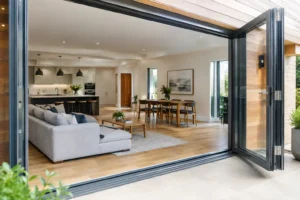
Aluminium offers particular advantages for homeowners who want slimmer frames, larger glazed areas and a crisp architectural finish. This can be especially valuable in extensions, contemporary renovations and properties where windows sit alongside aluminium bifold or sliding doors. Products such as Cortizo Casement Windows and Schuco AWS80SC Casement Windows can create a coordinated look while delivering strong thermal performance.
uPVC may have a lower initial cost and naturally insulates well due to its multi-chamber profile. Aluminium, meanwhile, provides excellent strength and durability, allowing more glass and less visible frame. For either material, look at the whole-window performance, not just the centre-pane glass value. A window’s U-value, air permeability, glazing specification and fitting quality provide a more meaningful comparison.
Signs your current windows are contributing to the problem
Persistent water on the internal glass during colder weather may point to inefficient windows, but it is useful to look for the wider pattern. Cold frames, draughts, black mould around reveals, peeling wallpaper and moisture concentrated at the edges of the glazing can all suggest weak thermal performance or air leakage.
If condensation is limited to one room, the cause may be more about how that room is used. Bedrooms with closed doors overnight, kitchens without effective extraction and conservatories with poor heating control are common examples. If it occurs throughout the house, consider both ventilation habits and the age or condition of the existing windows.
Condensation trapped between glass panes is different. It usually means the edge seal has failed, allowing moisture into the unit. Replacing the sealed unit may solve the problem if the frame remains sound, although older windows can make a full replacement the more sensible long-term investment.
Choosing aluminium windows for a warmer, drier home
Start with the room and the result you want to achieve. A north-facing bedroom, a kitchen extension and a large garden-facing living area may each need a slightly different approach. Consider the window orientation, the amount of glazing, the heating arrangement and whether the room generates extra moisture.
Choose a thermally broken aluminium system, specify efficient glazing appropriate to the opening, and do not overlook ventilation. Colour, handle finish and sightlines can be tailored to suit the property, but the performance specification deserves equal attention. A carefully designed aluminium window brings more than a contemporary appearance: it helps create a more comfortable room that is easier to enjoy through every season.
If condensation has become a regular problem, treat new windows as an opportunity to improve the whole room rather than simply replace the view. The right aluminium system, fitted properly and paired with practical moisture control, can help protect your home while keeping it bright, secure and beautifully connected to the outside.