A roof lantern can transform a dark kitchen extension into the brightest room in the house, but many homeowners ask: do roof lanterns lose heat? The honest answer is that any glazed area loses more heat than a fully insulated solid roof. However, a high-quality, correctly specified roof lantern is designed to keep that difference under control, delivering daylight and architectural impact without leaving the room feeling cold.
The result depends on the glass, the frame, the size of the lantern, its position and the quality of installation. Choose a modern aluminium system with a thermal break and energy-efficient glazing, and a roof lantern can be a practical, comfortable addition to an extension or refurbishment project.
Do roof lanterns lose heat compared with a solid roof?
Yes, in simple terms. A well-insulated solid roof will generally have a lower U-value than glazing, meaning it allows less heat to escape. This is why it would be misleading to suggest that fitting any roof lantern has no effect on a room’s heat loss.
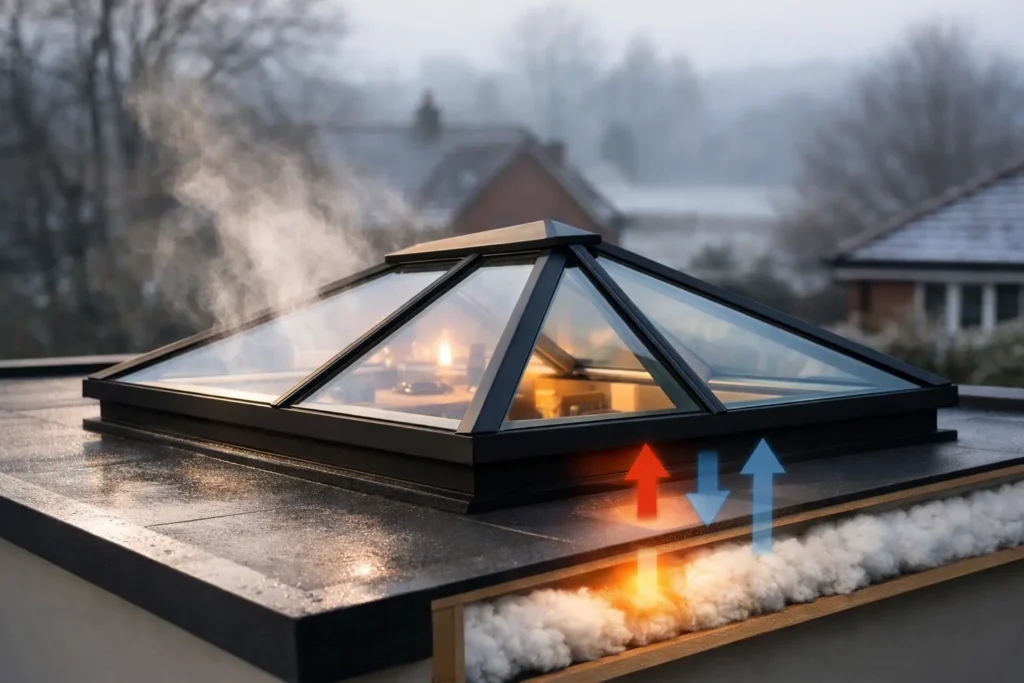
What matters is the scale of that effect. Older rooflights and poorly made glazed roofs could feel cold around the edges, particularly during a British winter. Modern roof lanterns are a very different proposition. They use insulated aluminium profiles, sealed double or triple glazing units and warm-edge spacer technology to reduce heat transfer through both the glass and the frame.
A roof lantern also occupies only part of the roof area. The surrounding flat roof should be properly insulated, so the overall thermal performance of the extension is assessed as a complete element rather than judged on the lantern alone.
For homeowners, the useful question is not simply whether a lantern loses heat. It is whether the proposed roof lantern achieves an appropriate U-value, complies with Building Regulations for the project and provides the comfort expected from a new living space. With the right specification, the answer can be yes.
Why modern roof lanterns perform better
The aluminium frame is central to performance. Aluminium is naturally strong, slim and durable, making it ideal for large panes of glass and clean sightlines. On its own, though, metal conducts heat. A modern thermally efficient roof lantern addresses this with a thermal break: an insulating material placed between the internal and external parts of the aluminium profile.
This barrier helps prevent the cold outside temperature from travelling directly through the frame and into the room. It also helps the internal frame surface remain warmer, reducing the conditions that can lead to internal condensation.
The glazing specification matters just as much. Energy-efficient units commonly include a low-emissivity coating, an insulating gas-filled cavity and spacer bars around the edge of the sealed unit. Together, these features reduce heat loss while allowing useful daylight into the room.
Triple glazing can offer an even lower U-value in some configurations, but it is not automatically the best choice for every roof lantern. It adds weight, can affect the available design options and may offer a smaller real-world improvement than expected if the rest of the roof, walls or doors are less efficient. A specialist should assess the whole project rather than treating one product feature as a cure-all.
Understanding U-values without the jargon
A U-value measures how quickly heat passes through a building element. Lower figures are better because they indicate lower heat loss. Roof lantern quotations may refer to the U-value of the glass, the frame or the complete product, so it is worth checking exactly what is being quoted.
The whole-product U-value is usually the most useful comparison. A very efficient glass unit does not tell the full story if a significant proportion of the lantern is frame, or if the frame has limited thermal insulation. Equally, a low figure on paper will not compensate for poor fitting around the roof opening.
Ask your supplier to explain the performance of the full roof lantern configuration you are considering. That includes the chosen size, glazing build-up and frame system, not a best-case figure from a different product arrangement.
Heat loss is only one part of comfort
A room can feel uncomfortable for reasons beyond heat escaping through the roof. Cold draughts, uneven temperatures, excessive solar gain and condensation all affect how an extension performs day to day.
A properly sealed roof lantern should not create draughts. Careful installation, suitable flashings and a well-prepared roof upstand are essential. The upstand is the raised section that the lantern sits on, and it needs to be insulated and built to the correct dimensions. This detail is easy to overlook, yet it has a direct effect on weatherproofing and thermal continuity.
During summer, a large overhead glazed area can admit significant sunlight. That is welcome on a cool spring morning, but an unshaded south-facing lantern may make a compact kitchen or orangery warmer than desired on bright days. Solar-control glass can reduce the amount of solar energy entering the room while retaining excellent natural light. Internal blinds may also help, although they are more effective for glare and privacy than stopping heat before it enters.
Orientation, room size and the amount of existing glazing should all inform the glass choice. An extension with wide bifold or sliding doors and a substantial roof lantern needs a balanced glazing strategy, not simply the clearest glass available.
Condensation: what is normal and what is not?
Condensation is often mistaken for a failed glazing unit, but the cause is usually moisture in the air meeting a cold surface. Kitchens, utility rooms and family spaces generate plenty of moisture through cooking, drying clothes and everyday living.
A thermally broken aluminium roof lantern with efficient glazing helps keep internal surfaces warmer, reducing the likelihood of condensation. Good ventilation remains important. Use extractor fans when cooking, keep background ventilation working as intended and avoid blocking airflow around the room.
External condensation on the outside of energy-efficient glass can sometimes appear on clear, still mornings. It happens because the outer pane becomes very cold as little internal heat reaches it. Although it can look concerning, it is often a sign that the glazing is insulating effectively.
Condensation between panes is different. This can indicate that a sealed unit has failed and should be investigated by the installer or supplier.
Choosing a roof lantern that will not compromise your extension
The best roof lantern is not necessarily the largest one or the one with the lowest advertised price. Look for a purpose-designed system with slim but strong aluminium rafters, a genuine thermal break and glazing selected for your room’s orientation and use.
It is also sensible to consider sightlines. A well-designed lantern has neat external caps and minimal internal framing, so the glass does the visual work. This allows daylight to spread deeper into the room and creates the open, contemporary ceiling feature that homeowners are looking for.
Colour is another practical choice. Anthracite grey, black and bespoke RAL finishes can coordinate with aluminium windows, patio doors or bifolds, creating a considered finish across the extension. The colour should be durable and suitable for external use, but it should never take priority over thermal performance and installation quality.
Installation matters as much as the product
Even a premium roof lantern can underperform if it is fitted onto an inadequate upstand, poorly sealed or connected to insulation incorrectly. The surrounding roof construction should be planned before the lantern arrives, particularly on a new extension where roof insulation, drainage and ceiling details need to work together.
For many projects, Building Regulations approval will be required. This provides useful reassurance that the extension is being assessed for areas including insulation, ventilation and structural safety. A competent installer or experienced supply partner can help ensure the product specification is appropriate for the opening and project requirements.
Smarts Bifold Doors supplies bespoke aluminium glazing solutions with thermally efficient specifications and can support homeowners who need full installation as well as those managing a supply-only project. The key is to finalise the lantern size, glazing and roof details together, rather than treating the lantern as a last-minute decorative extra.
A brighter room should still feel warm
A roof lantern is an investment in light, space and the way an extension feels throughout the day. While it will not insulate quite like a fully solid roof, a modern, thermally broken aluminium design with efficient glazing can provide excellent comfort when it is properly specified and installed.
Before choosing, ask for whole-product thermal information, discuss the room’s orientation and make sure the roof upstand and surrounding insulation are part of the conversation. That approach gives you the best chance of enjoying bright skies overhead without sacrificing the warmth and practicality your home needs.