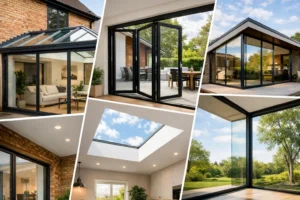
A low headline price can look attractive until you discover it excludes the glass specification, delivery, fitting, making good or the work needed to meet Building Regulations. Knowing how to compare glazing quotes properly helps you choose doors, windows or roof glazing that look right, perform well and stay within budget from the outset.
For a fair comparison, every supplier needs to be pricing the same product requirement. That sounds simple, but bespoke aluminium glazing can vary significantly in size, configuration, glass, hardware and installation scope. Two quotations for what appears to be the same three-panel bifold door may not be equivalent at all.
Start by comparing like for like
Before judging the totals, check that each quote refers to the same opening size and product type. Confirm whether measurements are based on a survey, architectural drawings or your own approximate dimensions. A quote based on estimated measurements is useful for budgeting, but it may change once a site survey confirms the finished opening.
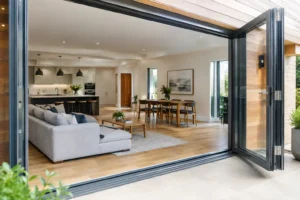
For bifold doors, compare the number of panels, the direction they fold, the location of the traffic door and whether the configuration opens in or out. For sliding doors, look at the number of tracks, panel arrangement and whether the quoted system supports the sightlines you want. A slim-frame system can transform the view into a garden, but it may carry a different cost from a standard system.
The same principle applies to windows and roof glazing. A fixed roof light, opening roof light and roof lantern are different products with different structural, ventilation and installation requirements. Do not assume that a quote for an apparently similar item provides the same finish or functionality.
How to compare glazing quotes beyond the price
The product specification should be clear enough for you to see exactly what you are buying. If a quotation only says “aluminium bifold doors” or “double glazing”, ask for the system, glass build-up and hardware to be confirmed in writing.
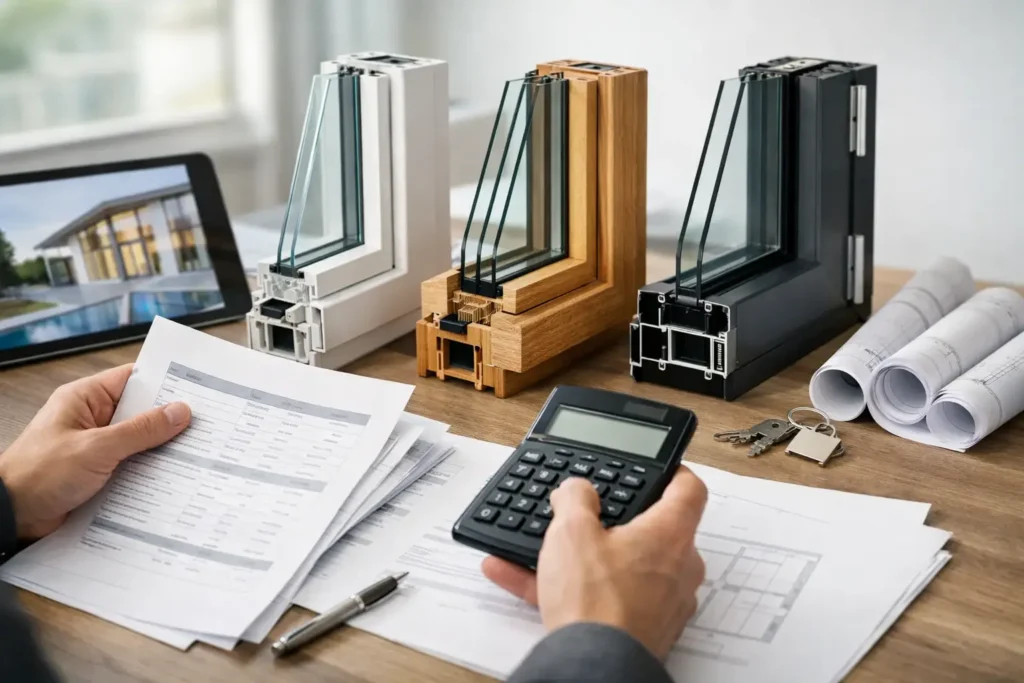
A quality quote for aluminium doors should identify the profile system, such as Smarts Visofold 1000 Bifold Doors or another named system, rather than relying on generic descriptions. The system affects frame depth, panel sizes, weather performance, security options and the finished appearance. It also gives you a meaningful basis for comparison.
Look closely at the following areas:
- Frame finish and colour: Check whether the price includes your chosen RAL colour inside and out, a dual colour finish, textured paint, marine-grade treatment where appropriate, and matching cills or trims.
- Glazing specification: Establish whether the quote includes double or triple glazing, toughened safety glass where required, low-emissivity coatings, warm-edge spacers, solar-control glass and obscured glass if needed.
- Thermal performance: Ask whether the stated U-value relates to the whole product or the centre of the glass only. Whole-door or whole-window U-values provide the more useful picture of installed performance.
- Hardware and security: Check handles, hinges, multi-point locking, cylinders, trickle vents, restrictors and any upgrade to premium hardware. Colour-matched handles are not always included as standard.
- Threshold and drainage details: A low threshold can improve garden access, but the correct detail depends on the internal floor level, external drainage and weather exposure. Make sure the quote identifies the proposed threshold.
Thermal performance deserves more than a quick comparison of numbers. Aluminium frames with a thermal break, combined with energy-efficient glazing, can help reduce heat loss while keeping the slim, contemporary appearance many homeowners want. However, the best choice depends on the rest of the property. A highly insulated extension with wide areas of south-facing glass may benefit from solar-control glass, while a shaded north-facing room may prioritise maximum daylight and insulation.
Check what installation actually includes
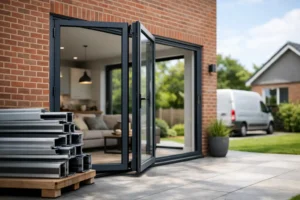
A supply-only quote and an installed quote should never be compared as though they are the same offer. Supply-only can be a sensible route for experienced renovators with a trusted builder or installer. It gives you control over the project programme, but you will need to manage measurement accuracy, delivery access, installation, glazing, sealing and any remedial work.
With a full installation quote, ask what happens before and after the doors or windows are fitted. Does the price include a detailed survey? Are old frames removed and disposed of? Is there allowance for lifting equipment, parking, protection to floors and access through the property? Large glazed panels can require specialist handling, particularly where access is limited.
Also clarify the finish around the frame. “Installation included” may mean the product is fixed, glazed and sealed externally, while plastering, decorating, internal trims, brickwork alterations and flooring remain outside the scope. That is not necessarily a problem, provided it is clear and you have budgeted for the other trades.
If your opening is not ready, find out what tolerances the installer requires. Aluminium doors need a sound, accurately formed structural opening. A discrepancy in the threshold level or a lintel that needs adjustment can add time and cost, even when the door itself has been priced correctly.
Include compliance, safety and certification in the decision
Glazing in a home extension or replacement project must meet relevant Building Regulations requirements. Your supplier or installer should be able to explain how the proposed products address thermal performance, safety glazing, ventilation and, where applicable, fire escape or critical-location requirements.
For replacement windows and doors, ask who will provide the compliance paperwork on completion and whether the installer is registered under a competent person scheme. For new extensions, your Building Control route may be different, so it is worth confirming responsibilities before ordering.
Safety glass is a frequent source of confusion. Doors, low-level glazing and areas close to doors often need toughened or laminated safety glass. If one quote includes it and another does not, the cheaper figure is not a saving – it is an incomplete specification. The same caution applies to trickle vents, which may be required depending on the project and ventilation strategy.
Read lead times, payment terms and warranties carefully
Bespoke glazing is made to order. Check the quoted lead time, but also ask when it starts: at deposit, after survey approval, after final drawings are signed off or when your opening is ready. This matters when coordinating builders, kitchens, plasterers and landscaping.
A shorter lead time is useful only if the supplier can deliver the agreed specification and has a clear process for resolving issues. Compare the payment schedule too. A detailed quotation should show whether VAT, delivery and installation are included, and when each payment falls due.
Warranties should be specific. Separate product, glass, hardware, powder-coating and installation cover may apply. Ask what is covered, for how long, whether accidental damage or adjustment visits are excluded, and who you contact if a problem appears after fitting. A meaningful warranty is supported by a company that can inspect, adjust and resolve an issue, not simply by a number printed on a document.
Use a simple quote comparison sheet
Create one page for each supplier and record the total price including VAT, product system, final dimensions, configuration, glass, colour, hardware, threshold, delivery, installation, compliance documentation, lead time and warranty. Add a separate line for exclusions and provisional sums.
This approach makes differences visible quickly. One supplier may be more expensive because it includes installation, upgraded solar-control glass and a full survey. Another may be the better choice if you genuinely need supply only and its specification is otherwise identical. The right answer depends on your project, not on which quote has the lowest number at the bottom.
If anything is unclear, ask the supplier to revise the quote rather than relying on a verbal promise. Clear written specifications protect both sides and make the ordering process more straightforward.
The best glazing quote is the one that gives you confidence before work begins: the right product for the opening, the performance your home needs, a defined installation scope and no avoidable surprises. When you are ready to move from estimates to a fully considered specification, Smarts Bifold Doors can help you shape a bespoke solution around your home, your style and the way you plan to use the space.