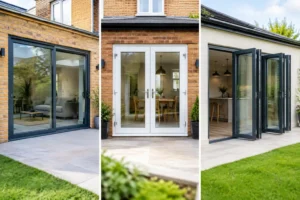

If you are comparing bifold doors and one quote shows 1.4 W/m2K while another shows 1.7, the cheaper option can quickly stop looking like the better deal. U value bifold doors explained in plain English really comes down to one thing – how well your doors keep heat inside your home.
That matters most in the rooms where bifolds are usually installed. Kitchen extensions, open-plan living spaces and garden rooms are all areas where you want plenty of glass without creating a cold spot in winter. A good-looking door should also work hard behind the scenes, helping your home feel comfortable and reducing heat loss through one of the largest glazed openings in the property.
What does U value mean on bifold doors?
A U-value measures how much heat passes through a building element. In this case, that element is your bifold door set. The lower the U-value, the better the thermal performance.
So if one bifold door has a U-value of 1.2 W/m2K and another is 1.6 W/m2K, the 1.2 option is better at slowing heat transfer. It is not a measure of how much sunlight comes in, how secure the doors are or how slim the frames look. It is specifically about insulation.
For homeowners, the practical question is simple. Will the doors help the room stay warmer in colder weather and more efficient to run? Lower U-values generally mean a better answer.
U value bifold doors explained without the jargon
Thermal performance figures can become confusing because there is more than one way to present them. Some brochures refer to centre-pane performance, others to whole-door U-values. The number that matters most is the whole-door figure, because it reflects the performance of the complete product – frame, glass, seals and all.
This is where comparisons can go wrong. A glazing unit might perform very well in isolation, but once it sits inside a larger aluminium frame the overall figure can change. That is why like-for-like comparisons matter. If you are choosing between systems such as Smarts Visofold 1000 Bifold Doors, Schuco ASFD75 Bifold doors or Cortizo Bifold Plus, you need to know whether the quoted U-value relates to the whole set and what configuration it is based on.
Door size, panel arrangement and threshold detail can all influence the final result. A headline figure is useful, but it is not the full story unless it reflects the exact design you are ordering.
What affects the U-value of a bifold door?
The frame material has a big influence. Aluminium is a strong, durable and low-maintenance choice for bifold doors, especially when you want slim sightlines and larger glazed panels. Years ago, aluminium had a reputation for being less thermally efficient than other materials, but modern systems use thermal breaks that significantly improve insulation. A well-designed aluminium bifold can now deliver very strong performance while keeping the contemporary look many homeowners want.
The glazing specification matters just as much. Double glazing is standard on most quality bifold doors, but the glass make-up can vary. Low-emissivity coatings, warm edge spacer bars and argon-filled cavities all help improve thermal efficiency. In some projects, triple glazing may be considered, although that comes with trade-offs in weight, cost and sometimes frame sightlines.
Seals and gaskets also play a part. Heat loss is not just about the glass itself. Air leakage around panels, poor weather seals or weak manufacturing tolerances can all reduce real-world performance. A bifold door should close tightly, operate smoothly and maintain a reliable seal across the entire opening.
Installation is another major factor. Even a high-performing door can underdeliver if it is poorly fitted. Gaps around the frame, inadequate packing or weak perimeter sealing will affect how the doors perform once installed in the home. That is one reason specialist advice is worth having, particularly on larger openings.
What is a good U-value for bifold doors?
For most UK homeowners, a lower U-value is better, but the right target depends on the project. If you are replacing older patio doors in an existing opening, modern bifold doors should offer a noticeable improvement in thermal performance. If you are building a new extension or working under current Building Regulations, compliance becomes a key part of the specification.
Broadly speaking, a bifold door with a whole-door U-value around 1.4 W/m2K is considered strong for many domestic applications, while figures closer to 1.2 W/m2K or lower indicate even better insulation. The exact threshold you need will depend on the type of project, the door system, the glass package and current regulations at the time of installation.
This is where product choice matters. Better-engineered systems can combine slim aluminium profiles with improved thermal breaks and high-performance glazing, giving you the clean modern look without compromising warmth more than necessary.
Why lower U-values are not the only thing to look at
It is easy to focus on one figure and assume the lowest number wins. In practice, choosing bifold doors is more balanced than that.
Very low U-values can come with thicker frames, heavier glass units or higher costs. That may be worthwhile in some homes, especially where energy efficiency is a top priority, but not every project needs the absolute lowest figure available. You may prefer a system that strikes a better balance between thermal performance, sightlines, configuration options and budget.
There is also the question of how the room will be used. A large south-facing kitchen extension with good solar gain may feel different from a shaded rear elevation in a period property. The heating system, insulation levels elsewhere in the room and ventilation strategy all affect comfort. Bifold doors are one part of the building envelope, not the whole answer on their own.
How to compare bifold door quotes properly
When you request prices, ask what the stated U-value actually refers to. Is it a whole-door figure? What size and panel configuration was tested or calculated? Does it include the glazing specification in your quote?
You should also check whether the door is being offered as a standard product or a made-to-measure system with options that change performance. Different colours, cills, thresholds and glass choices can all be part of a bespoke order, but they should be considered alongside thermal efficiency rather than after it.
For example, a supply-only buyer who is confident managing their own project may focus on specification details from the outset, while a homeowner using a full installation service may want more guidance on the practical trade-offs. Both approaches are valid, but clarity is essential. The goal is to understand what you are paying for and what level of performance you can expect once the doors are in place.
Do bifold doors lose more heat than windows?
Because bifold doors usually create a much larger opening than a standard window, they naturally play a bigger role in the thermal performance of the room. That does not mean they are a poor choice. It means specification matters more.
A well-made aluminium bifold with quality glazing and proper installation can perform very effectively in a modern home. If you are trying to maximise natural light and garden access, bifolds remain a strong option. The key is choosing a system designed to meet current expectations for insulation, security and durability, rather than treating doors as a purely visual upgrade.
If maximum thermal performance is the main priority, some homeowners also compare bifolds with sliding doors, such as a Smarts Visoglide Plus sliding door or Schuco ASE80 Sliding Door. Sliding systems can offer excellent thermal values too, and in some layouts they may be the better fit. It depends on how you want the opening to function day to day.
The best approach for UK homeowners
The most sensible way to think about U-values is not as a marketing number, but as part of a wider decision. You want doors that look right, feel secure, comply with regulations and help the room stay comfortable throughout the year.
That is why expert guidance makes a difference. A specialist can help you weigh up the frame style, glazing package, panel configuration and threshold detail against the needs of your home. In some cases, a system like Smarts Visofold 6000 Bifold Doors may suit the brief. In others, a different aluminium bifold or even a sliding door will be the better answer.
The right choice is the one that delivers the appearance you want with thermal performance you can rely on – not just on paper, but in everyday use. If you are investing in a brighter, more open living space, it pays to ask the extra questions now so the finished room feels as good in January as it does in July.
A good bifold door should do more than open up your home. It should help make that new space comfortable, efficient and enjoyable every day.