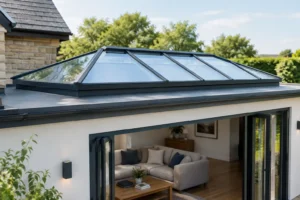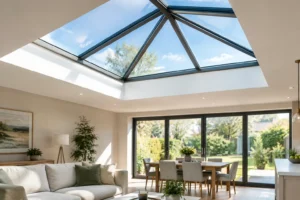
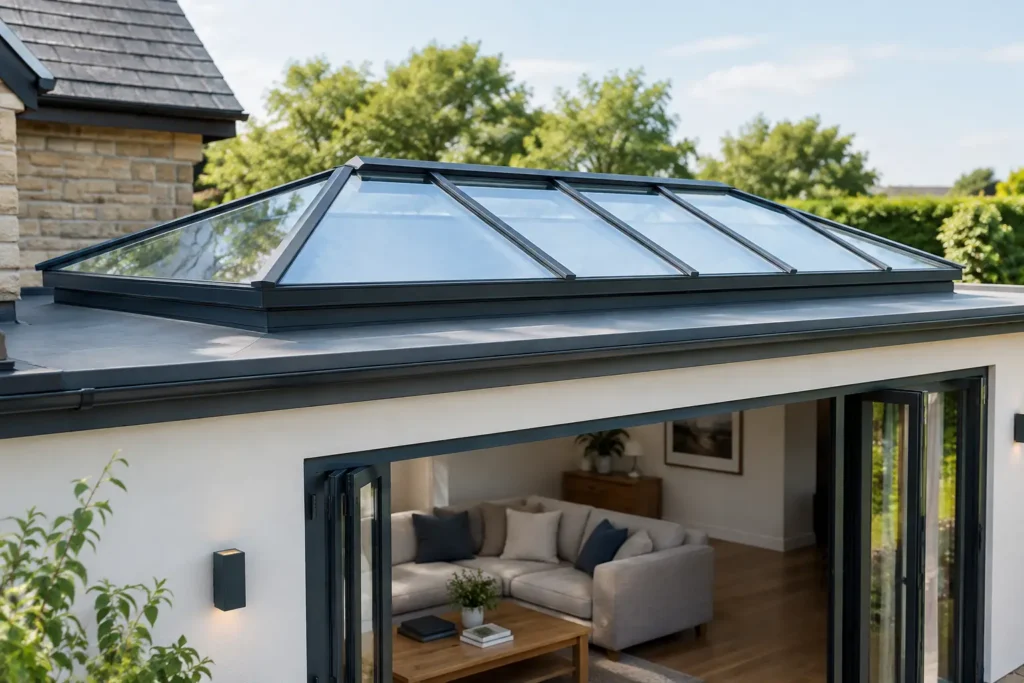
A roof lantern should make a kitchen extension feel brighter and more open, not leave you worrying that you have added a weak point above your head. So, are roof lanterns secure? A quality aluminium roof lantern, correctly specified and professionally installed, is a highly secure form of roof glazing. Its security comes from the combined performance of the glass, frame, roof kerb, fixing method and installation quality – not from one feature alone.
For a homeowner planning a flat-roof extension, replacement orangery roof or contemporary garden room, understanding those details makes it much easier to compare products with confidence.
Are roof lanterns secure against break-ins?
Yes, provided the lantern uses the right glazing and is installed as a complete, properly engineered system. Unlike a side window or patio door, a roof lantern is difficult to reach quickly and discreetly from ground level. That natural position is an advantage, but it should never be relied on as the only security measure.
A well-made roof lantern has a strong aluminium structure, securely retained glazing and a fixing arrangement that ties the unit firmly into the roof upstand or kerb. This makes it far more difficult to lift, force or remove than an older, poorly fitted glazed roof system.
The key point is that security is designed into the full assembly. An attractive lantern with good glass can still be compromised by an inadequate kerb, unsuitable fixings or poor weatherproofing around the perimeter. That is why a bespoke survey and correct installation matter just as much as the product specification.
The glass is your first line of defence
Glazing is usually the first concern for homeowners, and rightly so. Roof lanterns should use safety glass suitable for overhead applications. Depending on the design and glass build-up, this may include toughened glass, laminated glass or a combination of both.
Toughened glass is heat-treated to improve its strength. It is significantly stronger than ordinary glass and, if it breaks, it is designed to break into small, less hazardous fragments. Laminated glass comprises two panes bonded with an interlayer. If damaged, the interlayer helps hold the broken glass in place rather than allowing an immediate opening through the roof.
For security-conscious projects, laminated inner panes are particularly valuable. They add resistance to forced entry and provide additional reassurance if the glass is struck. The precise specification should also take account of the lantern size, roof position, local exposure and the Building Regulations requirements for the installation.
Why double glazing is not automatically security glazing
A double-glazed unit improves insulation, but the number of panes alone does not tell you how resistant it is to attack. The type, thickness and safety classification of each pane matter. A standard insulated glass unit may be suitable in some situations, while a laminated safety glass specification offers greater protection where security and overhead safety are priorities.
It is worth asking exactly what glass is included in a quotation. A specialist should be able to explain the make-up in plain English, including whether the inner or outer pane is toughened or laminated, rather than simply describing it as ‘double glazed’.
Strong aluminium frames help keep the glass in place
Aluminium is an excellent material for roof lantern frames because it combines strength with slim sightlines. It allows larger glazed areas and refined roof profiles without relying on bulky supports. More importantly for security, aluminium does not swell, warp or soften in the way some materials can over time.
A purpose-designed aluminium roof lantern uses interconnected rafters, ridge sections and perimeter members to support the glazing and manage loads across the structure. The glass is held in dedicated glazing channels with secure beads, gaskets and pressure plates, rather than being simply placed on top of a frame.
This construction helps prevent the panes being lifted or pushed out from outside. It also supports long-term performance through changing temperatures, wind and rain. Thermal breaks within quality aluminium systems reduce heat transfer through the frame, helping create a warmer extension without compromising the strength of the structure.
Secure fixings and the roof kerb matter more than many people realise
The roof lantern itself is only one part of the installation. It sits on a raised kerb or upstand, which must be structurally sound, level and correctly waterproofed. The lantern is then mechanically fixed to this base in line with the manufacturer’s requirements.
If the kerb is poorly constructed or the lantern is fixed at the wrong centres, the product may not perform as intended. That could affect security, weather resistance and the long-term condition of the roof covering. It can also lead to leaks that make a secure home feel anything but protected.
A professional installation team will check that the opening dimensions are correct, that the roof deck and upstand are suitable, and that the lantern is fitted squarely before completing the external weathering details. These are not cosmetic finishing steps. They are essential to keeping the structure secure and watertight.
Opening roof lanterns need an extra check
Most fixed roof lanterns have no opening sections, which removes a potential entry route. If you choose a rooflight or lantern arrangement with opening vents for ventilation, the opening mechanism should be considered separately.
Look for secure locking where applicable, protected hinges and controls positioned out of reach. Automated vents should close properly, and rain sensors can be useful for avoiding an open rooflight being left exposed during a shower. Security is not just about resisting force – it also includes preventing accidental opportunities.
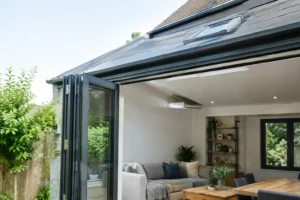
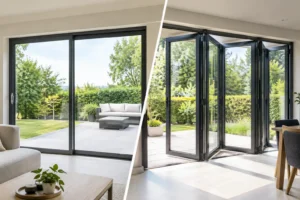
For many kitchen extensions, fixed roof lanterns provide all the daylight benefits homeowners want, while opening windows, bifold doors or sliding doors provide controlled ventilation at ground level. The best layout depends on the room, how it is used and how much airflow is required in warmer weather.
Security and energy efficiency should work together
Homeowners should not have to choose between a brighter room, lower heat loss and peace of mind. A well-specified aluminium roof lantern can deliver all three. Thermally broken aluminium frames and energy-efficient glazing help limit heat transfer, while safety glass and engineered fixings protect the opening.
The trade-off is usually cost. Higher-performance glazing, laminated panes and larger bespoke lanterns can increase the initial price, but they are often sensible investments in a prominent part of an extension. The cheapest option may save money at the outset, yet offer less clarity on glass specification, frame construction, fitting standards and warranty support.
A roof lantern should also be proportioned correctly for the space. Oversizing the glass area without considering orientation, shading and glazing performance may create unwanted solar gain in summer or make the room harder to regulate. Good design balances light levels with comfort, security and privacy.
What to ask before ordering a roof lantern
Before committing to a design, ask your supplier about the safety glass specification, the frame material and thermal break, the fixing method, and who is responsible for fitting and weathering the unit into the roof. You should also confirm that the proposed installation will meet relevant Building Regulations requirements.
If you are managing your own build, supply-only can be a practical option, but the installer must be experienced with roof glazing systems and flat-roof detailing. For homeowners who want one accountable team from measuring through to completion, a full survey and installation service offers welcome reassurance.
At Smarts Bifold Doors, roof lanterns are specified around the property and project rather than treated as a one-size-fits-all addition. That means considering the roof structure, desired dimensions, glazing choice and the finish that will sit naturally alongside your windows, bifold doors or sliding doors.
Signs your existing roof lantern may need attention
Modern roof lanterns are designed to be durable, but older installations can benefit from inspection. Persistent condensation between panes, damaged seals, loose-looking glazing beads, water ingress, visible frame movement or cracks in the glass should be assessed promptly. These issues do not always mean the whole lantern needs replacing, but they should not be ignored.
It is also sensible to keep the external channels and surrounding roof area clear of leaves and debris. This helps rainwater drain as intended and makes it easier to spot any deterioration in the roof finish around the kerb.
The right roof lantern should give you the freedom to enjoy a lighter, more contemporary room without second-guessing its performance. Choose a properly engineered aluminium system, specify appropriate safety glazing and make installation quality non-negotiable – then your new view of the sky can feel every bit as secure as it looks.