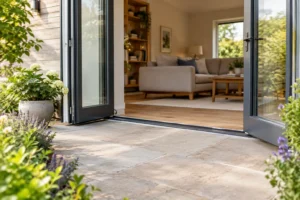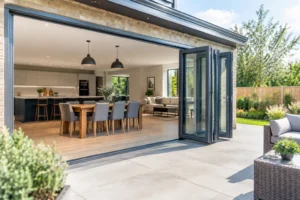

A kitchen that feels too narrow, too dark or cut off from the garden can hold back the whole house. A well-planned kitchen extension bifold transformation changes that quickly. It opens the rear elevation, brings in far more daylight and turns the kitchen into a space that feels bigger, brighter and easier to live in every day.
For many homeowners, the real appeal is not simply replacing a wall with glass. It is changing how the room works. Breakfast by the garden instead of under artificial light. Better sightlines across the extension. A stronger connection between kitchen, dining area and patio. Done properly, bifold doors do far more than look modern – they improve movement, light and the overall feel of the home.
Why a kitchen extension bifold transformation works so well
Kitchens are often the busiest rooms in the house, but older layouts rarely make the most of natural light or outdoor access. Rear extensions solve part of that problem by adding floor area, yet the glazing choice has a major effect on the result. This is where bifold doors stand out.
Because the panels fold away to one or both sides, they can create a wide clear opening that standard French doors or many patio door setups simply cannot match. That matters in a kitchen extension, where the aim is often to make the new space feel less like an add-on and more like a proper link between house and garden.
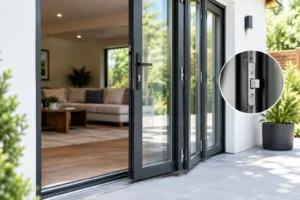
There is also a visual benefit when the doors are closed. Slim aluminium frames and large glazed panels help keep views open and bring in a generous amount of daylight, especially across the back of the property. In practical terms, that can make the extension feel more spacious throughout the year, not just in summer.
Start with the opening, not just the doors
One of the most common mistakes in a kitchen extension bifold transformation is choosing the door system before thinking properly about the opening size, room layout and furniture placement. The best results usually come from designing the whole rear wall with the doors in mind.
A very wide opening can look impressive, but it needs to work with the way you use the kitchen. If a run of cabinets, a dining table or an island interrupts the circulation route, the space may not feel as practical as it looks on paper. Equally, if you create too small an opening, you may miss the full impact that bifolds can deliver.
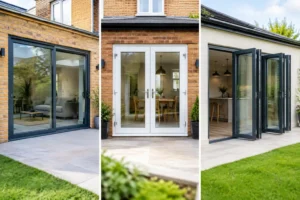
This is why panel configuration matters. A three-panel layout may suit a modest extension, while four, five or six panels can work well across wider spans. Traffic door options are also worth considering. They allow everyday garden access without folding the full set back, which is useful in colder weather or when you simply want to step outside quickly.
Bifold doors and light in a kitchen extension
Natural light is usually one of the main reasons homeowners build an extension in the first place. Bifold doors support that goal, but they work best as part of a bigger glazing plan.
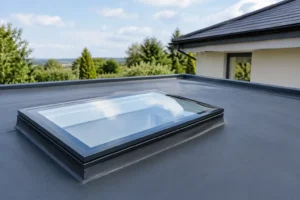
If your extension has a deep footprint, the rear doors alone may not carry enough light into the original part of the house. In that case, combining bifold doors with a roof lantern or flat roof light often gives a stronger result. Rear glazing brings light horizontally, while roof glazing draws it down into the centre of the room. Together, they can transform a once-dark kitchen into a far more balanced and usable space.
Frame colour also plays a part. Anthracite grey remains a popular choice for contemporary extensions because it gives definition without overpowering the glass. Black can create a stronger architectural look, while lighter tones may suit softer or more traditional schemes. The right finish depends on the style of the property, the interior palette and how bold you want the rear elevation to feel.
Choosing the right aluminium bifold system
Not every bifold door is right for every extension. The best choice depends on opening width, desired sightlines, threshold requirements, thermal targets and budget.
For many residential projects, systems such as Smarts Visofold 1000 Bifold Doors offer a strong balance of style, durability and everyday practicality. For homeowners who want another level of specification or a particular aesthetic, products such as Schuco ASFD75 Bifold doors, ASFD90.Hi Bifold Doors or Origin OB49 Bifold Doors may be worth considering.
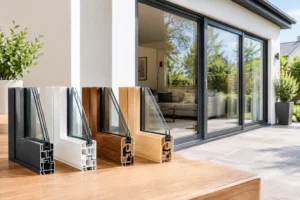
The material itself is a major part of the appeal. Aluminium is strong, stable and well suited to larger glazed panels. It also offers a clean, slim-frame appearance that works particularly well in modern kitchen extensions. Crucially, modern aluminium systems with a thermal break and energy efficient glazing can provide the thermal performance homeowners now expect, without sacrificing the contemporary look that makes bifolds so attractive.
Security should not be treated as an afterthought either. A good quality bifold system should include dependable locking, solid hardware and glazing that supports a secure overall specification. For ground floor extensions opening directly onto the garden, that reassurance matters.
The trade-offs: bifolds versus sliding doors
Bifold doors are not always the only answer, and a good supplier should say so. If your priority is the largest possible glazed area with minimal visible frame, sliding doors can be very appealing. Systems such as the Smarts Visoglide Plus sliding door or Cortizo COR Vision Sliding Door can offer broader uninterrupted panes and very clean sightlines when closed.
The difference is in the opening style. Sliding doors leave some of the aperture covered because the panels slide behind each other. Bifolds, by contrast, can stack back and open much more of the width. If you want the kitchen and patio to feel almost fully connected during warm weather, bifolds often win. If you care more about uninterrupted views in winter and on everyday closed-door use, high-end sliders may deserve a closer look.
It depends on how you live. Families who entertain outdoors frequently may prefer bifolds. Homeowners focused on fixed views and minimal framing may lean towards sliding doors instead.
Thresholds, flooring and everyday use
The details at floor level can make or break the finished result. In a kitchen extension, most homeowners want a threshold that feels as low and unobtrusive as possible, especially if they are aiming for level access to the patio.
That needs careful planning. A flush internal-to-external finish can look excellent, but it must still manage drainage properly and comply with Building Regulations. External ground levels, patio build-up and the internal floor construction all need to be coordinated early. Leaving this until late in the project often leads to compromise.
Flooring choice is equally important. Large-format porcelain tiles are popular because they work well visually with aluminium bifolds and can continue out onto the terrace for a more unified look. The key is to avoid focusing only on the doors themselves. The best transformations come from treating the extension, threshold and outside space as one connected design.
Planning for warmth as well as wow factor
Homeowners understandably focus on the visual impact of a glazed rear extension, but comfort through winter matters just as much. A bright room that feels chilly in January is not a successful upgrade.
Good specification helps avoid that. Aluminium bifolds with an effective thermal break, quality weather seals and energy efficient glazing can support strong thermal performance. Orientation also matters. A south-facing rear elevation may benefit from plenty of solar gain, while a north-facing extension may need more attention to insulation levels, glazing specification and heating layout.
This is also why the surrounding products matter. If your project includes matching windows, systems such as Smarts Alitherm 400 Windows can help create a consistent appearance and support the performance of the extension as a whole. The point is not just to add glass, but to build a room that feels comfortable and usable every month of the year.
Installation, supply-only and getting the specification right
A kitchen extension bifold transformation is usually part of a wider project with builders, kitchen suppliers and sometimes an architect involved. Timing and coordination matter. Door sizes, structural openings, sill details and lead times all need to be agreed before the build gets too far.
Some homeowners want a full installation service for peace of mind. Others, particularly those managing their own build, prefer a supply-only route. Both can work well, provided measurements, specification and site requirements are handled properly. What matters most is choosing a supplier that understands domestic extension projects and can guide you on the practical details rather than simply selling a door set.
This is where experience counts. A specialist such as Smarts Bifold Doors can help homeowners compare configurations, finishes and system options, while keeping an eye on compliance, thermal performance and day-to-day usability.
A successful kitchen extension is not just about adding square metres. It is about changing the way the home feels when you walk into it each morning. If bifold doors are specified with care, the transformation is not hard to see – or to enjoy.