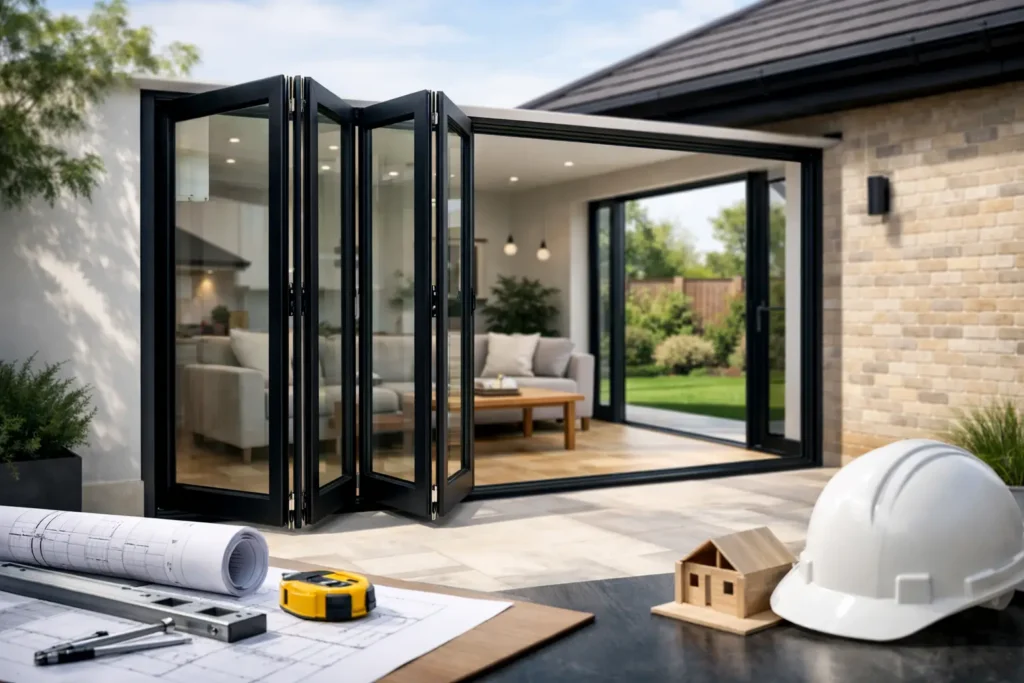
If you are planning a kitchen extension or replacing old patio doors, building regulations for bifold doors matter before you place an order, not after the frames arrive on site. The right doors can transform light, access and the overall feel of a room, but they also need to meet current standards for safety, thermal performance and installation. Getting that right early helps you avoid delays, extra costs and awkward changes when the project is already underway.
What building regulations for bifold doors usually cover
For most UK homeowners, the rules around bifold doors come down to a few key areas. These include structural support, energy efficiency, safety glazing, ventilation, access thresholds and, in some cases, escape routes. Which of these apply most heavily depends on whether you are fitting doors into an existing opening, enlarging the aperture, or adding them as part of a new extension.
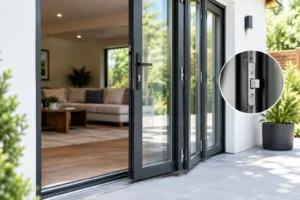
That is where confusion often starts. Many people assume the doors themselves either pass or fail, when in reality compliance is about the full opening and installation. A high-quality aluminium system with strong thermal performance, such as Smarts Visofold 1000 Bifold Doors or Origin OB49 Bifold Doors, still needs to be specified correctly for the property and fitted in a way that satisfies the regulations.
Do bifold doors need building regulations approval?
In many cases, yes. If you are replacing existing external doors and windows, the work must still comply with current Building Regulations even if planning permission is not required. If the project forms part of an extension or involves creating a new structural opening, approval becomes even more relevant.
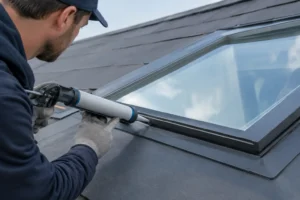
The easiest route is usually to work with a competent installer who can certify the installation, or to make sure the work is signed off through local authority building control. For supply-only projects, the responsibility sits more heavily with the homeowner and builder. That does not make supply-only a poor choice, but it does mean measurements, specification and installation details need closer attention.
Part L and thermal performance
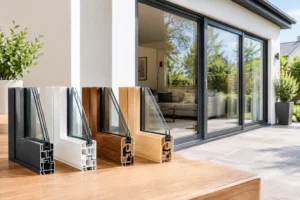
One of the most talked-about parts of building regulations for bifold doors is Part L, which deals with conservation of fuel and power. In simple terms, your new doors must help the home retain heat efficiently. This is one reason aluminium bifold doors have improved so much over the years. Modern systems use a thermal break in the frame and energy efficient glazing to deliver far better performance than older metal doors ever could.
For homeowners, this is not just a box-ticking exercise. Better thermal performance means a room that feels more comfortable in winter, less chance of cold spots near the threshold and more confidence when choosing large glazed openings. That said, performance figures depend on the whole specification, including frame system, glass unit, spacer bars and installation quality. A slim sightline looks excellent, but the right balance between appearance and insulation is always worth discussing.
If your priority is a wide opening with a contemporary finish, systems such as Smarts Visofold 6000 Bifold Doors or Schuco ASFD75 Bifold doors can be configured to suit both design goals and regulatory requirements. The best option often depends on opening size, orientation and how exposed the property is to weather.
Safety glazing requirements
Large panes of glass near floor level must meet safety standards. This is one of the most common compliance points with bifold doors because so much of the door leaf is glazed. Toughened or laminated safety glass is typically required in critical locations where impact is more likely.
This is not simply about avoiding breakage. It is about reducing the risk of serious injury if the glass is struck. In practical terms, most reputable bifold door systems for residential use will be specified with appropriate safety glazing as standard where needed, but the exact requirement still depends on the size and position of the glass.
For homeowners, the takeaway is straightforward. Do not treat glazing as a cosmetic choice alone. The glass specification affects safety, insulation, solar gain and even acoustic performance, so it should be chosen with the full project in mind.
Structural considerations when opening up a wall
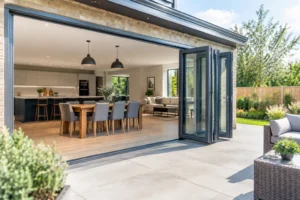
Bifold doors are often installed to create a wider opening onto the garden. That usually means removing part of an external wall and adding structural support above, typically with a suitable lintel or steel beam. This element falls under Building Regulations because the house must remain structurally sound once the original masonry is altered.
This is also where a design idea can shift in cost. A simple replacement within an existing opening is very different from knocking through a rear wall to fit a larger set of doors. The wider the span, the more important structural calculations and installation detail become. It is not a reason to scale back the project, but it is a reason to budget properly and involve the right professionals early.
Thresholds, access and everyday practicality
Low thresholds are one of the most requested features in modern bifold doors. They help create a cleaner transition between inside and outside, particularly in kitchens, dining rooms and garden rooms. Building regulations may affect how that threshold is designed, especially where access requirements and weather performance need to be balanced.
A flush or near-flush threshold looks smart and works well for families, older homeowners and anyone wanting easier movement to a patio. The trade-off is that threshold design must still manage water effectively and suit the floor levels on both sides. A very low threshold may be ideal in one property and less suitable in another if exposure to wind-driven rain is high.
That is why bespoke advice matters. A good bifold door specification should not just look right in the brochure. It should suit how the opening will actually be used.
Ventilation and trickle vents
Ventilation rules can catch people out, especially when replacing older doors and windows throughout a room. Depending on the project, background ventilation may be required, and that can include trickle vents. Recent changes to standards have made this a more prominent issue in replacement works as well as extensions.
Some homeowners dislike the idea because they want the cleanest possible sightlines. That is understandable. However, compliance needs to be considered alongside aesthetics. In some cases, the wider room design can influence how ventilation requirements are handled, particularly if other new windows are being installed at the same time, such as Smarts Alitherm 400 Windows or Cortizo Hidden Sash Windows.
Fire safety and escape routes
Ground floor bifold doors can sometimes play a role in means of escape, but this depends on the layout of the home. For most rear-facing domestic installations, this is less about the bifold system being a designated fire exit and more about ensuring the overall design of the extension or altered room remains compliant.
If the doors are part of a larger renovation, especially one that changes room layout or access paths, it is worth checking whether any fire safety considerations affect the design. This is usually straightforward, but it is another example of why doors should be specified as part of the whole project rather than in isolation.
Who is responsible for compliance?
The short answer is that responsibility can sit with more than one party. The manufacturer supplies a system designed to meet relevant standards when specified correctly. The installer is responsible for fitting it properly. The builder or structural engineer may be responsible for the opening and support work. If you are managing the project yourself, you need all of those parts to line up.
This is where experience makes a real difference. A specialist supplier that understands aluminium systems, thermal requirements and installation detail can help reduce the risk of ordering the wrong configuration. Smarts Bifold Doors, for example, works with homeowners who want either full installation or a supply-only route, and that flexibility is useful if you already have a builder in place but still want confidence in the product specification.
Common mistakes to avoid
The most expensive problems are rarely dramatic. More often, they come from small assumptions. Ordering doors before confirming structural sizes, overlooking threshold levels, choosing a configuration without thinking about furniture layout, or assuming any double glazing will satisfy Part L can all create avoidable setbacks.
Another common issue is focusing only on door leaf width and total opening size without considering how the doors stack when open. Compliance may still be achievable, but the practical result can feel less usable than expected. Good design means the doors meet regulations and work well on a wet Tuesday in February, not just on a sunny viewing day.
A sensible way to plan your bifold door project
If you are at the early stage, start with the opening, not just the product brochure. Confirm whether the wall is load-bearing, check whether building control approval is needed, and discuss thermal performance, ventilation and threshold design before finalising the order. Once those details are resolved, choosing between systems and finishes becomes much easier.
Done properly, bifold doors add far more than visual impact. They bring in light, improve access to the garden and make everyday living space feel larger and better connected. The best results come when compliance is built into the decision from the start, because a door that looks exceptional and performs properly is always the stronger investment.