Choosing a new patio door usually starts with a picture in your head – more light, better access to the garden, and a cleaner, more modern finish to the room. But when you begin working out how to compare patio door styles, the decision quickly becomes more practical. The right choice depends on how you use the space, how wide the opening is, and what matters most to you day to day.
Some homeowners are drawn to the full opening of bifold doors. Others prefer the uninterrupted glass and simple operation of sliding doors. French doors still have their place too, especially where you want a more familiar look or a smaller opening. There is no single best option for every property. The strongest choice is the one that suits your layout, budget, expectations and the way you want the room to feel.
How to compare patio door styles in a real home
The easiest way to compare patio door styles is to stop looking at brochure images and start with the opening itself. A patio door is not just a feature. It affects furniture placement, traffic flow, ventilation, threshold detail, heat retention and the connection between the house and garden.
In a rear kitchen extension, for example, the priorities are often wide access, strong sightlines and plenty of daylight. In a smaller dining room opening onto a patio, swing space and usable wall area may matter more. That is why two homes with the same width opening can still suit completely different door systems.
Aluminium is often the preferred frame material here because it offers slim profiles, reliable strength and long-term durability. With a proper thermal break and energy efficient glazing, it also delivers the thermal performance expected in a modern home improvement project.
Start with the opening width and available space
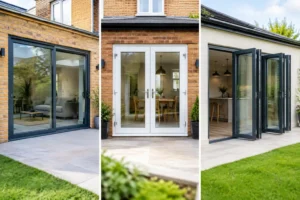
The width of your opening shapes the conversation straight away. If you have a large span and want most of it to open in good weather, bifold doors are often the natural fit. Systems such as Smarts Visofold 1000 Bifold Doors or Cortizo Bifold Plus can create a wide, folding opening that works particularly well in extensions designed for entertaining and garden access.
That said, bifolds need stacking space. When open, the panels fold and sit to one or both sides, so you do lose some clear width where the stack sits. In many homes, that is not a problem. In tighter layouts, it can be a factor.
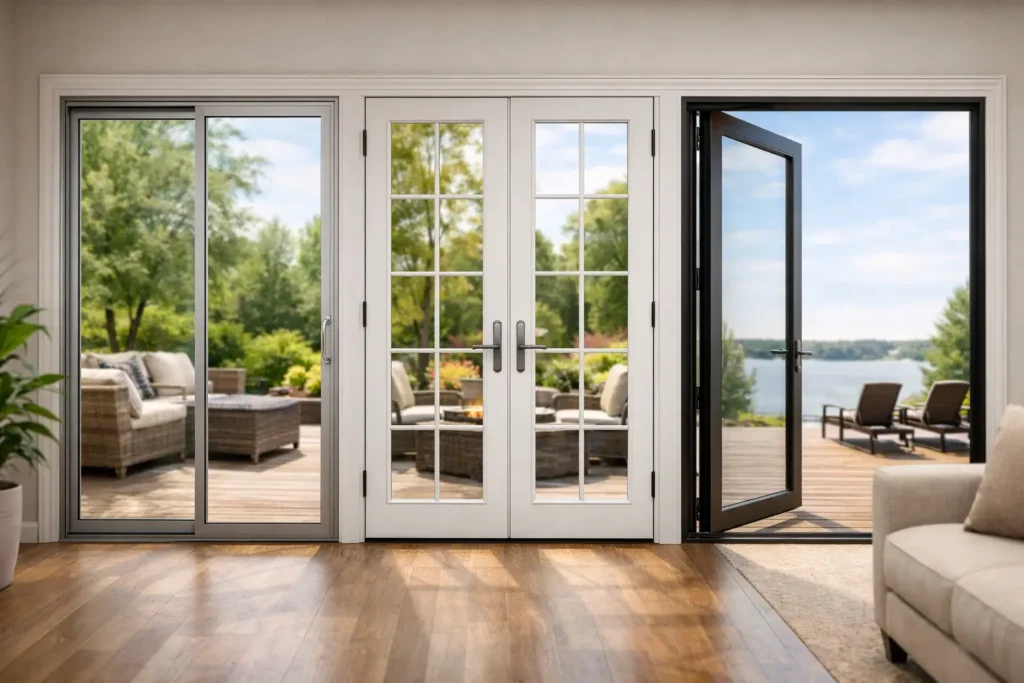
Sliding doors work differently. Instead of folding away, the panels glide behind one another. This means they do not project into the room or onto the patio, which is useful where space is tighter or where you want a cleaner visual line. Products such as the Smarts Visoglide Plus sliding door or Cortizo COR Vision Sliding Door are often chosen for larger glazed openings where slim sightlines are a priority.
French doors are generally more suited to modest openings. They are straightforward, familiar and can work well in older properties or smaller extensions. They do not usually deliver the same amount of glass or the same architectural feel as a premium aluminium bifold or sliding system, but they remain a sensible option in the right setting.
Think about open views versus full opening
This is one of the biggest trade-offs, and it often decides the project.
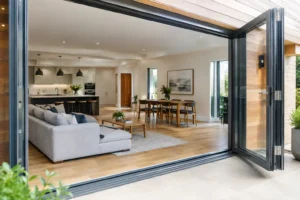
If your priority is a broad opening that brings the garden into the room, bifold doors have a clear advantage. With the panels folded back, the division between inside and outside feels far less defined. This is a major reason bifolds remain popular in open-plan kitchen and family spaces.
If your priority is the view when the doors are closed, sliding doors often come out ahead. Because they use fewer, larger panels, they tend to offer bigger panes of glass and less frame interruption. That can make a room feel calmer and more open throughout the year, not just on the days when the doors are fully open.
So the real question is not simply which looks better. It is whether you value a maximum opening in summer or cleaner glazing lines all year round.
Consider how you will use the doors every day
A patio door is used in ordinary moments far more than in show-home moments. Carrying shopping in from the car, letting children into the garden, moving between kitchen and patio while cooking, or stepping outside on a winter morning all place different demands on the door system.
Bifold doors can include a traffic door, which gives you everyday access without needing to fold back the whole set. This is worth considering if the door will be used frequently. Without it, a bifold may be less convenient for quick in-and-out use.
Sliding doors are very easy to operate for everyday access, but only part of the opening is ever open at one time. For some households, that is more than enough. For others, especially where the patio becomes part of the entertaining space, it can feel more restricted.
French doors provide a simple entrance and clear access, though they require room for the leaves to open. That can affect furniture placement inside and usable patio space outside.
Compare sightlines and style
The visual character of each system is different, and that matters just as much as the mechanics.
Bifold doors create a contemporary look with multiple glazed panels and a strong rhythm across the opening. They suit modern extensions particularly well, and they can be configured in different leaf numbers and opening directions to suit the design.
Sliding doors tend to give a more minimal look. Fewer vertical frame lines mean more glass and a stronger emphasis on the view. Systems such as the Schuco ASE60 Sliding Door, Schuco ASE80 Sliding Door and Cortizo COR Vision Plus Sliding Door are popular where homeowners want a high-end aluminium finish with slimmer visible framing.
French doors usually feel more traditional, although aluminium versions can still look smart and modern. If the rest of the property is period in character, they may sit more comfortably than a wide glazed wall of sliding or folding panels.
Security and thermal performance should be part of the comparison
Design gets attention first, but performance is what you live with.
High-quality aluminium patio doors should offer strong locking systems, secure frame construction and glazing designed to meet current expectations for domestic security. Top-of-the-range security should not be treated as an upgrade if you are investing in a main access point to the garden.
Thermal efficiency also deserves close attention, especially with large glazed areas. Frame design, thermal breaks, glass specification and installation quality all affect the finished result. A well-made aluminium system with energy efficient glazing can perform very well, but not all products are equal. A cheaper system may save money at quotation stage while giving away too much on comfort and heat retention over time.
This is where specialist advice matters. The best patio door is not just the one with the thinnest frame or the lowest headline price. It is the one that balances appearance, performance and long-term value.
Thresholds, flooring and access details
Threshold design is often overlooked until late in the project, yet it has a big impact on comfort and practicality.
If you want a cleaner transition to the patio, a low threshold can make access easier and improve the visual flow between inside and outside. This is especially useful for family homes, older homeowners and anyone wanting a more accessible layout. At the same time, threshold choice needs to be considered alongside weather performance, floor build-up and finished levels.
This is another reason to compare patio door styles in context. A system that looks ideal on paper may not be the right fit once floor heights, drainage and external paving are taken into account.
Customisation affects the final result more than many homeowners expect
When comparing options, do not stop at the basic style. Colour, handle finishes, panel configuration, opening direction and glazing choices all shape how the door looks and performs in your home.
Two bifold door quotes can look similar at first glance, but the details may be very different. One may offer better hardware, more suitable threshold options or a neater configuration for the opening. The same applies to sliding doors, where panel size, interlock thickness and track arrangement can change the whole feel of the system.
For homeowners who want a tailored finish rather than an off-the-shelf look, bespoke aluminium systems offer far more control over the final appearance.
Which patio door style is usually best?
There is no honest one-line answer.
Bifold doors are often best for homeowners who want to open up a kitchen extension and create a strong indoor-outdoor feel. Sliding doors are often best for those who want bigger panes of glass, slimmer sightlines and easy operation with minimal visual interruption. French doors are often best for smaller openings, more traditional homes or projects where simplicity matters most.
If you are still deciding how to compare patio door styles, the smartest approach is to weigh up four things at the same time: how much of the opening you want to use, how important uninterrupted glass is, how the room works every day, and what level of performance you expect from the finished installation.
A good patio door should not just look right on day one. It should continue to feel right every time you walk through it, open up the room, and let more light into the home.