
A kitchen extension can look superb on plan and still feel disappointing once built if the doors are wrong. Too much frame can cut the light. Doors that swing into the room can steal valuable floor space. Poor thermal performance can leave the new area feeling colder than the rest of the house. If you are deciding on the best doors for kitchen extension design, the right answer depends on how you want the room to work every day, not just how it looks in a brochure.
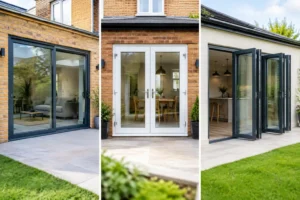
For most homeowners, the choice comes down to bifold doors, sliding doors or French doors. Each can suit a kitchen extension, but they solve different problems. The best option is usually the one that fits your opening size, furniture layout, garden access and expectations around sightlines, ventilation and budget.
What matters most when choosing the best doors for a kitchen extension
Kitchen extensions are busy spaces. They are used for cooking, eating, entertaining, homework, hosting and the odd quiet coffee. That means your doors need to do more than bring in daylight.
Start with the opening itself. A wide rear extension often suits larger glazed systems because they make the most of the span and help the room feel connected to the garden. A smaller side-return or compact kitchen diner may need something more space-efficient, especially if every cabinet and walkway matters.
Then consider how often the doors will be used. If the garden becomes part of the room through spring and summer, easy everyday access matters. If your priority is an uninterrupted view and as much glass as possible, slim-framed sliding doors may make more sense than a fully folding system.
Thermal efficiency should also be near the top of the list. Modern aluminium systems with a thermal break and energy efficient glazing can perform very well, but specifications vary. In a kitchen extension with lots of glazing, good thermal performance helps the space stay comfortable and avoids creating a bright room that is expensive to heat. South and West facing products benefit from Solar reflecting glass this will keep a home comfortable during the hot summer days reflecting 65% of the heat from the sun. Keep you home cooler during the summer.
Security, threshold design and Building Regulations all deserve attention too. A low threshold can improve accessibility and make the transition to the patio feel more natural, but you still need weather protection, structural suitability and compliant installation.
Bifold doors for kitchen extensions
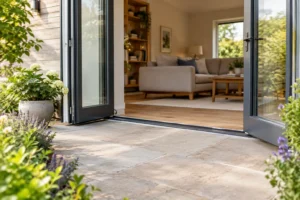
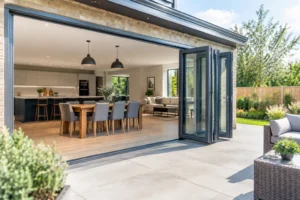
Bifold doors remain one of the most popular choices for kitchen extensions because they can open up a large section of the rear wall. When fully folded back, they create the strongest indoor-outdoor feel of any mainstream door type. For family homes that host barbecues, children moving in and out of the garden, or summer entertaining, that flexibility is a major advantage.
They also work well in open-plan kitchen diners where the extension is intended to feel larger, brighter and more sociable. Opening several panels at once changes how the room feels, not just how it looks.
That said, bifolds are not automatically the best fit for every project. Even with slim aluminium frames, there will be more vertical framing than on a comparable sliding system. When the doors are closed, that can interrupt the view slightly more. The stacked panels also need a place to fold, which affects how much clear opening you get at each side.
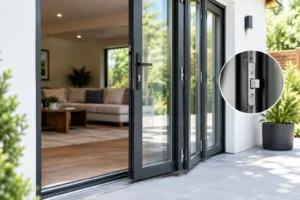
In practical terms, bifolds are strongest where opening width and flexibility matter most. Systems such as Smarts Visofold 1000 Bifold Doors, Smarts Visofold 6000 Bifold Doors and Schuco ASFD75 Bifold doors are well suited to modern kitchen extensions because they combine contemporary lines with strong security and good thermal performance. For homeowners seeking higher-spec insulation and a premium finish, ASFD90.Hi Bifold Doors or Origin OB49 Bifold Doors may be attractive options.
If your extension includes a wide aperture and you want the garden to feel like a natural continuation of the kitchen, bifolds are often the most satisfying solution.
Sliding doors for kitchen extension layouts
If your priority is glass first, sliding doors deserve serious attention. They typically offer larger panes, fewer frame lines and cleaner sightlines than bifolds. That makes them especially effective in kitchen extensions where the view is part of the design – perhaps across a landscaped garden, a patio or a long family lawn.
Sliding doors do not project into the room or out onto the patio, which helps in tighter layouts. You can place a dining table or island closer to the opening without worrying about door swing or folded panel stacks. For many homeowners, that makes furniture planning easier.
The compromise is in how they open. Even on a large system, one panel usually slides behind another, so you never get the entire opening clear. If your goal is a dramatic wide-open rear elevation in summer, bifolds still have the edge.
For day-to-day use, though, sliding doors are often exceptionally practical. A single panel can be opened quickly for ventilation or garden access, and the slim-profile look suits contemporary extensions beautifully. Products such as the Smarts Visoglide Plus sliding door, Schuco ASE60 Sliding Door, Schuco ASE80 Sliding Door and Cortizo COR Vision Sliding Door are all strong choices where minimal framing and smooth operation matter. On more design-led projects, the Cortizo COR Vision Plus Sliding Door can create an especially refined appearance.
For many modern rear extensions, sliding doors are the best doors for kitchen extension schemes where clean lines, wide glass panels and a strong visual connection to the garden come first.
Are French doors ever the right choice?
Yes, particularly on smaller extensions or where budget and simplicity matter more than maximum glass. French doors can work very well in period homes, modest kitchen enlargements or projects where you want a practical opening without committing to a full-width glazed wall.
They are also useful where the extension design includes fixed glazed panels on either side. In that arrangement, the doors provide a clear central access point while side glazing continues to bring in light.
The limitation is obvious. French doors do not deliver the same scale, visual impact or opening width as bifold or sliding doors. If the whole point of the extension is to create a bright contemporary rear elevation, they may feel underpowered. But in the right setting, they remain a sensible and attractive choice.
Aluminium versus other frame materials
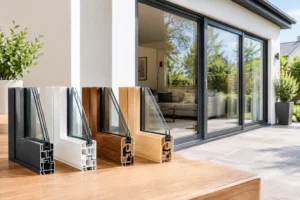
For kitchen extensions, aluminium is usually the strongest all-round option. It allows slimmer frames than many alternatives, which means more glass and a more contemporary finish. It is also durable, low maintenance and well suited to larger openings.
Modern aluminium systems are not just about appearance. With a thermal break and the right glazing specification, they can offer excellent thermal efficiency alongside the strength needed for larger panel sizes. That balance matters in an extension where performance and aesthetics need to work together.
This is also where bespoke manufacture makes a difference. Colours, panel configuration, threshold options and hardware finishes all affect the final result. A made-to-measure system will almost always look and perform better than trying to fit a standard-size product into a design-led space.
Matching the doors to the rest of the extension
The best results come when the doors are chosen as part of the wider glazing scheme, not as an isolated decision. If your extension includes roof glazing, lanterns or large windows, sightlines and frame finishes should feel consistent.
A kitchen extension with bifolds can pair well with slim aluminium windows such as Smarts Alitherm 400 Windows or Cortizo Hidden Sash Windows, especially where you want a clean modern look throughout. In more contemporary builds, matching the frame style across doors and windows helps the whole rear elevation feel intentional rather than pieced together.
You should also think about floor levels and thresholds early. Flush internal flooring flowing towards a low threshold can create a stronger sense of continuity between kitchen and patio, but this needs to be planned carefully so drainage, weathering and compliance are not compromised.
So which door type is best?
If you want the widest possible opening and a social, open-to-the-garden feel, bifold doors are usually the best choice. If you want bigger panes, less visible frame and a more fixed picture-window effect when closed, sliding doors are often better. If your extension is smaller or more traditional, French doors may be entirely sufficient.
There is no single answer that suits every home. A three-metre opening at the back of a Victorian terrace needs a different solution from a five-metre aperture in a new rear extension. The right product depends on how you live, how much wall space you have, and what you want the room to feel like in January as well as July.
For that reason, expert guidance matters. A specialist such as Smarts Bifold Doors can help you compare systems properly, not just by appearance but by opening configuration, thermal performance, security, threshold detail and installation requirements. That is usually where good decisions are made.
The best kitchen extension doors are the ones that make the room brighter, easier to use and more enjoyable every day – not just the ones that look impressive on first glance.