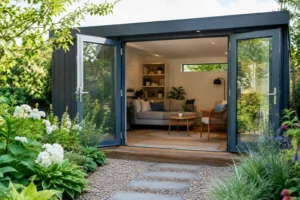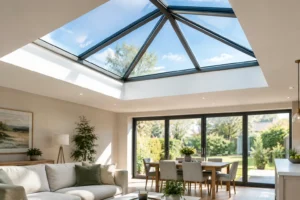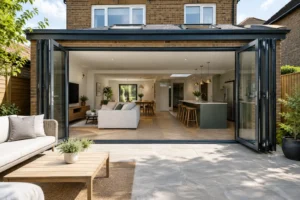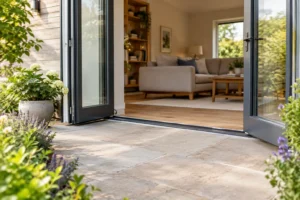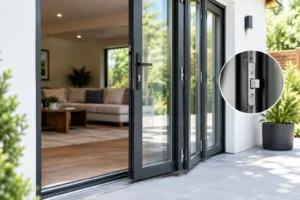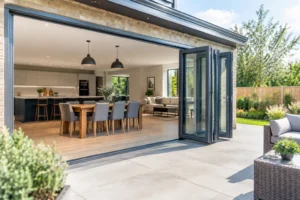
A new set of patio doors or a roof light should make family life feel more open, not leave you questioning whether the property is properly protected. Secure glazing for family homes is about more than fitting thicker glass. The strongest result comes from a considered combination of glass specification, aluminium frame design, locking hardware and professional installation.
For homeowners planning an extension, kitchen renovation or replacement window project, security should sit alongside natural light, energy efficiency and appearance from the first conversation. It is much easier to specify the right system at the design stage than to try to add protection after the doors and windows are in place.
What makes glazing genuinely secure?
Glass is the most visible part of a glazed door or window, but it is only one part of the security picture. A high-performing system is designed to resist forced entry at every likely point of attack: the glass, frame, hinges, locking points, handles and the connection to the building itself.
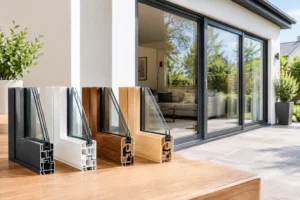
Aluminium is particularly well suited to larger glazed openings because it combines strength with slim sightlines. A quality aluminium profile can support substantial panes of double or triple glazing without the bulky frames that can reduce light and views. It also allows bifold and sliding doors to retain a contemporary, architectural finish while providing the rigidity needed for dependable locking.
The detail that matters is whether every component has been selected to work together. A premium cylinder lock is of limited value if the frame is poorly fixed, just as laminated glass cannot compensate for a door that can be lifted from its track. Ask your supplier about the complete tested door or window system, rather than focusing on one individual feature.
Laminated glass and toughened glass are not the same
Toughened safety glass is heat-treated so that, if it breaks, it fractures into small blunt fragments. This is valuable in areas where people may fall against glass, such as doors, low-level windows and glazed screens. However, toughened glass can still break away from the opening after impact.
Laminated glass consists of two panes bonded together with an interlayer. When broken, the interlayer helps hold the fragments in place. This makes it harder to create an opening quickly and can offer an additional layer of protection for accessible doors, side panels and ground-floor windows.
Neither option is automatically right for every pane. Safety requirements, building design, location and budget all influence the specification. In some locations, a combined toughened and laminated unit may be appropriate. A glazing specialist can identify where security glass brings meaningful benefit and where standard safety glass is sufficient.
Secure glazing for family homes starts with the opening
Garden-facing doors often create the largest opening in a home, which is why their security design deserves close attention. Bifold doors, sliding doors and French doors can all be highly secure when they are built from a proven system and correctly fitted.
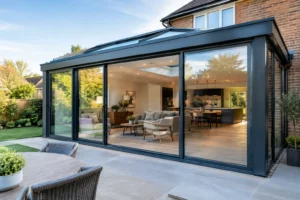
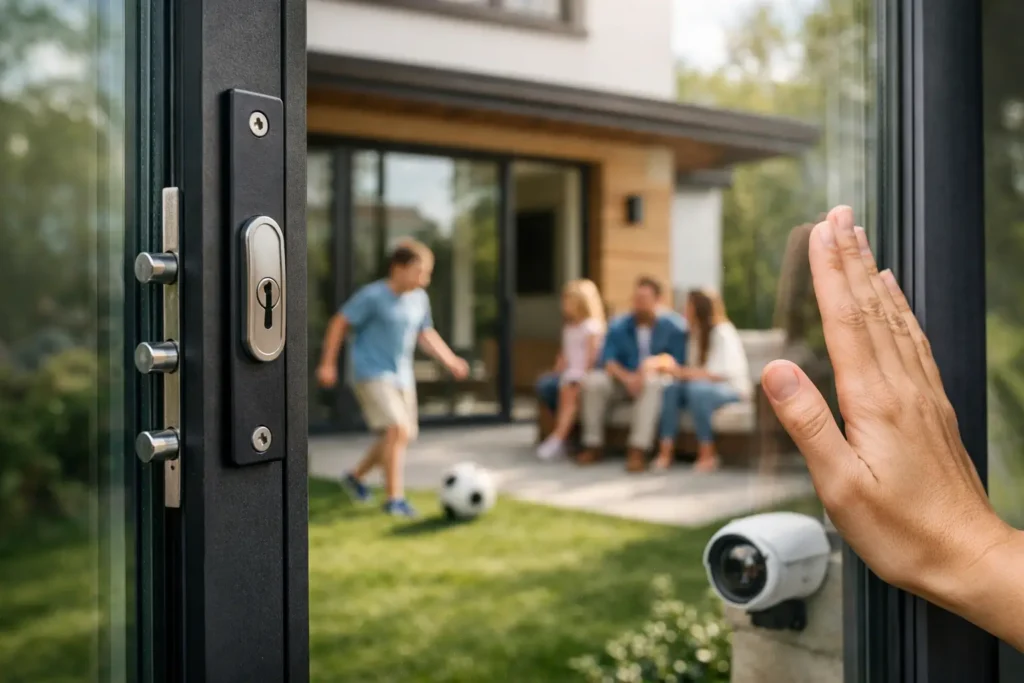
For bifold doors, look for multi-point locking on the primary traffic door, secure shootbolts on folding panels and a solid locking mechanism between each sash. The hinges and rollers should be designed so panels cannot be easily lifted or forced out of position. A system such as Smarts Visofold 1000 Bifold Doors can be specified in configurations that suit everyday family use while retaining a strong, clean-lined aluminium construction.
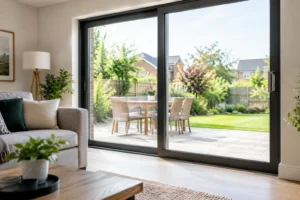
Sliding doors need equally careful consideration. Their large glass panels and minimal frames are a major part of their appeal, but they should have anti-lift measures, secure interlocks where panels meet and a high-quality lock that engages firmly into the frame. The threshold, track and drainage design also matter. A well-engineered system should operate smoothly without creating a weak point at floor level.
Windows deserve the same attention, particularly on the ground floor, near a flat roof or beside an extension where access may be easier. Multi-point locking, lockable handles and secure hinges all contribute to protection. Casement windows can provide excellent security, provided the hardware and frame are matched to the size and weight of the opening.
Look for tested performance, not vague promises
Security claims should be supported by recognised testing and certification. PAS 24 is a commonly referenced UK security standard for doors and windows, testing how a complete product performs against methods of attack. It is particularly relevant for new-build homes, where Part Q of the Building Regulations may apply, but it is also a useful benchmark for renovation projects.
Secured by Design is another recognised police-backed initiative that can help homeowners identify products designed with crime prevention in mind. Not every suitable product will carry every accreditation, and requirements differ between projects. The key point is to ask clear questions: what has been tested, to which standard, and does that specification apply to the exact size, configuration and hardware being quoted?
This is especially important with bespoke glazing. A three-panel bifold door, a five-panel corner arrangement and a large sliding door do not behave in exactly the same way. Bigger openings may require different glass thicknesses, reinforcement or hardware choices. Bespoke should mean properly engineered for your opening, not simply made to measure.
Do not trade thermal efficiency for security
A secure home should also be comfortable to live in. Aluminium doors and windows with a thermal break reduce the transfer of heat through the frame, while energy-efficient glazing helps retain warmth and limit cold spots near large glass areas.
For family homes, this balance matters most in rooms used every day. A kitchen extension with wide bifold doors may be bright and sociable in summer, but it still needs to feel warm beside the glass on a January morning. Low-emissivity glass, insulated spacers and an appropriate glass unit can improve thermal performance without compromising the security specification.
Triple glazing can be beneficial in some applications, particularly where improved insulation or sound reduction is a priority. It is not automatically the best choice for every door. Triple-glazed units are heavier, which can affect panel sizes, operation and cost. High-performance double glazing in a thermally broken aluminium system is often an excellent solution, especially when the design, orientation and ventilation of the room have been properly considered.
Everyday details that make a difference
The best security features should not make family life awkward. Handles should be easy for adults to operate but securely lockable. Door configurations should give you a practical daily access door, so you are not opening every panel to let children into the garden or bring in shopping.
Think about sightlines as well as security. Being able to see the garden, driveway or side access from a kitchen or living area is a practical advantage, particularly with younger children at home. Large glazed areas can improve natural supervision without making a room feel closed off.
Privacy also has a role. Obscure, patterned or carefully positioned glazing may be useful for side elevations, bathrooms or overlooked boundaries. This does not mean sacrificing light. The right glass treatment can maintain a bright interior while reducing visibility into the home.
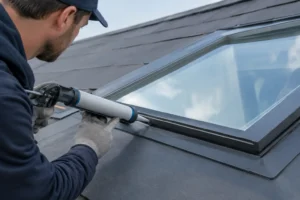
Finally, fitting quality is non-negotiable. Frames must be correctly packed, fixed and sealed into a sound opening. Doors must be adjusted so locks engage cleanly, panels align and thresholds remain weather-tight. A supply-only project can work well for experienced renovators with a capable installer, but the installer must understand the specific aluminium system and follow its fitting requirements precisely.
Questions to ask before placing an order
Before approving a quotation, ask how the proposed glazing handles impact, whether accessible panes use laminated glass where appropriate, and what locking hardware is included as standard. Confirm the security testing for the exact product, not just the manufacturer’s general range.
It is also sensible to discuss how the doors or windows will be used. A rear extension with direct garden access has different priorities from a first-floor bedroom window or a fixed roof lantern. Your supplier should be able to explain the options plainly, including where spending more delivers real reassurance and where it adds little practical value.
A well-designed glazed opening should give your family more light, better garden access and confidence when the house is empty or everyone is asleep. Choose a system that treats security as part of the design, and the finished space can feel open, warm and properly protected for years to come.