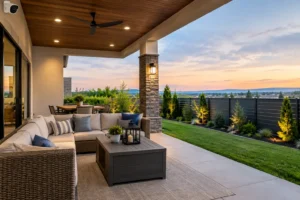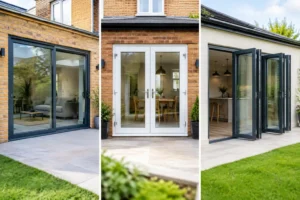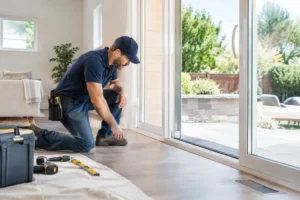
A rear extension can look excellent on plans and still feel disappointing once built if the doors are wrong. Too much frame can cut the glass area. A poor threshold choice can interrupt the flow to the garden. Weak thermal performance can leave the room feeling cooler than expected. That is why choosing doors for rear extension spaces deserves as much attention as the layout itself.
In most homes, the rear extension becomes the brightest and busiest part of the property. It is where kitchens open up, dining areas stretch into family rooms, and the garden becomes part of day-to-day living. The right doors need to do more than fill an opening. They need to suit the way you use the room, the style of the house, and the level of performance you expect over the long term.
What matters most when choosing doors for rear extension designs
Homeowners often begin with appearance, which is understandable. Slim sightlines, large panes of glass and a clean aluminium finish can transform the back of a property. But good door choice is really a balance of five things – light, access, thermal efficiency, security and practicality.
If your priority is creating a strong visual connection with the garden, larger glazed panels and narrower frames will usually matter more than almost anything else. If you entertain often or want the opening to feel as wide as possible in summer, bifold doors may be the natural choice. If you want uninterrupted views all year round and only open part of the elevation most of the time, sliding doors often make more sense.
That trade-off is where many rear extension decisions sit. The best-looking option on paper is not always the best one for how the room will actually function.
Bifold or sliding doors – which is better?
For many rear extensions, this is the key question. Both can work beautifully, particularly in aluminium, but they behave differently.
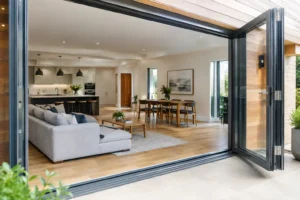
Bifold doors fold and stack to one or both sides, which allows a large proportion of the opening to be fully open. That makes them ideal where indoor-outdoor living is the main goal. In a kitchen extension opening onto a patio, a system such as Smarts Visofold 1000 Bifold Doors or Cortizo Bifold Plus can create a wide, practical opening that changes how the room feels in warmer months.
The compromise is that bifolds have more frame lines than sliders because they use multiple panels hinged together. You gain flexibility and opening width, but you lose some uninterrupted glass.
Sliding doors do the opposite. They maximise glazed area and keep sightlines cleaner, which suits contemporary rear extensions with a strong focus on light and view. A system such as the Smarts Visoglide Plus sliding door or Cortizo COR Vision Sliding Door is often a very good fit where the opening is wide and the aim is to bring in as much daylight as possible. The trade-off is that one part of the opening remains fixed, so you do not get the same fully opened effect as a bifold.
Neither option is universally better. It depends on whether you value full opening or more glass when the doors are closed.
Think about the size and shape of the opening
Door choice should always relate to the structural opening, not just the brochure image. A modest extension with a four-metre opening may suit bifolds very well, especially if you want that open-corner feel onto the garden. A much wider span might lean naturally towards sliding doors, where fewer vertical frames help keep the elevation feeling calm and uncluttered.
Panel configuration matters too. With bifolds, the number of panels affects how the doors stack, where the traffic door sits and how easy they are to use every day. With sliders, panel count changes the amount of visible frame and how much of the opening can be accessed at once.
This is one reason bespoke specification is so important. The right result usually comes from matching the door system to the opening, rather than forcing a standard arrangement into a space that needs something more considered.
Thresholds and everyday use
Rear extension doors are often judged by how they look when fully open, but daily life happens when they are shut or partly used. That is why thresholds deserve proper thought.
A low threshold improves the flow from inside to outside and can make the extension feel more connected to the patio. It is also useful where accessibility is a concern. At the same time, threshold design must still deal properly with weather performance and floor levels. In some projects, especially where the external paving is being redesigned alongside the extension, it is easier to achieve a cleaner, more practical transition.
You should also consider whether you need a single traffic door function for quick garden access. In family homes, that detail often matters more than people expect. Opening a full set of panels every time the dog goes out is less appealing after the first week.
Thermal efficiency is not a small detail
A rear extension usually adds a large glazed area to the home, so thermal performance matters. Doors should help the room stay comfortable throughout the year, not just look good in summer.
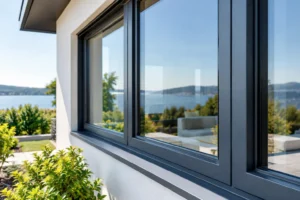
Modern aluminium systems have come a long way. With a proper thermal break and energy-efficient glazing, aluminium bifold and sliding doors can offer excellent performance while keeping the slim, contemporary look most homeowners want. That combination is one of the main reasons aluminium is now such a popular choice for extensions.
It is worth looking beyond headline claims and considering the full specification. Frame design, glass unit makeup, installation quality and threshold detailing all affect real-world results. A well-made system fitted correctly will generally outperform a cheaper option that looks similar in photographs.
Security should come as standard
Rear extension doors are often the largest access point in the property, so security is central to the decision. Homeowners should expect strong locking systems, durable aluminium frames and glazing that supports the overall security performance of the door.
Top-of-the-range security does not need to come at the expense of design. Well-engineered systems are built to deliver both. Whether you choose bifolds or sliders, the aim is the same – confidence that the doors are protecting your home while still giving you the light and open feel that made you want an extension in the first place.
Matching the doors to the style of the house
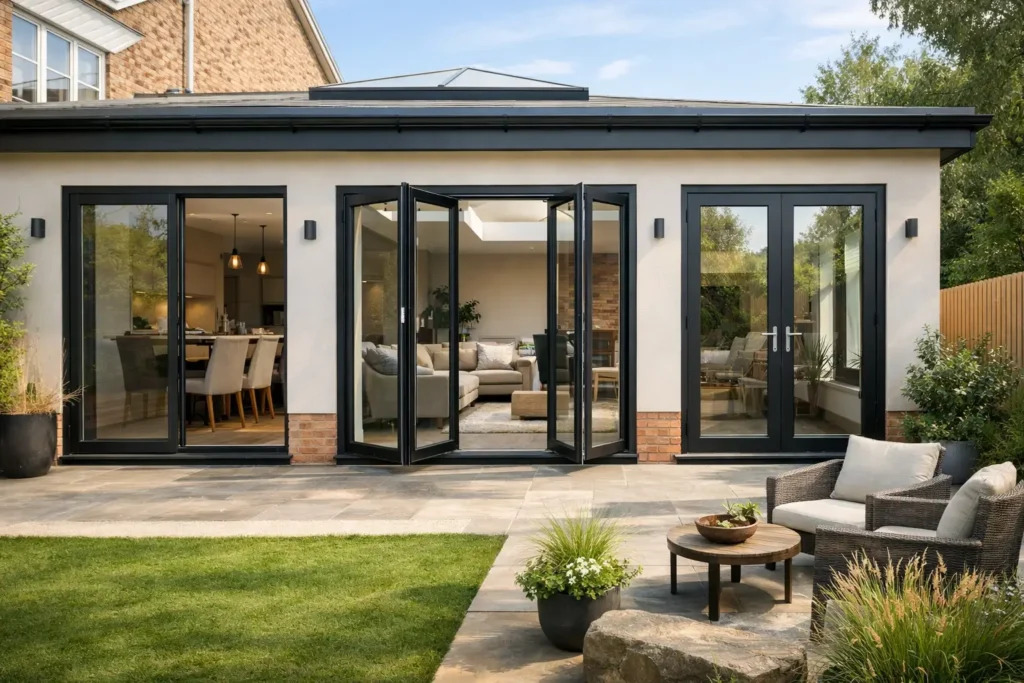
Not every rear extension is ultra-modern, and the door choice should reflect that. Contemporary extensions often suit minimal sliding doors with very slim frames, especially on rendered or brick properties with large rooflights and open-plan interiors. More transitional homes can work equally well with bifolds, particularly where the extension needs to bridge old and new parts of the property.
Colour also affects the final result. Anthracite grey remains popular for good reason, but black, white and bespoke finishes can all work depending on the architecture and the window design elsewhere in the home. If the extension includes new glazing, coordinating the doors with systems such as Smarts Alitherm 400 Windows can help create a more resolved, high-quality finish.
Hardware choices, sightlines and cill details might seem secondary, but together they shape how premium the installation feels. Good design is usually about these smaller decisions being handled properly.
Planning, regulations and installation quality
Most homeowners are focused on product choice, but compliance and fitting matter just as much. Rear extension doors must meet current Building Regulations, and the specification needs to suit the structural opening, support details and finished floor levels.
This is another reason specialist advice is valuable. An experienced supplier or installer can help you avoid problems that only become obvious late in the project, such as awkward stacking positions, clashes with kitchen layouts, drainage issues at the threshold or a door system that looks oversized for the elevation.
For some customers, a full installation route is the simplest choice because design, survey and fitting are all managed together. Others may prefer supply only if they are working with their own builder. Both can work well, provided the doors are manufactured accurately and the technical details are clear from the outset.
The best choice is the one that fits your extension properly
There is no single answer to choosing doors for rear extension projects because every home uses the space differently. A family kitchen with regular garden access may benefit most from bifolds with a practical traffic door. A large contemporary extension focused on daylight and uninterrupted views may be better served by a premium sliding system such as the Schuco ASE80 Sliding Door.
The key is to choose with the room in mind, not just the product in isolation. Think about how often the doors will be opened, what you want to see when seated inside, how the threshold will work in daily use, and whether the finish complements the rest of the home.
When those details are handled well, the doors stop feeling like a product choice and start feeling like the feature that makes the whole extension work. If you are investing in extra space, extra light and a better connection to the garden, that is exactly what they should do.