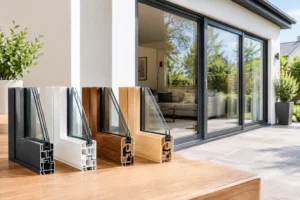
A window replacement can change far more than the view. The right frame colour and texture can make a dated elevation feel considered, connect an extension to the original house, or give a kitchen garden-facing wall a crisp architectural edge. Choosing between the top window frame finishes is therefore not simply a decorative decision – it affects how your home looks in changing light, how easily it is maintained, and how well new glazing sits alongside doors, brickwork and roofline details.
For most UK homeowners, aluminium offers the broadest and most durable choice of finishes. Its powder-coated surface is designed to withstand everyday weather, while the slim, strong profiles suit both contemporary and traditional properties. The best option depends on the character of the home, the colour of your existing windows and doors, and whether you want the frames to stand out or recede.
Top window frame finishes to consider
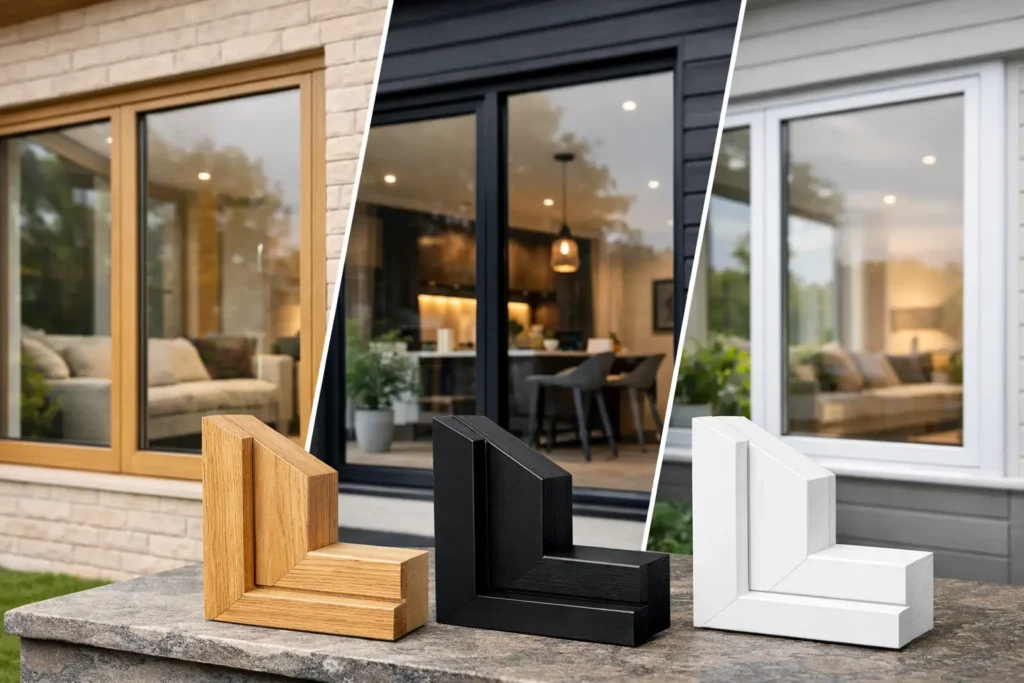
Anthracite grey: the modern all-rounder
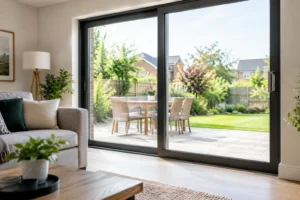
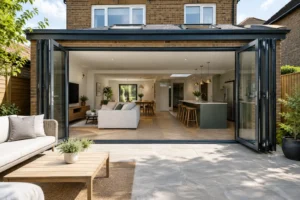
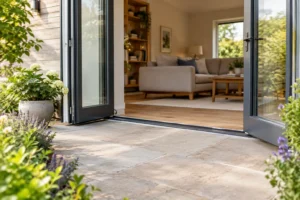
Anthracite grey, commonly specified as RAL 7016, remains one of the most popular choices for aluminium windows, bifold doors and sliding doors. It has enough depth to define the opening without appearing as severe as black, and works particularly well with pale render, buff brick, stone and timber cladding.
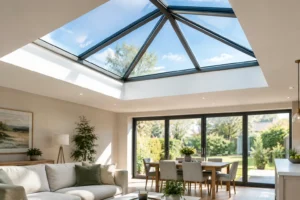
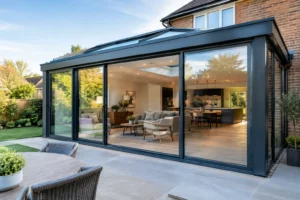
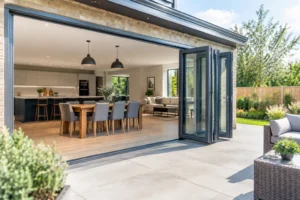
For extensions, grey frames provide a clean link between glazing, roof lanterns and external doors. They also tend to be forgiving of everyday dust and rain marks compared with brilliant white. A matt finish gives a softer, more contemporary appearance, while a subtle texture can add visual depth and reduce the appearance of minor surface marks.
The trade-off is familiarity. Anthracite grey is a safe and attractive choice, but it is now seen on many renovated homes. If your project calls for a more individual result, a darker charcoal, warm bronze or carefully chosen heritage shade may suit the architecture better.
Black: sharp definition for contemporary glazing
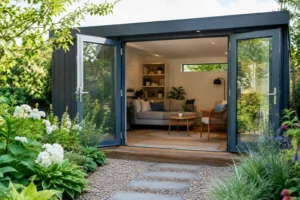
Black aluminium frames create strong outlines around glass. This is especially effective on large picture windows, fixed corner glazing and slim-profile systems where the frame becomes part of the architectural design. Black can make garden views feel framed and intentional, and it pairs naturally with black steel details, slate roofs and contemporary cladding.
A matt black finish is often the most refined choice for domestic projects. High-gloss black can look striking, but shows fingerprints, dust and water spotting more readily, particularly on frequently used doors. For south-facing elevations, darker finishes can become noticeably warmer in direct sunshine. Quality aluminium systems are built to accommodate normal temperature movement, but good design, correct installation and appropriate clearances are still essential.
Black is also a confident choice on period homes when used selectively. It can suit a rear extension or a modern garden room beautifully, although replacing every front-facing traditional window with black frames may not always be right for the street scene or local planning requirements.
White: bright, timeless and adaptable
White window frames are often dismissed as basic, yet a clean white aluminium finish remains one of the most adaptable options available. It is ideal for homes where the aim is to maximise light and make the glazing feel less visually dominant. White suits painted render, coastal-style properties, traditional cottages and interiors with a softer, lighter palette.
It can also be the sensible answer where planning conditions favour a more conventional appearance. Modern powder-coated aluminium avoids many of the drawbacks associated with older white frames, offering a crisp finish with the strength, security and thermal performance expected from a contemporary system.
Choose the shade carefully. Bright traffic white can look very fresh against modern render, while a softer white may sit more comfortably beside cream masonry or older painted joinery. Viewing a real finish sample outdoors is worthwhile, because colour can look very different under showroom lighting than it does on a cloudy British afternoon.
Heritage greens, blues and warm greys
Colour does not need to mean bold. Muted greens, deep blues, pebble greys and off-black shades can give a home more character while still looking established. A heritage green can complement brick, stone and mature gardens; a deep navy works well with white render and traditional details; and warm grey tones are a good alternative where anthracite feels too cool.
These finishes are particularly useful for homeowners who want aluminium’s low-maintenance benefits without the unmistakably modern appearance of dark grey or black. They can help new replacement windows respect the proportions and personality of an older property.
There is a practical point to consider: not every system, hardware item or accessory is available in every bespoke colour. If you are matching windows to a bifold door, roof lantern or garage door, confirm the full specification early. Ordering samples and comparing them against brickwork, roof tiles and interior finishes prevents an expensive near-match.
Textured and metallic powder coatings
Texture changes how a frame reads at close range. Fine-textured powder coating has a slightly tactile surface that softens reflected light and gives aluminium a premium, architectural feel. It is a popular choice for contemporary homes because it looks less flat than a standard smooth finish and is generally practical for busy family spaces.
Metallic and anodised-look finishes offer another route. Bronze, champagne and darker metallic tones can add warmth to a modern extension, particularly alongside oak, limestone, concrete or brass interior details. These finishes are less common than grey, so they can make a scheme feel more bespoke without relying on a bright colour.
They do, however, need careful coordination. A metallic window frame may sit beautifully beside one material and clash with another. It is usually better to repeat the tone in door handles, lighting or exterior metalwork than treat it as an isolated feature.
Woodgrain effects for traditional character
For some homes, particularly cottages and properties in conservation-sensitive locations, a wood-effect aluminium finish offers a useful balance. It can provide the appearance of timber while retaining aluminium’s slim sightlines, durability and reduced maintenance requirements.
The result depends heavily on the quality and colour of the woodgrain. A subtle oak, walnut or painted-timber effect can work well where the frames need to complement existing joinery. A poorly matched grain can look artificial, especially next to genuine timber doors or fascias. If authenticity is central to the project, compare full-size samples rather than making a decision from a small colour card.
How to choose a finish that works across the whole home
The strongest schemes consider every visible opening, not just one window. If your kitchen extension includes bifold doors, a roof lantern and replacement side windows, selecting a consistent frame finish creates a far more polished result. Systems such as Smarts Alitherm 400 Windows can be specified to complement aluminium doors, allowing the glazing to read as one coordinated design.
Start outside. Look at the permanent materials that will remain for years: brickwork, render, roof tiles, stone, fencing and guttering. Then consider the interior view. Dark frames can add welcome contrast to pale walls and open-plan rooms, while white frames keep attention on the garden and daylight.
It also helps to decide whether you want contrast or continuity. Contrast makes the opening a feature – black against white render is the clearest example. Continuity uses a finish close to the wall colour so the glass appears larger and the frame feels quieter. Neither is automatically better; the correct choice comes down to the scale of the glazing and the architectural style of the property.
Maintenance, durability and the quality behind the colour
A beautiful finish should also be practical. Factory-applied powder coating is a durable choice for aluminium, but it still benefits from occasional cleaning with warm water, a mild detergent and a soft cloth. Avoid abrasive pads, strong solvents and harsh cleaning products, which may dull or damage the surface.
Coastal and high-pollution locations may require more frequent cleaning because airborne salt and grime can build up on frames. Ask about the coating specification for your location, particularly if the property is close to the sea. The finish, glass, thermal break, weather seals and installation quality all work together to support long-term performance.
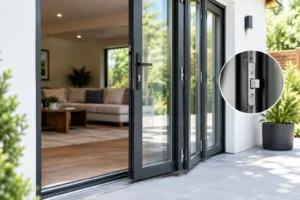
Hardware deserves the same attention. Handle, hinge and trickle vent colours should be chosen alongside the frame rather than as an afterthought. Matching black or colour-coordinated hardware generally gives the most considered look, while brushed metallic handles can introduce a deliberate contrast in the right setting.
Before placing an order, request physical samples and view them in daylight against your home. A finish that looks perfect online can appear cooler, warmer, lighter or darker once it meets your own brickwork. A tailored quotation should confirm the colour, texture, internal and external finish, hardware and glazing specification clearly. That attention to detail is what turns a new window from a replacement into a lasting improvement to the home.