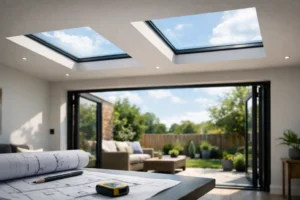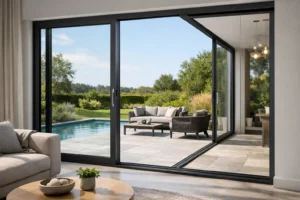

When an extension is finished and the walls come down, the door choice suddenly matters far more than most homeowners expect. In open-plan kitchens and living spaces, the glazing is not just a way out to the garden. Patio doors for open plan rooms shape how the whole space feels, how much light reaches the back of the room, and how practical the layout is every day.
A good set of doors can make a large room feel brighter, calmer and better connected to the garden. The wrong choice can interrupt furniture layouts, reduce usable floor space, or leave you with too much frame and not enough glass. That is why it pays to look beyond appearance and think carefully about how the room will actually be used.
What matters most with patio doors for open plan rooms
Open-plan rooms usually have to do several jobs at once. They are cooking spaces, dining spaces, family spaces and entertaining spaces. The patio doors need to support all of that without dominating the layout.
Sightlines are usually the first priority. In a wider room, slim aluminium frames help keep the view open and pull more daylight further indoors. This is especially valuable in kitchen extensions, where the rear elevation often becomes the main source of natural light. Products such as the Smarts Visoglide Plus sliding door or the Cortizo COR Vision Sliding Door are often chosen for exactly that reason – large glazed areas with a clean, contemporary look.
The second priority is how the doors open. This sounds obvious, but it changes the room more than many people realise. Sliding doors stay within their own frame, so they do not take up internal or external space when open. Bifold doors fold and stack, which creates a wider opening but needs space for the panels. Neither option is automatically better. It depends on whether your priority is uninterrupted glass when closed or a more open threshold in summer.
Thermal performance also matters. Open-plan rooms can be expensive spaces to heat if glazing is poorly specified. Modern aluminium systems with a thermal break and energy-efficient glazing are a very different proposition from older patio doors. With the right combination of frame and glass, you can achieve the light and garden access you want without making the room feel cold in winter.
Sliding or bifold for an open-plan layout?
For many homeowners, this is the main decision.
Sliding patio doors are often the best fit where the view is the hero. Because the panels glide behind one another rather than folding away, you typically get larger panes of glass and less visible frame. In a long kitchen-diner overlooking a garden, that can make the room feel more expansive all year round, not just when the doors are open. Systems such as the Schuco ASE60 Sliding Door, Schuco ASE80 Sliding Door and Cortizo COR Vision Plus Sliding Door are well suited to modern extensions where minimal framing is part of the design brief.
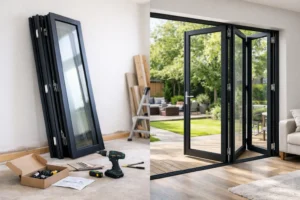
Bifold doors are often preferred where opening width matters most. If you want to open up a dining area for summer gatherings or create a stronger link between the house and patio, bifolds can deliver a more dramatic opening. Smarts Visofold 1000 Bifold Doors and Smarts Visofold 6000 Bifold Doors remain popular because they combine slim aluminium styling with practical flexibility across different panel configurations.
The trade-off is straightforward. Sliding doors usually win on glass area and uninterrupted views when closed. Bifolds usually win on the size of the opening when fully opened. In an open-plan room used every day through all seasons, many homeowners find sliding doors more practical than they first expected. In family homes that host often and want the garden to feel like part of the room in warm weather, bifolds can still be the stronger choice.
Size, configuration and how the room works
The best patio doors for open plan rooms are not chosen in isolation. They need to work with kitchen islands, dining tables, sofas and circulation routes.
If furniture sits close to the rear wall, sliding doors can be easier to live with because there is no swing arc or stacked leaf projection to account for. This can be useful in compact rear extensions where every square metre matters. On the other hand, if you have a large entertaining space and want people to move freely between inside and outside, a bifold arrangement with a traffic door can be a very practical answer.
Panel configuration matters too. A three-panel or four-panel sliding system may give you a cleaner look across a wide opening, but the usable opening width will be narrower than the overall glazed span. With bifolds, the stack position, opening direction and whether the doors open in or out all affect how the room feels. There is no universal formula here. The right answer depends on your wall width, furniture plan and how often you will fully open the doors.
Threshold choice is another detail worth getting right. Low thresholds improve access and help create a more open connection to the garden, which is especially appealing in open-plan spaces. They also suit households thinking about long-term accessibility. The key is ensuring weather performance, drainage and the finished floor levels are all considered early in the project.
Style should follow the architecture
Open-plan living spaces often sit within newer rear extensions, renovated period homes or garden-facing kitchen refurbishments. The door style should support the architecture rather than compete with it.
In contemporary homes, slim aluminium frames in anthracite grey, black or other understated finishes usually work well because they emphasise glass and keep the look crisp. In more traditional homes, the right aluminium system can still sit comfortably if the sightlines are proportionate and the external colour complements the existing windows and doors.
This is where bespoke specification makes a difference. Colour, handle finish, panel arrangement and frame proportions all help tailor the result. Matching or coordinating with products such as Smarts Alitherm 400 Windows or Cortizo Hidden Sash Windows can make the whole rear elevation feel intentional rather than pieced together.
Security and compliance should be standard, not an upgrade
Homeowners rightly focus on design first, but security and compliance should never be treated as optional extras. Large glazed doors are a major investment, and they need to perform properly over time.
A well-made aluminium system should offer strong frames, quality locking mechanisms and glazing that meets current standards. Top-of-the-range security is especially relevant in open-plan rooms because these spaces are often at the back of the property with wide openings onto the garden. You want the benefit of more glass and easier access without compromising peace of mind.
Building Regulations are just as important. The doors need to be suitable for the opening, glazing specification and intended use. If you are replacing old doors as part of a renovation, or fitting new systems in an extension, proper guidance on compliance saves problems later. Experienced specialists also help with practical points that can easily be missed, such as structural openings, cill details and tolerances on wider spans.
Why aluminium suits open-plan spaces so well
For this type of room, aluminium is usually the strongest all-round material choice. It allows for slimmer frames than many alternative materials while maintaining strength across wider openings. That means more glass, cleaner lines and better support for modern designs.
It is also a durable option for busy family homes. Aluminium does not warp, swell or need the same level of maintenance as some other materials. In a room that becomes the centre of the house, that reliability counts. You want doors that look sharp, operate smoothly and continue to perform after years of regular use.
Thermally efficient aluminium systems have moved on significantly too. With a thermal break and the right double or triple glazing specification, they can deliver the performance expected in modern homes. That matters in open-plan rooms because comfort is not just about warmth. It is about reducing draughts, limiting cold spots near the glass and making the whole space feel usable throughout the year.
Getting the specification right from the start
Choosing doors from a brochure is one thing. Choosing a door system that genuinely suits your home is another.
Start with the opening width and the way you want to use the space in winter as well as summer. Think about where the dining table will sit, whether the sofa faces the garden, how often you will carry food outside, and whether you prefer one large clear view or the ability to open almost the full width. Then consider thermal performance, threshold detail, glazing options and colour.
This is also where supply-only versus full installation becomes relevant. Some renovators know exactly what they need and simply want a bespoke product manufactured to the right size and specification. Others want the reassurance of a specialist handling survey, installation and final finish. Smarts Bifold Doors works with both types of customer, which is often useful on projects where the build route is not the same from one household to the next.
The best result is rarely about picking the most expensive system or the one with the widest opening. It is about choosing doors that suit the room you actually live in. Get that right, and the whole open-plan space works harder – brighter mornings, better garden access, stronger comfort levels and a finish that still looks right years down the line.
If you are planning a new extension or upgrading an existing rear elevation, take the time to compare how each door type will feel in daily use, not just on installation day. That is usually the difference between a feature that looks good and one that genuinely improves your home.