If you are comparing door systems for a new extension or kitchen renovation, aluminium bifold doors security features should be near the top of your checklist. Large panes of glass and wide openings can look vulnerable on paper, but a well-made aluminium bifold door is engineered to do the opposite. The real question is not whether bifolds can be secure, but which features make the difference between a door that only looks good and one that protects your home properly.
Why aluminium bifold doors can be highly secure
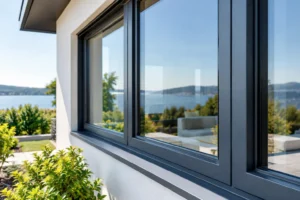
Security starts with the frame. Aluminium is naturally strong, which allows slimmer sightlines without sacrificing structural performance. That matters because a stronger frame gives the hardware and locking points a stable base to work from. If the frame flexes too easily, even good locks can be compromised. With aluminium, the material itself gives you a solid starting point.
That does not mean every aluminium bifold performs to the same level. Security is always a combination of the profile system, the lock set, the glazing specification, the cylinder and, just as importantly, the quality of the survey and installation. A premium system such as Smarts Visofold 1000 Bifold Doors or Schuco ASFD75 Bifold doors will usually offer stronger hardware options and more rigorous testing than an entry-level alternative, but the final result still depends on how the door is configured and fitted.
The aluminium bifold doors security features that matter most
When homeowners ask what makes one bifold more secure than another, they are usually shown a lock and told it is high security. In reality, good protection comes from several parts working together.
Multi-point locking systems
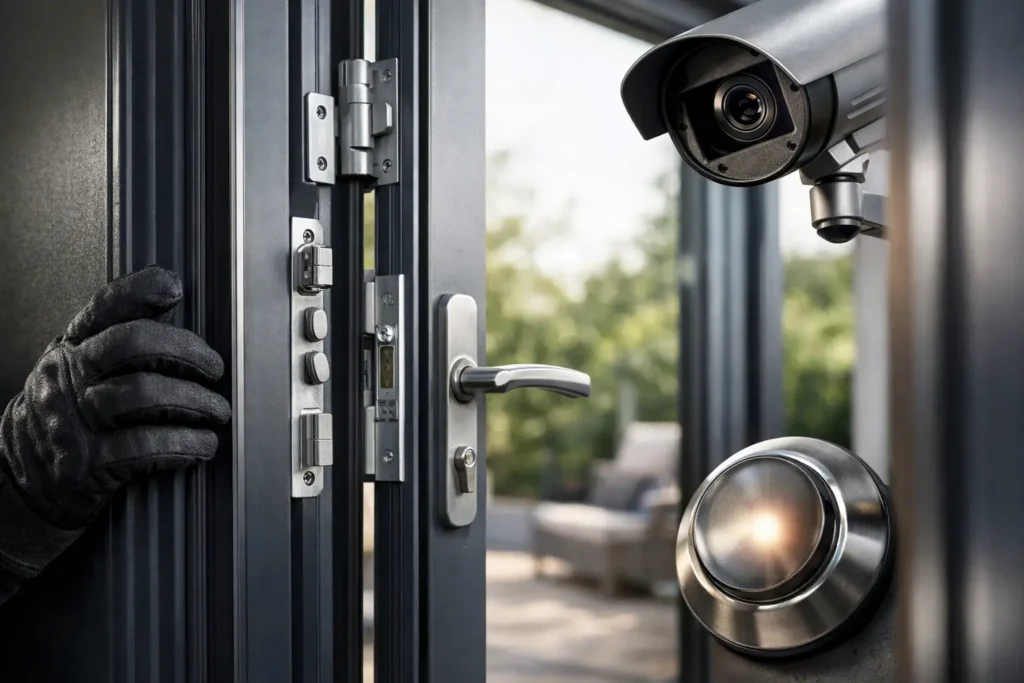
A single lock in the main traffic door is not enough for a wide glazed opening. Quality bifold doors use multi-point locking, which secures the leaf at several positions along the frame. This makes the door harder to force because pressure is distributed across multiple locking points rather than concentrated in one area.
On a bifold, you should also look at how the intermediate panels are secured when closed. Shoot bolts at the top and bottom of the sashes help anchor the panels into the frame, creating a tighter and more resistant overall system. The exact arrangement varies by design, especially depending on whether you have a traffic door, how many panels are included and which way they stack.
High-security cylinder protection
The cylinder is a common weak point in many external doors. On bifolds, choosing an anti-snap, anti-pick and anti-drill cylinder can make a substantial difference. These are designed to resist the kinds of forced entry methods often used on lower-grade door locks.
This is one of those details that can be overlooked when buyers focus on frame colour, handle finish or panel configuration. Yet a strong cylinder upgrade is often one of the most cost-effective security improvements available.
Toughened or laminated glazing
Glass specification matters as much as the frame. Toughened safety glass is standard in many high-quality systems and is much stronger than ordinary glass. Laminated glass adds another layer of protection because it is designed to stay in place even if broken, making access more difficult.
The right choice depends on the location of the doors and your priorities. For many ground floor applications, laminated glass can offer extra reassurance, particularly where the doors open onto a garden that is less visible from the street. It may also be worth considering if your bifolds form part of a large rear extension with broad expanses of glazing.
Internal beading and secure glazing retention
A secure bifold door should be designed so the glazing cannot be removed easily from outside. Internal beading helps prevent external access to the glass unit edges. Combined with the correct glazing retention system, it reduces the risk of someone trying to remove the pane rather than break it.
It is not the most visible feature, but it is one of the technical details that separates a purpose-designed external door system from a product chosen only for appearance.
Hinges, rollers and track security
Because bifold doors move across a track and fold on hinges, the hardware needs to do more than operate smoothly. It also needs to resist tampering and support the weight of the door leaves correctly over time. Poor-quality rollers or badly aligned tracks can create weak spots, not only in day-to-day use but also in security performance.
Top-of-the-range systems use engineered hardware designed for repeated use and secure engagement. This is particularly important on larger openings with heavier glazed panels. A door that drops slightly over time can stop locking cleanly, which is why long-term reliability is part of security, not separate from it.
Security testing and standards explained
For most homeowners, product testing offers useful reassurance because it gives you an objective benchmark. PAS 24 is one of the key standards to look for in external doors in the UK. It assesses how a door performs against a series of security tests designed to simulate forced entry.
You may also see references to Document Q compliance in certain projects, especially new builds. This relates to Building Regulations and security requirements for new dwellings. Not every home improvement project needs the same certification, but tested performance is always preferable to vague claims.
If a supplier says a bifold is secure, ask what that statement is based on. A tested system with specified hardware is more meaningful than a general promise. This is where an experienced specialist can guide you through the difference between brochure language and actual product performance.
Design choices that influence security
Security is not only about what is built into the door. Configuration choices can affect the finished result.
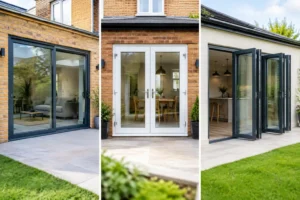
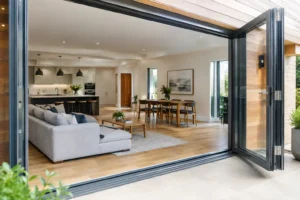
A traffic door, for example, gives you a conventional daily access leaf without having to fold the full set each time. This is practical, but it also means that leaf becomes the most frequently used locking point, so hardware quality is especially important. Panel count matters too. More panels can create a more dramatic opening, but they also increase the complexity of alignment and locking. That does not make larger bifolds less secure, only more dependent on precise manufacture and fitting.
Threshold choice can also influence the balance between convenience and performance. A low threshold improves accessibility and creates a neater transition to the garden or patio. In some cases, however, a fully rebated threshold may offer a stronger weather and security detail. It depends on the project, the exposure of the opening and how the space will be used.
Installation is part of the security package
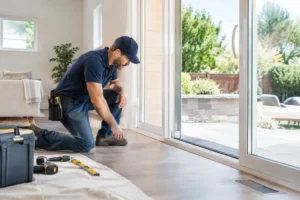
Even the best aluminium bifold doors security features can be undermined by poor installation. If the frame is not fixed correctly, if packers are badly placed, or if the door leaves are not aligned properly, locking points may not engage as intended. That can lead to operational issues at first and security problems later.
This is why a proper site survey matters. Openings need to be measured accurately, structural support has to be considered and tolerances must be right. On renovation projects, older masonry can introduce complications that only become obvious on survey. A specialist installer or supplier should account for those details before the door is manufactured, not after it arrives.
For supply-only customers, this is equally relevant. A high-quality system such as Smarts Visofold 6000 Bifold Doors, Origin OB49 Bifold Doors or Cortizo Bifold Plus still needs competent fitting to achieve its intended performance. The product and the installation cannot really be separated.
What to ask before you buy
If you are comparing quotes, ask direct questions. Is the system tested to recognised security standards? What cylinder is included as standard? Is the glazing toughened, laminated, or both? Are the beads internal? What locking points are fitted to the traffic door and the other panels?
You should also ask who is responsible for installation and aftercare. Security is not only about resisting forced entry on day one. It is also about how well the door continues to operate after months and years of regular use.
At Smarts Bifold Doors, this is why security is treated as part of the full specification rather than an optional extra to discuss at the end. Homeowners want slim frames, light-filled rooms and a better connection to the garden, but they should not have to compromise on peace of mind to get them.
The best bifold door is one that feels effortless to use every day and dependable every night. When you look beyond the headline design and focus on the details, that is where real value tends to show.