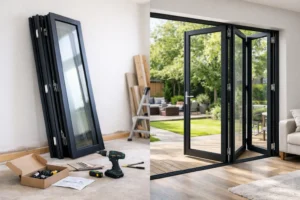
When a bifold door looks right on a home, it usually comes down to one thing – the configuration has been chosen properly. The best bifold door configurations explained simply are the ones that suit the width of the opening, how you want to move through the space, and how often the doors will actually be used day to day. A stylish frame and a good colour matter, but panel arrangement is what makes the door practical.
For most homeowners, this decision comes up during a kitchen extension, rear renovation or garden room upgrade. You want more light, a cleaner connection to the garden and a door that feels easy to live with in every season. That means thinking beyond the number of panels and looking at where they stack, which leaf opens first and whether you need everyday access without folding the whole set back.
Best bifold door configurations explained for real homes
The right configuration depends on how you use the room. A large family kitchen with regular garden access needs something slightly different from a snug, a side return extension or a formal dining area. There is no single best answer for every property, but there are clear reasons why certain layouts work better than others.
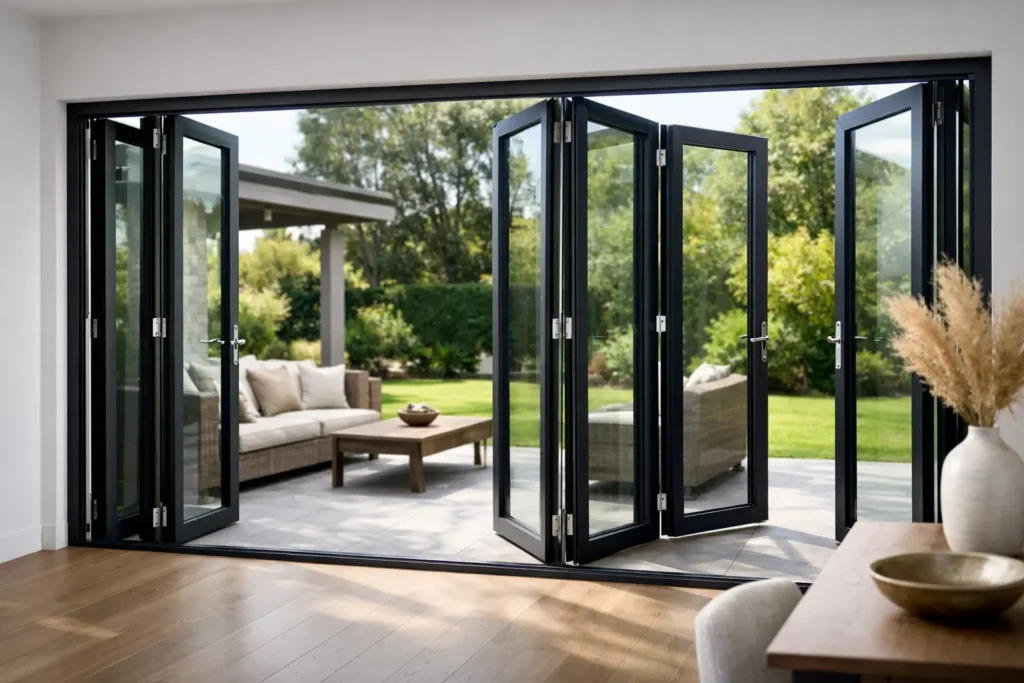
In practical terms, bifold configurations are usually described by the number of panels and the direction they open. A three panel set might stack to one side, while a four panel set may split in the middle or stack all one way. The choice affects the clear opening, furniture placement and how balanced the doors look from inside and outside.
If your priority is the widest possible opening in summer, a configuration that folds fully to one or both sides often makes sense. If your priority is convenience in winter, a traffic door can be just as important as the full opening itself. Homeowners often focus on the open view, but the closed and part-open positions matter just as much.
Three panel bifold doors
Three panel bifold doors are a popular choice for medium-width openings, particularly in kitchen diners and smaller extensions. They can give a generous glazed area without the door leaves becoming too narrow or the frame lines too busy.
This layout is often chosen when there is a preference for a lead door on one side and the remaining panels folding away together. It works well where one end of the opening suits the stacked panels, perhaps because there is a return wall, cabinetry or outdoor furniture that would otherwise get in the way. The trade-off is that the opening is not symmetrical, so if visual balance is your top priority, you may prefer an even-numbered arrangement.
Four panel bifold doors
A four panel layout suits wider openings and tends to give a more balanced appearance. This is one of the most flexible options because the doors can be set to split and stack in the centre or fold all to one side, depending on the opening and the room layout.
A split configuration is often a strong choice where you want a central opening onto a patio or want the elevation to feel even from outside. Folding to one side can be better where one side of the opening is more usable for stacking. Neither is automatically better. It depends on how the room is arranged and whether the stack location interferes with furniture, blinds or circulation.
Five and six panel bifold doors
For larger rear elevations, five and six panel sets can create an impressive opening and a contemporary glazed finish. These are often used in open-plan kitchen and living spaces where homeowners want a strong indoor-outdoor feel.
With wider openings, panel width becomes more important. Too many narrow leaves can make the closed view feel overly segmented. Too few oversized leaves can affect the weight and practicality of operation. This is where choosing a well-designed aluminium system matters. Products such as Smarts Visofold 1000 Bifold Doors or Schuco ASFD75 Bifold doors are often selected because they combine slim sightlines, good thermal performance and dependable operation across bespoke sizes.
How opening direction changes the result
One of the most overlooked parts of choosing bifold doors is deciding whether they open inwards or outwards. Both can work very well, but they suit different spaces.
Outward-opening bifolds are often preferred where you want to preserve interior floor space. This can be especially useful in kitchens, where islands, dining tables and cabinetry already compete for room. They also help keep the stacked panels outside rather than projecting into the home when open. The main consideration is outside space. You need enough room on the patio or terrace for the leaves to fold back comfortably.
Inward-opening bifolds can suit properties where external space is tighter or where the outside area is raised, stepped or interrupted by planting. They may also feel more protected in certain layouts. The compromise is that when fully open, the stacked panels sit inside the room footprint.
The role of a traffic door
A traffic door is one of the most useful configuration options for everyday living. This is a leaf that operates like a normal single door without needing to fold the whole set.
For many households, it quickly becomes the most-used part of the system. It gives easy access to the garden for children, pets, hosting or simply stepping outside with a cup of tea. Without it, you may find yourself opening more of the door set than you really need, especially in colder weather.
That said, not every opening benefits from one. On smaller sets, the layout may already be simple enough that a separate traffic door is less important. On wider family spaces, it is usually worth serious consideration.
Best bifold door configurations explained by room type
The room itself often points you towards the right answer. In a kitchen extension, a three or four panel setup with a traffic door is commonly the most practical. It gives good glass area, straightforward access and enough flexibility for daily use.
In a wider open-plan rear extension, four, five or six panels may be more suitable, particularly where the aim is to open up most of the elevation in warmer months. Here, symmetry often matters more because the doors are such a prominent design feature.
For smaller openings, homeowners sometimes assume bifolds are always the best fit. That is not always the case. If the opening is relatively modest and your priority is uninterrupted glass rather than a fully folded opening, a sliding system such as the Smarts Visoglide Plus sliding door or Cortizo COR Vision Sliding Door may be the better answer. Bifold doors excel when you want the opening cleared back. Sliding doors often win on sightlines when closed.
Thresholds, sightlines and everyday practicality
Configuration is not just about panel count. Threshold choice has a big effect on how the door feels to use. A low threshold improves accessibility and helps create a more level transition to the garden, which is especially valuable in family homes and age-friendly renovations. In many cases it also improves the visual flow from inside to outside.
You do, however, need to balance this with weather performance and the specifics of the opening. The most suitable threshold depends on exposure, drainage and floor build-up. A specialist will usually advise based on the property rather than recommending the same detail every time.
Sightlines also deserve attention. Slimmer aluminium frames help keep the view open and modern, but panel arrangement still changes the look. More panels mean more vertical frame lines. That may be acceptable or even desirable on a wide elevation, but on a smaller opening it can feel unnecessarily busy.
Thermal performance should stay part of the conversation as well. Modern aluminium bifold systems with a thermal break and energy-efficient glazing can perform very well, but different sizes and configurations affect the overall specification. A door should not only look good in July. It should also feel comfortable in January.
Choosing the right system for your configuration
The product system and the configuration need to work together. Some homeowners start with aesthetics, others with budget or performance, but ideally the final choice should balance all three.
If you want a proven aluminium option for a contemporary home improvement project, systems such as Smarts Visofold 6000 Bifold Doors, Cortizo Bifold Plus and Origin OB49 Bifold Doors each bring different strengths depending on size, styling and specification priorities. The right recommendation will depend on your opening width, desired sightlines, threshold requirements and whether you are looking for supply only or full installation.
What matters most is that the configuration is tailored, not guessed. The best result usually comes from discussing how the room is used, where furniture sits, how the garden is accessed and what matters most when the doors are closed, partly open and fully folded back.
A bifold door should feel easy from the first day, not impressive only on viewing. If the layout is chosen carefully, the doors will bring in light, improve movement through the home and make the whole extension work harder for the way you actually live.