A lot of homeowners love the look of bifold doors until one practical question cuts through the excitement – are bifold doors energy efficient enough for everyday family life in the UK? It is a fair concern. Large glazed openings can transform a kitchen extension or rear living space, but nobody wants a room that feels cold in January or overheated in July.
The short answer is yes, bifold doors can be energy efficient. The longer answer is that performance depends on the system, the glazing, the frame design and, just as importantly, the quality of the installation. A well-made aluminium bifold door with a proper thermal break and energy efficient glass can perform very well in a modern home. A poor-quality product, or one fitted badly, can fall short.
Are bifold doors energy efficient in real homes?
They can be, and modern systems are a long way from older patio doors that were often blamed for draughts and heat loss. Today’s aluminium bifolds are engineered to meet current Building Regulations, with insulated profiles, improved gaskets, better weather sealing and glazing options designed to reduce heat transfer.
That matters because energy efficiency is not only about the headline figure on a specification sheet. It affects how comfortable your room feels when you are sitting near the doors, how hard your heating system has to work, and whether your extension feels like a natural part of the home rather than a space that is too cold to enjoy in winter.
For many homeowners, the concern comes from the amount of glass. It is easy to assume that more glass means more heat escaping. In reality, modern double glazing and thermally broken aluminium frames have changed that picture significantly. You still need to choose carefully, but bifolds are no longer the weak point they were once assumed to be.
What actually makes a bifold door energy efficient?
The biggest factor is the overall system rather than any single feature. Frame material, profile design, glass specification and installation all work together.
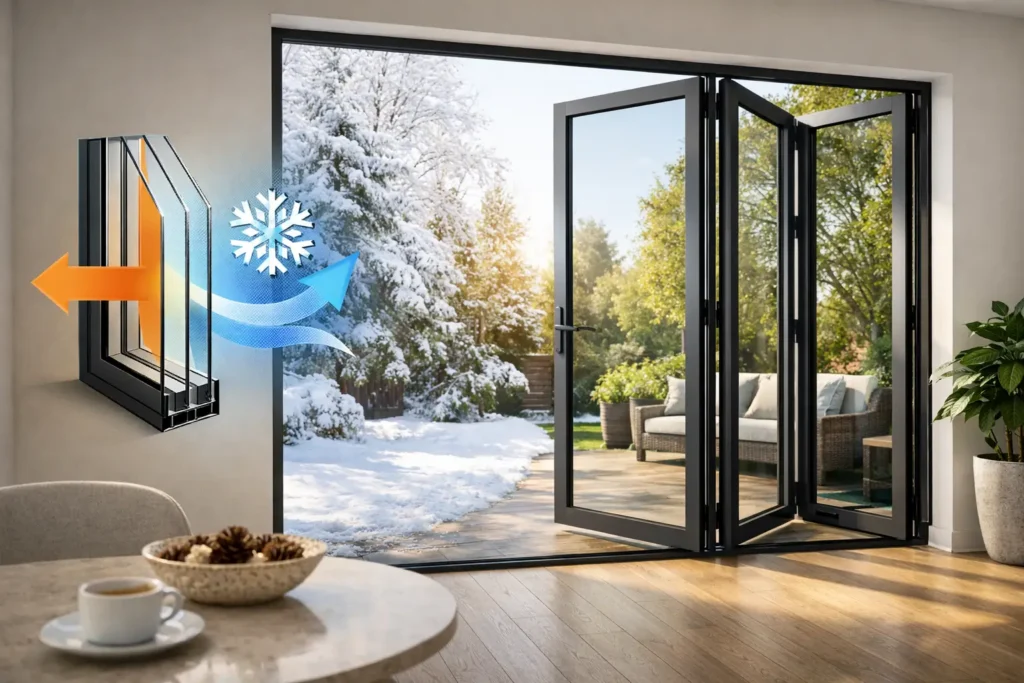
Aluminium has become a leading choice for contemporary bifold doors because it is strong, slim and durable. On its own, metal is conductive, which is why quality systems include a thermal break. This is an insulating barrier within the frame that helps reduce heat passing from inside to outside. Without that feature, aluminium would be a much less effective option for thermal performance.
Glazing is equally important. Energy efficient glass typically uses low-emissivity coatings, gas-filled cavities and warm edge spacer bars to reduce heat loss. These details may sound technical, but the benefit is simple enough: more warmth stays indoors when temperatures drop.
Seals and gaskets also play a major role. Bifold doors have multiple panels and moving parts, so they need to close tightly and consistently. Good perimeter seals help prevent draughts, rain ingress and cold spots around the frame. This is one reason why choosing a proven system matters. Well-designed products such as Smarts Visofold 1000 Bifold Doors or Schuco ASFD75 Bifold doors are built with this level of performance in mind.
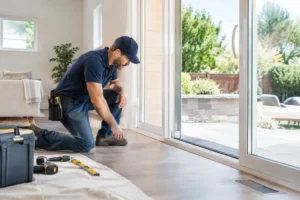
Then there is installation. Even an excellent door can underperform if the opening is out of square, the frame is not packed correctly or perimeter sealing is poor. The gap between the product and the wall is one of the most overlooked areas in thermal performance.
Understanding U-values without the jargon
If you have started comparing doors, you will have seen U-values mentioned. This figure measures how easily heat passes through a product. Lower is better.
For homeowners, the key point is that a competitive U-value usually indicates a better-performing door, provided it reflects the whole door set rather than just the centre pane of glass. That distinction matters. Some quotes make products look better by highlighting glass-only figures, but the real-world performance comes from the complete frame and glazing combination.
If you are comparing systems, ask what the quoted U-value refers to and whether the door configuration matches the size and layout you actually want. A three-panel set may perform differently from a wider five-panel arrangement, simply because frame-to-glass ratios and overall dimensions change.
Aluminium bifolds versus other door types
Bifold doors are not the only option for improving access to the garden, so it is sensible to compare them fairly.
Sliding doors often achieve excellent thermal performance because they have fewer panel junctions and larger fixed panes. Products such as the Smarts Visoglide Plus sliding door or Cortizo COR Vision Sliding Door can be a strong choice where expansive views are the priority. However, bifolds offer a different benefit: they can open up much more of the aperture, which is ideal for entertaining and indoor-outdoor living.
Against older French doors or dated patio systems, modern bifolds are typically much stronger on thermal efficiency, weather sealing and security. Against premium sliding systems, it can be closer, and the best option depends on how you use the space. If you want the widest possible clear opening, bifolds usually come out ahead. If your focus is on large panes and minimal sightlines, a slider may suit better.
That is why the right question is not simply whether bifold doors are energy efficient. It is whether the right bifold door is efficient enough for your room, your layout and your priorities.
Do bigger bifold doors lose more heat?
A larger opening will usually have more potential for heat loss than a smaller one, simply because there is more glazed area overall. But that does not mean large bifolds are a poor choice. It means specification becomes more important.
In many extensions, the thermal performance of the doors should be considered alongside the roof glazing, wall insulation, floor insulation and the orientation of the room. South-facing glass may gain useful solar warmth in cooler months, while west-facing doors can lead to more overheating in summer if shading is not considered.
This is where product choice and design advice make a difference. Features such as integral blinds are not the only answer. Glass specification, ventilation strategy and the proportions of the opening all help create a room that feels balanced throughout the year.
Common reasons bifold doors feel cold
When homeowners say bifolds are not energy efficient, the issue is often not the concept itself but one of a few practical problems.
The first is an outdated or poorly specified product. Older systems may lack the thermal break technology and glazing performance expected today. The second is poor installation, which can create draughts around the frame even if the doors themselves are sound. The third is unrealistic comparison. No heavily glazed opening will insulate in exactly the same way as a fully insulated cavity wall.
Comfort also depends on the wider room design. If a new extension has lots of glazing, limited radiator output and no underfloor heating, the doors may take the blame for a broader heating issue. That is why whole-room planning is so important.
Choosing an energy efficient bifold door
If thermal performance is high on your list, focus on evidence rather than broad claims. Ask about the thermal break, the glazing make-up, the tested U-value and whether the system complies with current standards. Check the threshold and weather rating as well, especially if the doors open onto an exposed garden or patio.
It is also worth asking how the doors will be installed and finished internally and externally. A careful survey and a properly prepared opening are just as important as the product itself. This is particularly relevant in renovation projects where existing walls, floors and lintels may not be perfectly true.
For homeowners who want aluminium for its slim sightlines and long-term durability, there is no need to assume style comes at the expense of warmth. Modern systems are designed to deliver both. That is one reason aluminium bifolds remain such a popular choice for kitchen extensions and open-plan living spaces.
Smarts Bifold Doors works with systems built for this balance – contemporary appearance, strong security and thermal performance that supports comfortable everyday use. The key is making sure the specification matches the opening rather than choosing on price alone.
Are bifold doors worth it for energy efficiency?
If you choose a quality system and have it installed properly, bifold doors can absolutely be an energy efficient option for a UK home. They bring in natural light, improve access to the garden and help create the open, modern feel many homeowners want, without automatically compromising comfort.
The trade-off is that not all bifolds are equal. Thermal efficiency is built into the details: the frame design, the glass, the seals and the fitting. Get those right, and bifold doors can enhance both how your home looks and how it performs.
If you are planning an extension or replacing older doors, it is worth taking a little extra time over the specification. The best result is not just a brighter room. It is a room that feels right in every season.