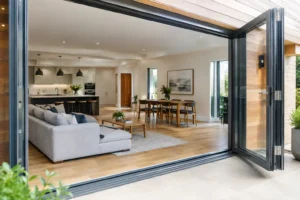

The wrong frame colour can make a beautifully designed opening feel out of place. The right one can sharpen the whole look of a kitchen extension, help a garden-facing room feel brighter and tie new glazing into the rest of the property. That is why bespoke aluminium door colours matter so much. They are not a finishing touch in the casual sense. They are part of the design decision.
For homeowners choosing bifold or sliding doors, colour usually sits alongside sightlines, opening configuration, security and thermal performance. It deserves the same level of attention. Aluminium gives you far more freedom than standard off-the-shelf options, but that also means more decisions to make. The best choice depends on the character of your home, the amount of glass, the direction of light and whether you want the doors to blend in quietly or stand out.
Why bespoke aluminium door colours make a difference
Aluminium doors have a distinctly architectural feel. Slim frames, larger glazed areas and crisp lines suit contemporary homes especially well, but they can also work very successfully in period properties when the finish is chosen carefully. Colour influences how bold or subtle that final result feels.
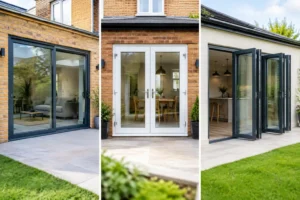
A dark anthracite finish, for example, can make glazing lines look sharper and more defined. A lighter neutral can soften the appearance of a large opening and stop it feeling too dominant across the rear elevation. Black often delivers strong contrast and a premium look, but it can be too severe on some homes, particularly if the rest of the joinery is warmer or more traditional. White remains popular because it is clean and familiar, though some homeowners find it less distinctive on a modern extension.
This is where bespoke colour options become valuable. Rather than working around a limited palette, you can choose a finish that suits the architecture instead of forcing the architecture to suit the product.
Popular bespoke aluminium door colours for UK homes
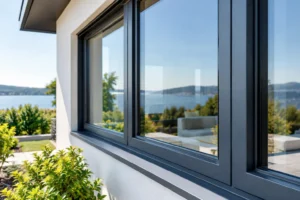
The most requested shades tend to be contemporary, practical and easy to pair with other finishes. Anthracite grey remains a leading choice because it suits brick, render, timber cladding and stone without much effort. It also works well across products, so if you are matching bifold doors with Smarts Alitherm 400 Windows or a roof lantern, the whole scheme can feel consistent.
Black is often chosen where homeowners want a more dramatic frame line. It can look excellent on modern renovations and monochrome schemes, particularly with large-format glazing such as Smarts Visofold 1000 Bifold Doors or a Smarts Visoglide Plus sliding door. That said, black needs a bit more care in the overall design. Against red brick or a cottage-style exterior, it may feel too stark unless there are other dark details nearby.
White and off-white shades still have an important place. They are especially useful where the aim is to keep attention on the glass and the view rather than the frame itself. In smaller rooms, lighter frame colours can also help the opening feel less visually heavy.
Beyond these core choices, more homeowners are looking at muted greens, greys with warmer undertones, and heritage-inspired shades for renovation projects. These colours can be particularly effective where aluminium doors are being introduced into a property that is not purely modern. The finish can help bridge the gap between old and new.
Matching colour to the style of your home
The best colour is rarely chosen in isolation. It needs to sit comfortably with the brickwork, render, roofline, internal flooring and kitchen palette, especially when the doors open from a main family space.
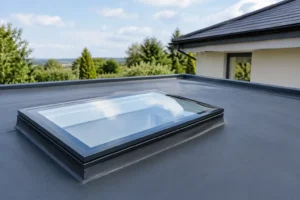
On a contemporary extension, darker colours often work well because they reinforce the clean geometry of the frames. Products such as Schuco ASFD75 Bifold doors, Cortizo Bifold Plus or Origin OB49 Bifold Doors naturally suit this kind of scheme. If the extension includes flat roof lights or wide sliding doors, a coordinated darker finish can create a strong, consistent architectural look.
On a more traditional property, the decision is often more balanced. You may want the performance and slim sightlines of aluminium without making the doors look too modern from the outside. In those cases, softer greys, muted heritage shades or a dual-colour finish can be a better answer than a hard black or very industrial-looking tone.
Internal design matters just as much. Open-plan kitchens are often built around cabinetry, worktops and flooring that already have a clear colour story. If your doors are one of the largest visible elements in the room, they need to support that scheme rather than compete with it.
Should you choose the same colour inside and out?
Not always. One of the key advantages of bespoke aluminium door colours is the option to specify different finishes internally and externally. This is particularly useful when the exterior of the property calls for one look, while the interior needs something lighter or warmer.
A homeowner may choose anthracite outside to complement roof tiles, guttering and external glazing, but prefer white inside to keep the room feeling brighter. That can work very well in north-facing spaces or rooms where darker internal frames might feel too dominant.
The trade-off is cohesion. A single colour inside and out can feel more resolved and design-led, especially on fully glazed extensions where the frame is visible from multiple angles. A dual-colour setup offers more flexibility but should still feel intentional. The aim is not to solve one design problem by creating another.
Finish, durability and long-term appearance
Colour choice is not only about style. The quality of the finish has a direct impact on how the doors look over time. Aluminium is a strong, stable material, and when paired with a high-quality powder-coated finish it offers excellent durability for domestic applications.
That matters in the UK climate. Doors at the rear of a property are exposed to rain, sun, changing temperatures and day-to-day use. A properly finished aluminium system is designed to retain its appearance well with relatively low maintenance. That is one reason aluminium remains such a strong choice for homeowners looking for a long-term upgrade.
It is still worth thinking about practicalities. Very dark finishes can show dust, pollen and water spotting more readily, particularly on wide external frames in sunny positions. Lighter tones may be more forgiving in everyday use. This does not mean dark colours are the wrong choice, only that appearance and maintenance should be considered together.
Colour and product choice go hand in hand
Not every system suits every design brief in the same way. The frame depth, sightlines and opening style will all affect how a colour is perceived once installed.
For example, on bifold doors with slimmer profiles, a dark finish can emphasise the elegance of the frame without making it feel too heavy. On larger sliding systems, darker colours can visually reduce the frame and keep the focus on the glass. That is one reason they remain popular on products such as the Schuco ASE80 Sliding Door and Cortizo COR Vision Plus Sliding Door.
If you are replacing older patio doors, the change in colour can be just as transformative as the change in product. A dated white PVCu opening replaced with a made-to-measure aluminium system in a contemporary finish often changes the feel of the entire elevation. It can make the property look more current, more valuable and better connected to the garden.
How to choose with confidence
Start with the fixed elements of the house. Brick, render, roof colour and internal flooring are much harder to change than door frames, so your chosen finish should respond to them. Then think about the role the doors play in the room. If they are there to frame a garden view, a quieter colour may be best. If they are a centrepiece in a rear extension, a bolder finish may suit the project.
It also helps to consider how the colour will work across other aluminium products if you are planning a wider upgrade. Matching doors with windows, roof glazing or screens can create a more polished result than treating each element separately.
Most importantly, choose a supplier that can explain the options clearly and tailor the specification to your home. Good advice should cover more than shade charts. It should include finish quality, internal and external colour combinations, compatibility with your chosen system, and how the final result will perform as well as look.
With bespoke glazing, colour is not a small cosmetic decision. It is part of how the doors sit within your home for years to come. Get it right, and the frames will do exactly what they should – complement the architecture, support the light and make the opening feel like it has always belonged there.