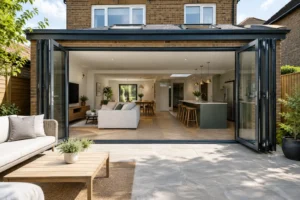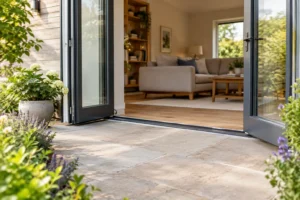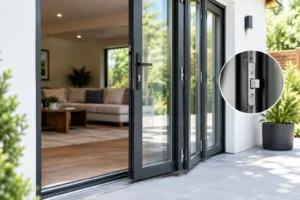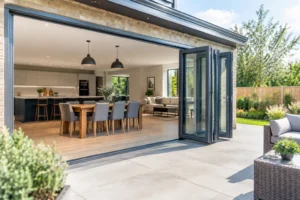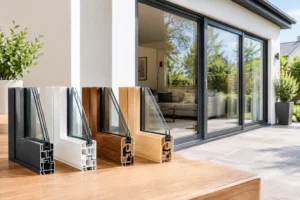
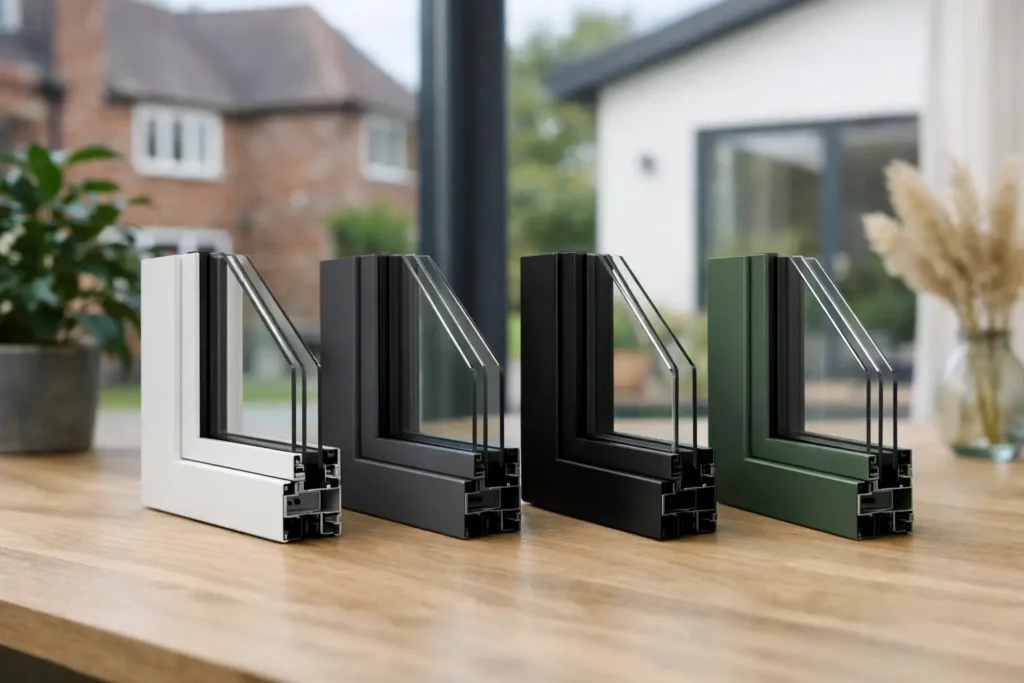
A window colour can make a new extension feel purpose-built or make it look like an afterthought. The best aluminium window colours do more than follow a trend: they connect the glazing to your brickwork, roofline, interior finishes and the character of your home. Because aluminium windows are made to order and designed to last for decades, it is worth making this decision with the whole property in mind.
The best aluminium window colours for modern UK homes
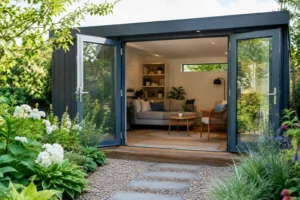
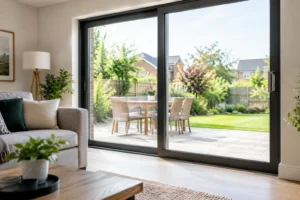
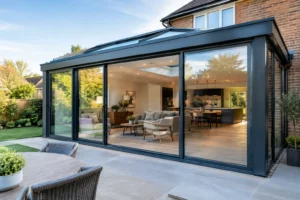
For most contemporary renovations, anthracite grey remains the leading choice. Usually specified as RAL 7016, it has enough depth to define slim aluminium frames without appearing as severe as black. It works particularly well against pale render, buff brick, timber cladding and modern roof tiles. Anthracite grey also sits comfortably alongside grey bifold or sliding doors, helping a rear extension read as one considered architectural element.
Black is the bolder alternative. RAL 9005 gives windows a crisp, graphic outline and can make large panes of glass look especially impressive. It is a strong fit for industrial-inspired extensions, white-rendered elevations and homes with black gutters, fascias or steel-look details. However, black can look heavy on a small façade or a house with many narrow window openings. It also absorbs more heat in direct sun, so it is sensible to choose a high-quality powder-coated finish from an established aluminium system.
White, commonly RAL 9016, is still one of the most practical and effective aluminium window colours. It creates a clean finish that suits traditional homes, coastal properties and darker brickwork, while allowing the glazing itself to remain the visual focus. White frames can also make smaller rooms feel brighter, particularly where windows are not full height. The trade-off is that white does not provide the same contrast as darker frames, which some homeowners want in a contemporary extension.
For homes where a softer look is needed, light grey and stone shades are increasingly popular. Colours such as RAL 7035, RAL 7044 or a carefully selected warm grey can complement limestone, cream render and pale brick without creating a stark contrast. These shades tend to feel more understated than anthracite and often work well on detached homes where the aim is modernisation rather than a dramatic change in style.
Match the frame colour to the elevation, not just the kitchen
A kitchen sample board can be useful, but windows are viewed from outside far more often than a kitchen cabinet is. Start by looking at the fixed elements of your home: brick colour, roof tiles, render, stonework, guttering and existing front door. These features should carry more weight than a fleeting interior trend.
Red brick often pairs successfully with anthracite grey, black, cream or heritage green. Dark grey offers a modern contrast without fighting the warmth of the brick, while black creates a sharper, more contemporary look. On yellow or buff brick, softer greys, white and muted green shades usually feel more natural. If your property has strong orange brick, avoid choosing a grey with an obvious blue undertone unless you want a deliberately high-contrast finish.
Rendered homes offer more freedom. Black frames bring definition to white or pale render, while anthracite grey creates a slightly less dramatic effect. With darker render, lighter grey or white frames can prevent the elevation from becoming too flat and imposing. The right answer depends on the amount of glazing: a single small window can carry a dark frame easily, whereas a full wall of black-framed doors and windows will make a much stronger statement.
For a period property, colour should respect the existing proportions and materials. A heritage green, deep navy, warm grey or off-white can look more considered than standard anthracite. Aluminium does not need to imitate timber to suit an older home, but it should be selected with care. Fine sightlines and a sympathetic colour are usually more convincing than a fashionable shade that jars with original brickwork or stone.
Think about sunlight and maintenance realistically
Darker finishes show pollen, dust and water marks more readily than mid-tone greys, especially on frames beneath projecting roofs or close to mature trees. This does not mean dark aluminium windows are difficult to maintain. A regular gentle clean with warm water and a non-abrasive cloth is normally sufficient, but it is a practical factor when choosing black for a busy garden elevation.
Sunlight also changes how colour appears. Anthracite grey may look nearly black on a north-facing wall and noticeably lighter in bright afternoon sun. Order physical colour samples where possible and view them outdoors against your property at different times of day. A colour that looks ideal under showroom lighting can feel very different beside your actual brickwork.
Use dual-colour aluminium windows where it earns its place
Dual-colour windows have one finish outside and another inside. They are an excellent option when the exterior needs to complement the property but the interior has a different design direction. For example, anthracite grey outside with white inside is a popular combination for homeowners who want a modern external elevation and a light, flexible interior.
A black exterior with a softer internal shade can also work well in open-plan spaces, where black frames might otherwise dominate lighter walls and ceilings. Conversely, matching dark frames inside and out gives a deliberate, architectural feel, particularly around large glazed openings. It suits a kitchen-diner extension with dark metalwork, statement lighting or a contemporary staircase.
There is usually an additional cost for dual colours compared with a single finish, and not every bespoke shade is available on every system. It is also worth considering how the internal frame colour will sit with blinds, curtains and wall paint, rather than choosing it purely to match a kitchen at the point of installation.
Coordinate windows with doors and roof glazing
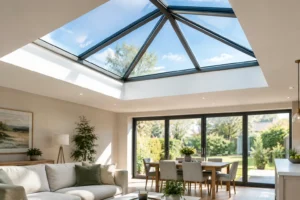
When an extension includes bifold doors, sliding patio doors and rooflights, keeping the frame colour consistent is usually the safest route. Matching aluminium systems creates a calm, cohesive finish and helps the new space feel larger. A Smarts Alitherm 400 window, for instance, can be specified to complement aluminium doors and roof glazing within the same project.
Consistency does not always mean using the same colour everywhere. A front elevation might suit white or a heritage shade, while the rear extension uses anthracite or black. This approach can work well when the original house and new addition have clearly different architectural roles. What matters is that each elevation has a reasoned palette, rather than a collection of unrelated finishes.
Hardware needs attention too. Window handles are often available in colours that coordinate with the frame, including black, white, chrome and anthracite. Matching handles provide a neat finish, while contrasting hardware can add detail to a simple internal scheme. For doors, consider the handle, hinge and track finishes as part of the same decision.
Do not let colour distract from performance
The finish is visible every day, but the quality behind it matters just as much. A properly specified aluminium window should combine a durable powder-coated surface with a thermal break and energy-efficient glazing. The thermal break reduces heat transfer through the frame, while the glass specification helps retain warmth and manage solar gain.
Ask about the available RAL colours, whether your preferred finish is standard or bespoke, and the expected lead time. Standard greys, black and white are often the most straightforward choices; specialist metallic, textured or heritage shades may take longer and cost more. A sample is particularly valuable for textured finishes, as their appearance can be quite different from a smooth powder coat.
Security, ventilation, opening style and compliance with Building Regulations should be agreed alongside colour selection. A beautiful frame is only a good investment when the window is correctly designed for its location, professionally measured and installed to perform as it should.
The most successful choice is rarely the colour that looks best on a small swatch. It is the one that makes your home look more intentional from the pavement, feels right from the garden and still suits the rooms behind the glass years after the renovation is complete. A tailored quotation and colour sample review can turn that final decision from a guess into a confident part of your project.