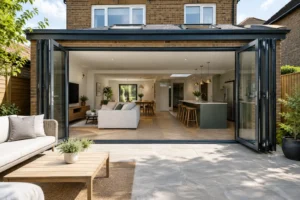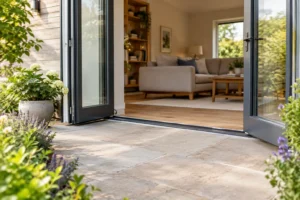
A traffic door in bifolds is one of the most practical choices you can make when planning a new kitchen extension, garden room or open-plan living space. Rather than opening the full run of folding panels every time somebody wants to step outside, one panel operates as a conventional hinged door. It gives you quick, controlled access to the garden while keeping the rest of the door closed, secure and weather-tight.
For many UK homes, this small configuration decision has a bigger effect on day-to-day use than the colour of the frames or even the total number of panels. The key is making sure the traffic door works with the size of the opening, the way you use the room and the direction the door needs to open.
What is a traffic door in bifolds?
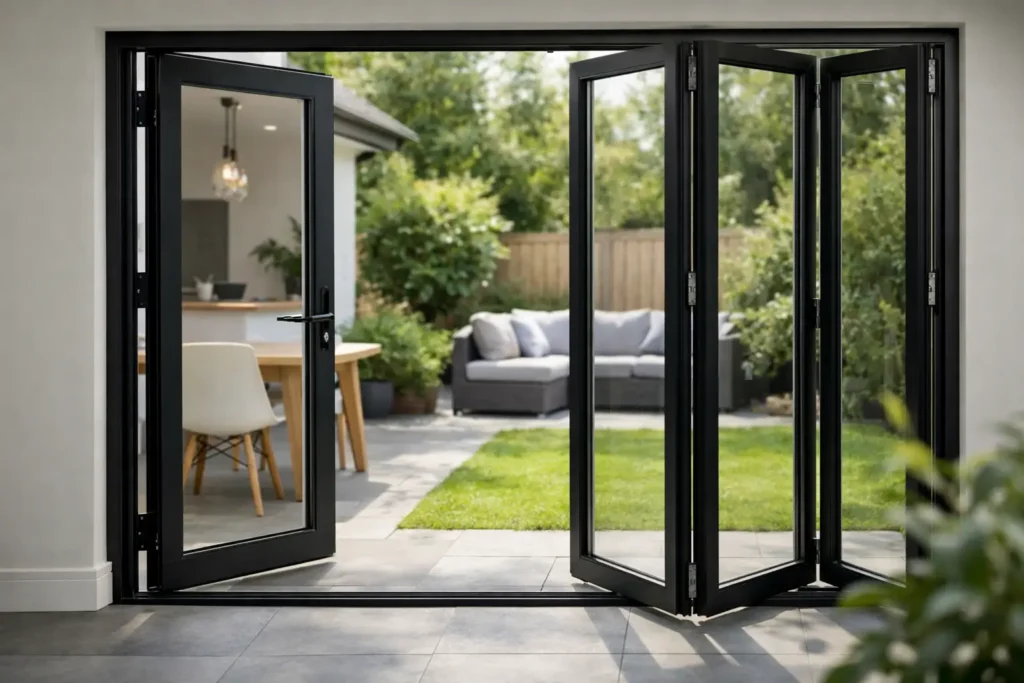
A traffic door, sometimes called an access door or daily-use door, is a lead panel within a bifold door set. It has its own handle and locking mechanism, allowing it to open independently without stacking the other panels to one side.
When the weather is mild and you want the entire opening clear, you can still fold the full set back as normal. But on a rainy morning, when letting the dog out, carrying drinks to the patio or popping into the garden for a moment, the traffic door is much simpler to use.
It is not necessarily a separate door added alongside the bifolds. In most designs, it is one of the bifold panels configured to function as an everyday entrance. This helps retain the clean, consistent appearance that makes aluminium bifolds so popular in contemporary extensions.
Why homeowners choose an everyday access door
A wide bifold arrangement is designed to transform the relationship between home and garden. Fully opened, it can remove the visual and physical barrier between the two spaces. Yet most households do not need the whole aperture open every day of the year.
A traffic door avoids the inconvenience of releasing, folding and securing several panels just to walk outside. It can also help limit heat loss during colder months, because only a single panel is opened. Aluminium systems with a thermal break and energy-efficient glazing already provide strong thermal performance, but practical habits still matter when it comes to keeping a room comfortable.
There is also a security benefit in everyday use. A properly specified traffic door can be fitted with high-quality handles, multi-point locking and secure hinges, so the main bifold system remains closed and locked behind it. You retain the flexibility of a large opening without treating the entire door set as the only route in and out.
Where should the traffic door be positioned?
The best position depends on how people move through the room and across the patio. There is no single right answer, but the decision should be made early, before manufacturing begins.
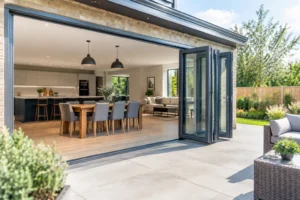
An access door at one end of the arrangement is often the most straightforward option. This can work particularly well where a kitchen island, dining table or sofa layout creates a clear route to one side of the opening. It also allows the remaining panels to fold neatly away in a predictable direction when fully opened.
A centrally positioned traffic door can suit some layouts, especially where access is needed from the middle of a wide opening. However, it may make the folding configuration more complex and can affect where the stacked panels sit. Your installer or supplier should set out the opening arrangement clearly, including which panels fold, where they stack and whether the traffic door opens inwards or outwards.
Think beyond the view from inside. Consider the garden path, steps, outdoor dining area and any furniture close to the threshold. A door that opens outwards protects internal floor space, but it needs a clear area on the patio. An inward-opening door can be useful where external space is tight, although furniture inside must not obstruct its swing.
Inward or outward opening: the practical choice
For many extensions, outward-opening bifolds are preferred because the panels and traffic door do not take up valuable indoor space. This is especially helpful in kitchens and living areas where the furniture layout is carefully planned.
Outward opening is not always suitable. If there is a narrow balcony, a raised deck with restricted room, a boundary wall or a busy path immediately outside, an inward-opening configuration may be the more sensible option. In exposed locations, it is also worth discussing how prevailing wind and driving rain will affect the door in use.
The important point is that a traffic door should feel natural to open. If it clashes with a dining chair, blocks a route through the kitchen or swings across a garden step, it will quickly become frustrating. Bespoke aluminium bifolds give you the opportunity to solve these issues before installation rather than working around them afterwards.
Thresholds, level access and weather protection
The threshold deserves as much attention as the panels themselves. It affects how easily you can walk through the traffic door, how the inside meets the outside and how the system manages rainwater.
A low threshold can create a refined indoor-outdoor finish and make access easier for children, pushchairs and anyone with reduced mobility. However, level or near-level access needs careful detailing. External ground levels, drainage falls and the exposure of the property all need to be considered so water is directed away from the doorway.
Where Building Regulations apply, the chosen threshold and surrounding construction should be assessed as part of the wider project. Safety glazing is also normally required in critical locations within doors and low-level glazed areas. A knowledgeable supplier can help ensure the bifold specification supports the requirements of the installation rather than leaving important details to chance.
Choosing the right panel configuration
The number of panels in your bifold door set influences how well a traffic door will work. A three-panel system is a popular choice for medium-sized openings, with one lead panel often used for daily access. Larger four-, five- or six-panel systems can offer more flexibility, but the arrangement needs to be planned around panel widths, opening direction and where the panels will stack.
Very narrow panels may look elegant across a large opening, but a narrow traffic door can feel restrictive when carrying a tray, moving garden furniture or bringing in shopping. On the other hand, making one panel significantly wider than the rest may alter the balanced appearance of the doors. The most successful designs combine comfortable access with proportionate sightlines.
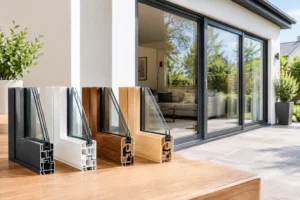
Systems such as Smarts Visofold 1000 Bifold Doors are available in a wide choice of configurations, allowing the access leaf, opening direction and panel split to be tailored to the property. The exact options will depend on the structural opening, glass specification and chosen hardware, which is why a measured quotation is more useful than selecting a configuration from a generic chart.
Do not overlook handles, locks and hardware
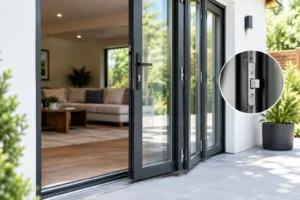
The traffic door is likely to be the most frequently used part of the bifold system, so its hardware must be chosen for regular use. A quality handle should feel substantial, operate smoothly and complement the finish of the aluminium frames. Black, white, stainless steel and colour-matched options can all change the final look.
Security should be built into the specification, not added as an afterthought. Look for multi-point locking, secure cylinder options, dependable hinges and properly engineered shootbolts within the folding panels. When closed, the traffic door should sit neatly within the system, with consistent gaps and effective weather seals.
For homes with young children, consider how the handle height, key operation and opening direction will work in practice. For households with pets, a traffic door can reduce the temptation to leave the entire bifold set partially open, which is better for security and helps keep unwanted rain or cold air outside.
When a traffic door may not be necessary
A traffic door is highly useful for most bifold installations, but it is not compulsory. If the bifolds are a secondary feature and there is already a nearby back door used every day, you may prefer to maximise symmetry or choose a simpler folding arrangement.
Likewise, if your priority is the widest possible uninterrupted glass view and you expect to open the full doors mainly for entertaining, a sliding door may be worth considering. Products such as the Smarts Visoglide Plus sliding door can provide large glazed panels and slim sightlines, although they do not create the fully open aperture associated with bifolds.
The right choice comes down to how the room will be lived in. A family kitchen with regular garden access benefits differently from a formal lounge overlooking a terrace. There is no benefit in specifying a traffic door simply because it is available if another entrance already handles the daily footfall.
Make the everyday route part of the design
Bifold doors are often chosen for the big moments: summer gatherings, open doors, children running between the house and garden. A traffic door is about the quieter moments that happen every day. It keeps access easy when the full opening is not needed, while preserving the light, security and architectural finish of a bespoke aluminium door set.
Before committing to a configuration, stand in the planned room and trace the route to the garden. Consider furniture, patio levels, opening direction and how often that door will be used in January as well as July. Getting those details right will make your bifolds feel just as impressive on an ordinary weekday as they do when the whole garden is open to the house.