A patio door can transform a room – but only if the size is right. Measure badly and even the best-looking door will create delays, fitting problems, and avoidable cost. If you are planning a replacement, an extension, or a wider opening onto the garden, knowing how to measure patio doors properly is the first step towards a smooth project.
For most homeowners, the aim is straightforward. You want a door that looks clean and contemporary, opens well, keeps the weather out, and brings in as much light as possible. Accurate measurements make all of that easier, whether you are pricing up a sliding system such as the Smarts Visoglide Plus sliding door or comparing it with bifold options for the same space.
How to measure patio doors for a replacement
If you are replacing existing patio doors, measure the structural opening rather than relying on the size of the old frame. Old doors are not always square, previous installers may have packed gaps unevenly, and visible frame dimensions rarely tell the full story.
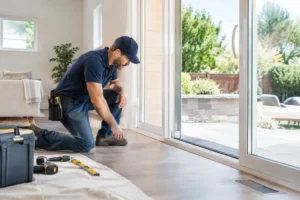
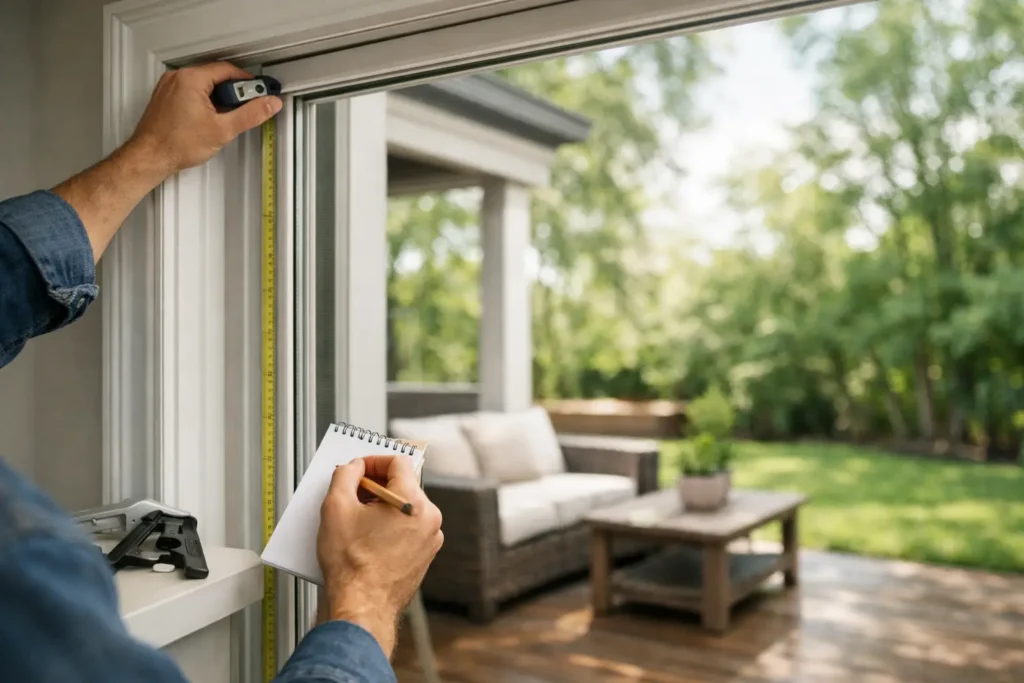
Start by measuring the width in three places – at the top, middle, and bottom of the opening. Then measure the height in three places – on the left, in the centre, and on the right. This helps you spot any variation in the brickwork, plaster, or floor level.
Write every figure down in millimetres. This is standard practice for made-to-measure aluminium doors and reduces the chance of confusion. A measurement such as 2398mm is far clearer than switching between metres, centimetres, and fractions of inches.
If the three width measurements differ, use the smallest one as your working figure. Do the same for height. That might feel cautious, but it is the sensible approach. Openings are often slightly uneven, and the final door needs to fit within the tightest point, not the most generous one.
You should also measure from the actual structural surfaces wherever possible. That means brick to brick or block to block, not plaster finish to plaster finish if those surfaces are likely to change. If internal finishes are staying in place, note that as part of your planning, because it can affect tolerances and trim.
Measuring a new patio door opening
For a new extension or renovation, the process depends on what stage your project has reached. If the opening has already been formed, measure it in the same way as a replacement opening – width in three places, height in three places, smallest figures used.
If the opening has not yet been built, the more useful measurement is usually the overall door size you want to achieve. This is where layout matters as much as raw dimensions. A large opening may suit a two-panel or three-panel sliding door, while the same width could work equally well with a bifold arrangement. The right choice depends on how much clear access you want, how you plan to furnish the room, and how often the doors will be used.
This is also the point where sightlines, frame depth, threshold detail, and floor build-up become important. A slim aluminium system can maximise glass area, but the opening still needs to account for installation tolerances and support above. On new projects, door sizes should be coordinated with your builder before brickwork is finalised.
What measurements do you actually need?
When customers ask how to measure patio doors, they often assume it is just width and height. In practice, there are a few more details that make the quotation and specification far more accurate.
The key dimensions are the overall opening width and overall opening height. Alongside that, it helps to record the external width and height of any existing frame, the cill depth if one is present, and the internal floor level relative to the outside. Threshold choice can affect accessibility, drainage, and the final feel of the room, especially where you want a low step out to the patio.
You should also note the direction of opening if you are considering hinged or bifold doors. With sliders, panel configuration matters. For example, you may want the fixed panel on one side and the sliding sash on the other to suit furniture layout or everyday traffic flow.
Take a few clear photos too. They help identify details that numbers alone cannot show, such as render returns, cavity closers, internal reveals, and whether there is enough room for a larger frame or different style of system.
Check whether the opening is square
This is one of the most overlooked parts of measuring patio doors. An opening can appear straight to the eye and still be out enough to affect installation.
Measure the diagonals from corner to corner in both directions. If the two diagonal measurements are the same, the opening is square. If they are slightly different, that does not always stop the project, but it does tell you that the installer or supplier needs to allow for the variation.
Also place a spirit level along the threshold area if possible. Floors near old patio doors sometimes slope towards the outside, and that can affect how a new low threshold sits. On replacement jobs, this is especially important where you are trying to create a cleaner transition between inside and outside without compromising performance.
Common measuring mistakes to avoid
Most sizing problems come down to assumptions. People measure the visible glass instead of the opening, copy dimensions from sales particulars, or take a single width and a single height and assume the rest will follow.
Another common mistake is forgetting floor finishes. If your new tiled floor, engineered timber, or screed build-up is still to come, the finished floor level may be higher than it is today. That can affect threshold height and door clearance.
Baying for the biggest possible frame can also create problems. It is natural to want maximum glass and a dramatic opening, but larger panels are heavier and system limits vary. A configuration that looks perfect on paper may need to be adjusted to suit the chosen door system, structural support, and practical day-to-day use.
And if you are measuring for a supply-only order, never guess the clearance required for fitting. Aluminium patio doors are made to precise sizes, and tolerances matter. A professional survey is always the safest route before manufacture.
How patio door style affects measuring
Not all patio doors are measured with exactly the same priorities. The opening itself may be recorded in the same way, but the design you choose influences what happens next.
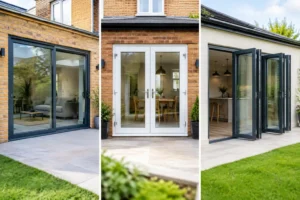
For sliding doors, the focus is often on maximising glass area and keeping the frame lines slim. A system such as the Schuco ASE80 Sliding Door or Cortizo COR Vision Sliding Door can work brilliantly in wide openings where you want uninterrupted views and a clean contemporary finish. In these cases, panel widths, track arrangement, and stack position all need to be considered alongside the opening size.
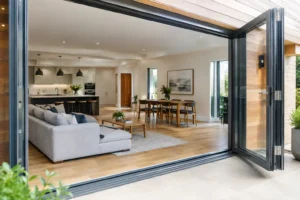
For bifold doors, the number of panels, traffic door position, and fold direction become more important. Systems such as Smarts Visofold 1000 Bifold Doors are often chosen where homeowners want the opening to feel fully connected to the garden in summer. Measuring is still about the structural aperture, but configuration decisions play a bigger role in the final specification.
This is why measuring is only the start. The right patio door is not simply the one that fits. It is the one that fits your opening, your threshold requirements, your layout, and the way you actually use the space.
When a quick measurement is enough – and when it is not
There is a difference between measuring for an initial quote and measuring for manufacture. For a rough quotation, careful opening dimensions in millimetres are usually enough to narrow down styles, configurations, and budget.
For a final order, a detailed site survey is the right next step. This confirms structural sizes, checks levels and squareness, and identifies any details that could affect fitting or performance. It is particularly important in older homes, where openings may have settled over time or where hidden issues only become obvious on closer inspection.
If your project includes a new extension, steelwork, or knock-through, accurate final measuring should happen once the opening is fully prepared. Measuring too early can lead to costly revisions later.
A simple way to record your patio door measurements
Keep your notes clear and consistent. Record width top, middle, and bottom, then height left, centre, and right, all in millimetres. Add the diagonal measurements, note floor levels, and mark any concerns such as uneven walls, render, skirting, radiators, or restricted access.
That gives a far better starting point for advice and pricing than a single rough figure. It also means any specialist you speak to can give guidance that reflects the real opening rather than an estimate.
If you want your new doors to bring in more light, improve thermal efficiency, and create a stronger connection to the garden, getting the measurements right is where confidence starts. A few extra minutes with the tape measure now can save a great deal of time later – and help you choose a patio door that looks every bit as good in real life as it does in your plans.