A rear extension can look impressive on a plan yet still feel disconnected from the garden if the opening is too small. That is why homeowners often ask, are patio doors worth it when weighing up the cost of a renovation. For many properties, the answer is yes – provided the door style, specification and installation suit the way you live.
Patio doors do more than replace a wall with glass. They can bring daylight further into a kitchen or living room, create a clearer route outside and give an older property a more contemporary finish. However, they are a substantial purchase, and the right choice is not always the biggest or most expensive system.
Are patio doors worth it? The value beyond the price
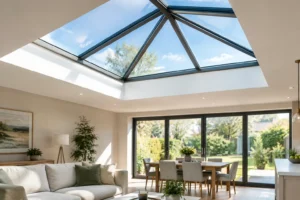
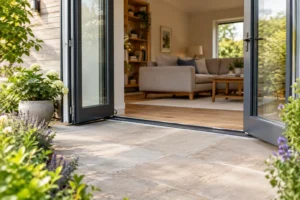
The most immediate benefit is the change in how a room feels. A well-positioned glazed door turns the garden into part of the view, rather than something seen through a small window. In a kitchen-diner or open-plan extension, this can make the space feel wider, brighter and more inviting throughout the year.
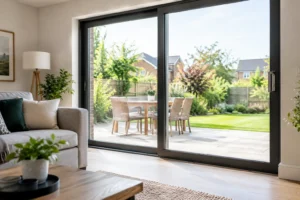
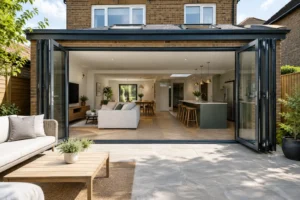
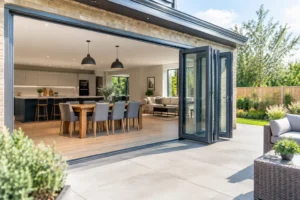
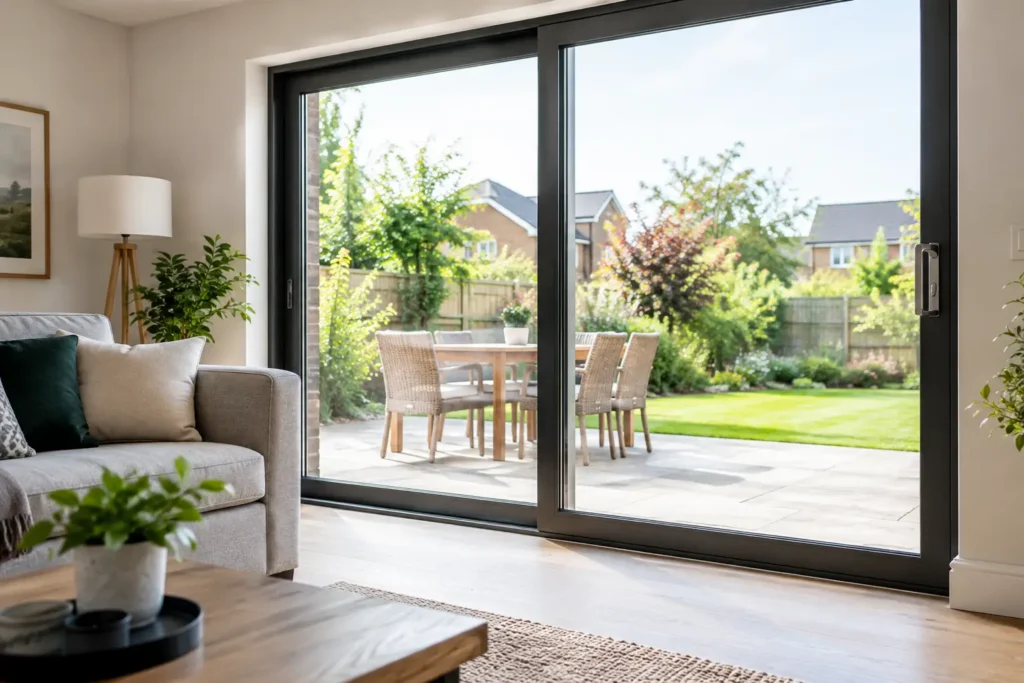
The practical benefit is equally important. Sliding patio doors offer a large glazed area without panels projecting into the room or garden, making them particularly useful where furniture, a patio or a narrow terrace limits space. Bifold doors, meanwhile, fold neatly to one side and can open up most of the aperture for entertaining, children playing outside or simply enjoying warm weather.
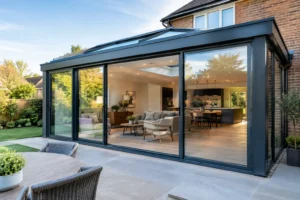
There is also a long-term design benefit. Aluminium patio doors have slim, strong frames that complement both modern extensions and renovated period homes. They are available in a wide choice of colours, panel arrangements, handle finishes and threshold options, so the finished result can look designed for the property rather than added as an afterthought.
Whether that value translates into a higher sale price depends on the property, local market and overall standard of the work. Patio doors should not be viewed as a guaranteed return on investment. Their stronger case is that they improve the daily use, appearance and appeal of a key living space – qualities that can make a home more attractive to future buyers as well.
What makes a patio door a worthwhile investment?
A patio door earns its place when it solves a genuine problem in the home. If your existing back door is dark, draughty, difficult to operate or creates a bottleneck when people move between kitchen and garden, replacing it can have an immediate effect. The same is true where a new extension needs more natural light without sacrificing valuable wall space.
More natural light, without compromising comfort
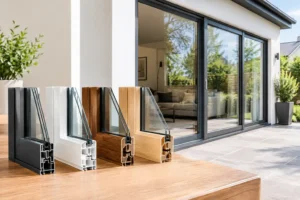
Large areas of glass need careful specification. Older sliding doors and poorly fitted units have contributed to the idea that glazed extensions are cold in winter and too hot in summer. Modern aluminium systems address this with thermally broken frames and energy-efficient double or triple glazing.
A thermal break is an insulating barrier within the aluminium profile that reduces the transfer of heat through the frame. Combined with suitable glazing, seals and professional installation, it helps keep warmth in during colder months. The exact performance will vary by system, glass specification and door size, so it is sensible to compare whole-door values rather than relying on glass performance alone.
Solar gain also needs consideration. A south- or west-facing opening may benefit from solar-control glass, particularly in a room with rooflights or a roof lantern. This can reduce excessive heat and glare while retaining the bright, open feel that makes patio doors appealing.
Easier access to the garden
For many households, better access is the strongest reason to invest. A low threshold can reduce the step between indoors and outdoors, creating a smoother route for prams, pushchairs and anyone with reduced mobility. It also gives flooring a more continuous visual line from the room to the patio.
Low thresholds must be planned correctly to manage weather protection and comply with Building Regulations. This is not an area to treat as a cosmetic extra. The external paving level, drainage and the door system itself all need to work together.
Security that suits a large opening
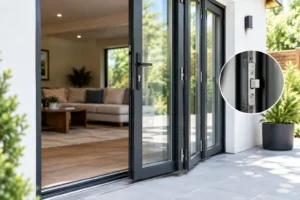
A larger opening should never mean lower security. Quality aluminium patio doors use multi-point locking, secure cylinder options, toughened safety glass where required and strong frames designed to resist forced entry. Sliding doors should also have effective anti-lift features, while bifold systems need dependable locking across the lead door and folding panels.
Ask how the specific system is secured, rather than assuming every patio door has the same standard. The configuration matters. A two-panel sliding door, a four-panel bifold and a set of French doors all operate differently and should be specified with their intended use in mind.
Sliding, bifold or French doors?
There is no single best patio door. The right option depends on how much of the opening you want to use, the available wall width, the view and how you plan to furnish the room.
Sliding doors are often the strongest choice where uninterrupted views are the priority. Their panels glide behind one another, so they do not take up internal or external floor space. Systems such as the Smarts Visoglide Plus sliding door or Cortizo COR Vision Sliding Door can provide expansive glass areas with refined aluminium sightlines. They work especially well for wide openings facing a garden, countryside view or landscaped patio.
Bifold doors are worth considering when you want a more open connection in summer. With the panels folded back, they create a broad clear opening that suits family gatherings and indoor-outdoor entertaining. A system such as Smarts Visofold 1000 Bifold Doors offers flexibility in panel numbers and opening direction, allowing the layout to be tailored to the room.
French doors can be the sensible option for a smaller opening or a more traditional property. They provide a clear central route outside at a lower scale, although they will not deliver the same amount of glass or open aperture as a sliding or bifold arrangement.
The trade-offs to consider before ordering
Patio doors are worth it when the budget includes the complete project, not just the frame and glass. Structural work may be needed to create or widen an opening, particularly where the rear wall is load-bearing. You may also need a steel support, plastering, electrical alterations, new flooring, drainage work and patio adjustments.
Planning permission is not always required for replacement doors or permitted development extensions, but the work must still meet relevant Building Regulations. Where structural changes are involved, building control approval is commonly needed. A specialist can help clarify what applies before the order is finalised.
There are operational trade-offs too. Bifold doors offer the largest open aperture, but their frames create more vertical sightlines when closed than a large-panel sliding door. Sliding doors maximise the view but only allow part of the overall opening to be open at one time. French doors offer simplicity but need clear space for the leaves to swing.
Maintenance is generally straightforward with powder-coated aluminium. Regularly clearing tracks, checking drainage channels and cleaning the glass and frames with suitable non-abrasive products will help keep the doors operating properly. Avoid harsh cleaners, and do not let leaves or grit build up in sliding door tracks.
How to decide if patio doors are right for your home
Start with the room, not the brochure. Stand where the doors will sit and consider the line of travel to the garden, where the dining table or sofa will go, and whether the best view is straight ahead or to one side. Think about how often you expect to open the doors fully, rather than choosing bifolds simply because they look impressive in a showroom.
Then focus on specification. Choose an aluminium system with a thermal break, quality glazing appropriate for the orientation of the property, secure locking and a threshold suited to your access needs. Bespoke sizing and configuration are valuable because they help the doors fit the architecture, rather than forcing the architecture to fit a standard door.
Finally, get clarity on what the quotation includes. Confirm whether it covers survey, delivery, removal of existing doors, installation, finishing work and Building Regulations requirements. Smarts Bifold Doors can provide both nationwide supply-only service for capable renovators and full installation for homeowners who want one specialist team handling the process.
A patio door is most worthwhile when it makes the room work better every day: brighter mornings in the kitchen, easier summer lunches outside and a view of the garden even when the weather keeps the doors closed. Choose the system around those moments, and the investment is far more likely to feel right long after the project is finished.