A new patio door changes far more than the route to your garden. It affects how much daylight reaches your kitchen or living space, how open the room feels, and how comfortably it performs through a British winter. This patio door materials guide explains the practical differences between aluminium, uPVC, timber and composite doors, so you can specify a solution that suits your home rather than simply choosing the cheapest frame.
The right material depends on the size of the opening, the style of your property, your maintenance expectations and the door design you prefer. Sliding doors, French doors and bifolds all place different demands on their frames. A material that works well for a modest rear-door opening may not be the best choice for a wide extension with large glass panels.
Patio door materials guide: the key choices
Aluminium patio doors
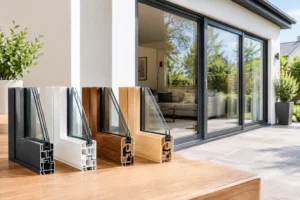
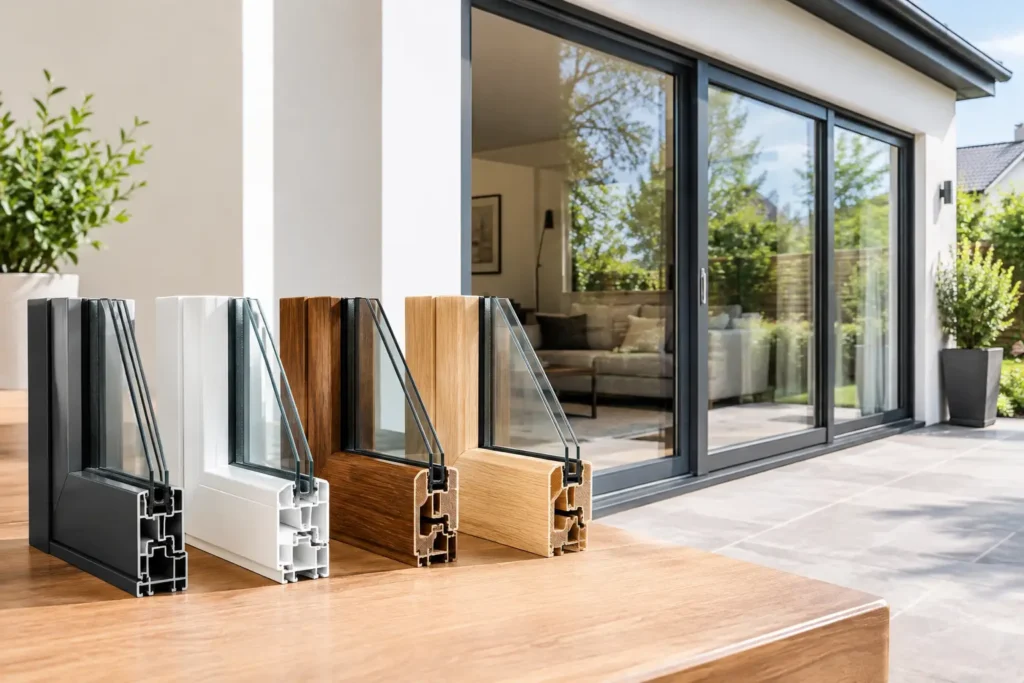
Aluminium is the leading choice for contemporary extensions and homeowners who want maximum glass with minimal visual interruption. It is exceptionally strong for its weight, allowing slim sightlines and larger panels than many alternative materials can support. That makes it particularly well suited to bifold doors and large-format sliding doors facing the garden.
A quality aluminium system uses a thermal break – an insulating barrier within the frame that reduces the transfer of heat between indoors and out. Combined with energy-efficient double or triple glazing, this helps create a warm, comfortable room without compromising the clean, architectural look that aluminium is known for.
Aluminium is also highly durable. It will not rot, swell or warp when exposed to changing weather, and its powder-coated finish requires very little upkeep beyond an occasional clean. Colours are a major advantage too. Homeowners can choose classic anthracite grey, black, white, heritage shades or a dual-colour finish, with one colour inside and another outside.
The upfront cost is usually higher than uPVC, especially for premium sliding systems or large bespoke configurations. However, aluminium often represents strong long-term value where sightlines, longevity and design flexibility matter. Systems such as Smarts Visoglide Plus sliding doors are designed to deliver wide glazed views, while aluminium bifolds can create an open transition between house and patio when folded back.
uPVC patio doors
uPVC remains a familiar and cost-effective material for many UK homes. It provides good insulation, does not need painting and is widely available in sliding and French door styles. For smaller openings, it can be a practical way to replace an older door and improve draught resistance, security and appearance without stretching the renovation budget.
The compromise is frame bulk. uPVC needs more material to achieve its strength, so sightlines are generally wider than aluminium. Over a large opening, that can mean less glass and a more segmented view of the garden. Dark-coloured uPVC can also absorb heat and may expand more noticeably than aluminium in direct sunlight, although quality products are engineered to manage normal seasonal movement.
uPVC is often most appropriate for standard-sized replacement projects, particularly where matching existing uPVC windows is a priority. It is less often the first choice for a wide, design-led extension or a door wall intended to be a major architectural feature.
Timber patio doors
Timber offers a warmth and character that manufactured materials cannot quite replicate. It suits period properties, cottages and homes in conservation-sensitive settings, where natural grain and traditional proportions are part of the appeal. A well-made timber French door can look entirely at home beside original joinery.
As a natural insulator, wood can perform well thermally when paired with modern glazing and seals. It is also straightforward to repair locally if it suffers a knock or surface damage. Yet timber requires a genuine maintenance commitment. Paints, stains and protective coatings need regular inspection and renewal, particularly on exposed elevations.
Without consistent care, moisture can lead to peeling finishes, movement or rot. Timber is therefore a good choice when its appearance is central to the project and the homeowner is prepared to maintain it. It is not automatically the lower-effort option simply because it is traditional.
Composite patio doors
Composite doors combine more than one material to balance insulation, strength and appearance. The term can mean different constructions depending on the manufacturer, but typically includes an insulated core with durable external skins, sometimes alongside reinforced sections.
They are most commonly associated with front doors, though composite-style glazed door options are available. Their main appeal is low maintenance with a solid feel and good thermal performance. Design and panel-size flexibility can be more limited than with bespoke aluminium systems, however, so they are rarely the strongest option for very large glazed openings.
Why the door style changes the material decision
Material cannot be chosen in isolation. The operating style determines how the frame, panels, tracks and hardware need to work together.
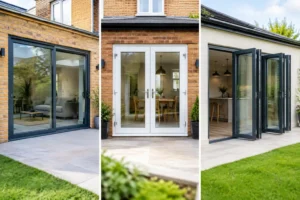
Bifold doors use multiple hinged panels that stack to one or both sides. They are ideal when you want the opening itself to disappear on warm days, creating a broad connection to the patio. Aluminium is particularly effective here because its strength supports slim profiles and reliable folding panels. A system such as Smarts Visofold 1000 Bifold Doors can be made to suit a wide range of configurations, colours and opening arrangements.
Sliding patio doors move panels along a track rather than folding away. They retain a fixed glazed area when open, but provide excellent uninterrupted views when closed. Large aluminium sliding doors work especially well where the priority is daylight and a calm, picture-frame view across the garden. The frame can support expansive panes without the bulk associated with less rigid materials.
French doors are a practical choice for conventional openings and period-style homes. Timber, uPVC and aluminium can all work well, depending on the desired finish and budget. If accessibility is a concern, ask about low-threshold options early in the design process rather than treating them as an afterthought.
Compare performance beyond the price
The initial quote matters, but it should not be the only comparison. Two doors with similar dimensions can perform very differently once glazing, hardware, installation and specification are considered.
Start with thermal performance. Ask how the complete door set performs, not just the glass unit. Frame design, thermal breaks, spacer bars, seals and installation quality all influence heat loss and draught resistance. In an extension with lots of glazing, choosing efficient frames and glass is vital to keeping the space usable year-round.
Security deserves the same attention. Look for multipoint locking, toughened safety glass where required, secure cylinders and hardware designed to resist forced entry. Large glazed doors should feel reassuringly solid when closed, with smooth operation that does not come at the expense of locking performance.
Then consider everyday use. A three-panel sliding door, for example, offers a different clear opening from a three-panel bifold. Think about where furniture will sit, whether the door opens onto steps, how often it will be used and which direction receives the strongest weather. These details influence the most sensible panel layout and threshold choice.
Finally, plan for maintenance over the full life of the door. Aluminium generally needs the least attention, uPVC is similarly straightforward but may have design limitations, and timber needs periodic care to retain its finish and structural condition. Paying more for a material that suits the property and your lifestyle can prevent costly dissatisfaction later.
Getting the specification right
A made-to-measure patio door should be designed around the opening, not selected from a shelf. Measure the available width and height, but also consider structural supports, floor finishes, drainage, internal ceiling lines and how the door will meet the external patio level. For replacement projects, the installer should assess the existing opening and any work needed to achieve a secure, weather-tight fit.
Colour, handle finish, glazing type and panel configuration all contribute to the final result. Solar-control glass may be worth considering for a south- or west-facing extension that receives strong afternoon sun. Privacy glass can be useful where neighbours overlook the garden, while integral blinds may suit homeowners who want a tidy alternative to curtains around a door opening.
For many modern UK homes, aluminium provides the broadest combination of slim frames, bespoke design, low maintenance and strong thermal performance. That does not make it the answer for every property. A carefully specified uPVC, timber or composite door may be the better fit when budget, heritage character or a smaller opening leads the brief.
The most useful next step is to decide what you want to notice every day: the warmth of timber, the value of uPVC, or the light, views and fine sightlines of aluminium. Once that priority is clear, a specialist can turn it into a patio door specification that feels right from the first opening.