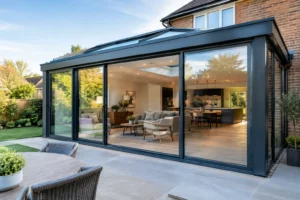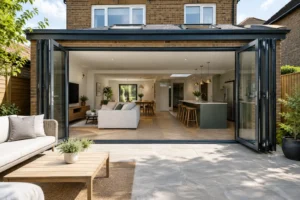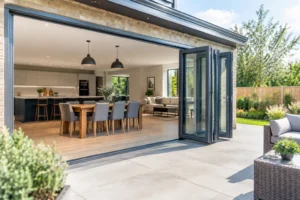

Ordering bifolds without installation can save money and give you more control, but it also leaves less room for error. A good supply only bifold checklist helps you get the opening, specification and finishing details right before your doors go into production.
For homeowners managing an extension, replacing old patio doors or working with their own builder, that matters. Aluminium bifold doors are made to order. Once the dimensions, configuration and glazing choices are signed off, changes are rarely simple and never cheap. Getting organised early makes the whole project smoother.
Why a supply only bifold checklist matters
With a full installation service, a specialist usually surveys the opening, confirms tolerances and takes responsibility for fit. With supply only, more of that responsibility sits with you or your contractor. That does not mean the process is difficult, but it does mean each decision needs to be checked properly.
The biggest problems tend to be predictable. An opening is measured before plaster is finished. The threshold chosen does not suit floor build-up. The traffic door swings the wrong way for the kitchen layout. A frame colour is approved without checking the internal finish against the windows. None of these are unusual, and all can delay a job.
A practical checklist keeps the order focused on what really affects performance and usability – size, configuration, thermal efficiency, security, compliance and how the doors will work day to day.
Your supply only bifold checklist before you order
Start with the structural opening. You need accurate width and height measurements from the finished opening, not rough estimates from drawings alone. If the opening is still being formed, it is worth waiting until lintels, floor levels and reveals are confirmed. Bifolds are bespoke products, and a few millimetres can make a real difference.
Next, check who is taking final responsibility for the dimensions. If you are using your own builder, make sure everyone understands whether the sizes are based on structural opening, finished opening or a fitting tolerance. Assumptions cause more issues than bad products ever do.
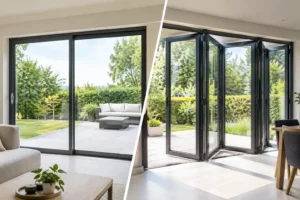
Configuration comes next. Decide how many panels you want, which way they stack and where the everyday access door should sit. A three-panel set behaves very differently from a five or six-panel design. If the doors open onto a patio used daily, the traffic door position will affect how the space feels in practice.
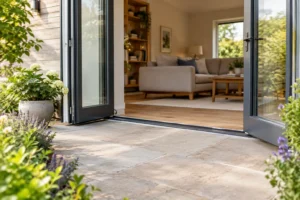
Threshold choice is another key point. Homeowners often prefer a low threshold for easier access and a cleaner look, especially between kitchen and garden. That can work very well, but the final choice depends on exposure, drainage and floor levels. In more exposed locations, weather performance may need to take priority.
You should also confirm the glazing specification before ordering. Double glazing is standard for many projects, but glass choice still matters. Solar control, privacy, acoustic performance and low-emissivity coatings all affect comfort. South-facing openings, for example, may benefit from glass that reduces overheating without making the room feel dark.
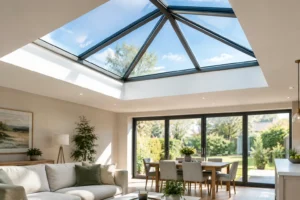
Frame finish deserves just as much attention as the glass. External colour, internal colour, handle finish and any dual-colour option should be agreed in the context of the room, not chosen in isolation. Anthracite grey remains popular, but many homeowners now prefer softer neutrals or darker architectural tones that tie in with roof lanterns, windows and rear extensions.
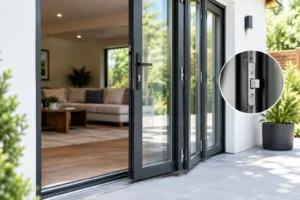
Security should never be an afterthought. Ask what locking system is included, whether shootbolts, multi-point locking and high-security cylinders are standard, and how the system performs against current security expectations. Good aluminium bifold systems are designed to feel slim and contemporary without compromising protection.
Finally, check lead times, delivery arrangements and storage. Supply only orders need somewhere dry and secure to be kept if the site is not ready on arrival. It is also worth confirming whether the product will arrive glazed or unglazed, and what equipment may be needed to move it safely.
Choosing the right system for the project
Not every bifold door system suits every home. The right choice depends on opening size, sightlines, thermal targets, budget and the look you want to achieve.
For many domestic projects, systems such as Smarts Visofold 1000 Bifold Doors offer a strong balance of style, reliability and value. They suit homeowners who want slim aluminium frames, secure operation and a made-to-measure design that works well in extensions and garden-facing rooms.
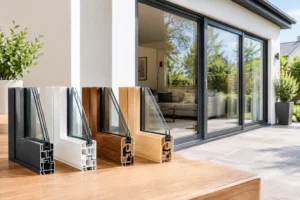
If thermal performance is a bigger priority, it is worth comparing specifications more closely. Aluminium products with a thermal break and energy efficient glazing can deliver very good insulation, but performance figures vary by system, glass unit and overall door size. A larger opening with more glass may change the final result, so headline numbers should always be read in context.
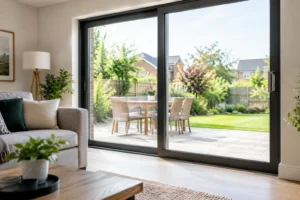
Higher-end options such as Schuco ASFD75 Bifold doors or ASFD90.Hi Bifold Doors may appeal where premium detailing and enhanced thermal performance are part of the brief. On the other hand, if your goal is to maximise width with fewer interruptions, a sliding door system may be worth considering instead of a bifold. That depends on how often you want the opening fully clear.
Measurements, tolerances and common mistakes
The most expensive supply only mistakes usually begin with measuring too early or without enough detail. If floor finishes are not finalised, you risk setting the threshold at the wrong level. If plasterboard and skim have not been accounted for, frame sizes can be out. If the opening is not square, that needs to be identified before the order is placed, not during installation.
It also helps to think beyond the frame itself. Will the doors fold back against a wall light, an external tap or a raised planter? Will curtain tracks, blinds or ceiling details interfere internally? On paper, a door set can look perfect. In a real room, small clashes can affect how usable it feels.
Another common issue is forgetting access for delivery and installation. Aluminium bifold panels can be large and heavy. Check side access, hallway turns, parking and whether lifting equipment may be needed. This is especially relevant on renovation projects where finished surfaces are already in place.
Questions to ask before you confirm the order
A reliable supplier should be able to explain exactly what is included and what is not. Ask whether the quote covers frames, panels, glazing, hardware, trickle vents if required, cills, handles and delivery. Clarify whether packers, fixings and installation instructions are included too, especially if your builder is fitting the doors.
You should also ask about compliance. For a domestic project, the doors need to meet current Building Regulations requirements relevant to the application. That may include thermal performance, glazing safety and ventilation, depending on the layout and the rest of the scheme. If your extension is being signed off by Building Control, product documentation should be easy to obtain.
Warranties matter as well. A strong aluminium system is built for long-term use, but it still makes sense to check what cover applies to frames, powder coating, glazing units and hardware. The best reassurance is not just the warranty term, but the experience behind the supplier and the quality of the system being specified.
When supply only is the right choice
Supply only works best when the project team is clear and the site is well managed. If you already have a trusted builder, or you are comfortable coordinating the installation yourself, it can be an efficient route. It also gives experienced renovators more freedom to manage timescales and trades around a wider extension or refurbishment.
That said, it is not always the best option. If the opening is complex, access is difficult or you want a single point of responsibility from survey through to fitting, a full installation service can remove a lot of pressure. The right decision depends on how hands-on you want to be and who is carrying out the work.
For homeowners who want the flexibility of a bespoke aluminium system without guesswork, the best approach is simple: slow the order down before production starts. Check the opening, the threshold, the panel layout, the glazing, the colour and the delivery plan. A careful supply only bifold checklist does more than prevent mistakes – it helps you end up with doors that look right, perform properly and feel made for your home.
If you are investing in a new garden opening, that extra care at the ordering stage is usually what separates a straightforward project from a frustrating one.